will 和be going to 区别
- 格式:docx
- 大小:15.94 KB
- 文档页数:4
Will和be going to 区别
一、在表示将来发生的事情时,二者的区别主要是:
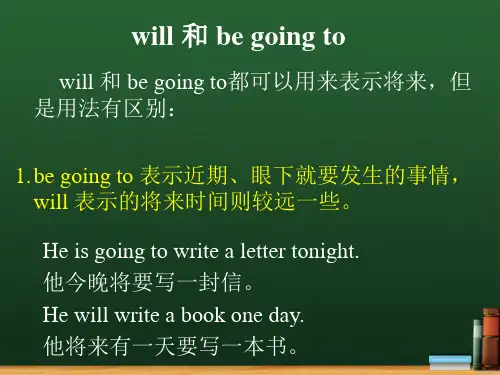
1、be going to 用于主观判断,及说话人主观上计划或安排将要去做的事情.will 则多用于客观的情况,即客观上将要发生的事情.例如:
I’m not going to ask her. 我不打算去问她.
It will be rainy tomorrow.明天会下雨.
2、be going to 表示近期、眼下就要发生的事情,will 表示的将来时间则较远一些.例如:
He’s going to do it right away. 他马上就去做.
Will she arrive on time next time? 下次她会按时到吗?
二、可表示说话人按照他的意图将要发生或进行的动作时,各有侧重:
若表示没有经过事先计划或考虑,而是在说话的当时临时想到的意图或临时作出的决定时,则要用will.若表示经过事先考虑好的意图时,要用be going to.例如:I’ll answer the telephone.我去接电话.(事先没经过考虑)
I’m going to meet him at the railway station. 我去火车站接他.(已经过考虑)
三、在有条件从句的主句中一般不用be going to, 而多用will,因为此时多少带有些意愿.例如:
I won’t go if he doesn’t come.他不来,我就不去.
四、在正式的通知(如新闻媒体公布的官方消息,气象预报等)中用will结构.例如:
Ji’an will be cloudy with the temperature from eighteen to twenty-eight.
吉安阴,气温十八到二十八摄氏度.
五、表示有迹象表明要发生某事,只用be going to,不用will.例如:
Look at the clouds, it’s going to be another storm.瞧瞧这些云,暴风雨又要来了.
Can和could的区别
1、can 表示现在的能力,could 表示过去的能力,例如:He can speak a little English now.
She could play the piano when she was five.
2、在表示请求许可时,没有时间区别,在语气上could 更加委婉客气,例如:Can I use your pen
Could I have a look at your book
3、在表示可能性方面,没有时间区别,can 可能性比could 大;1、can 表示现在的能力,could 表示过去的能力,例如:He can speak a little English now. She could play the piano when she was five.
2、在表示请求许可时,没有时间区别,在语气上could 更加委婉客气,例如:Can I use your pen
Could I have a look at your book
3、在表示可能性方面,没有时间区别,can 可能性比could 大;表示逻辑上或理论上的可能性,而不是某种实际上将要发生或正在发生的可能性.
Can it be true?这会是真的吗?
Anybody can make mistake.任何人都可能犯错误.
The weather here could be very cold in winter.冬天这的天气有时很冷.
一般用于否定句和疑问句.
He can't be at home.他不可能在家.
注意和may not 的区别.
He may not be at home.他可能不在家.
也可以用于肯定句.,
An accident can happen if you do this.
如果你这样做,可能会发生事故
Every day,Everyday,Each day的区别
everyday是形容词,意思是"每天的"、"日常的",后面必须接被修饰的名词; every day是副词,意思是"每天",表示动作的时间。
放在句首或句末,用来修饰整个句子,every-day它的意思同everyday。
each day 指具体每一天,从个体来考虑.Approach each day.迎接每一天.
some time ,sometime,some times,sometimes的区别
(1)sometimes的意思是“有时”,是副词.例如:
Sometimes he comes by bike and sometimes by bus.
他有时骑车来,有时乘公共汽车来.
(2)sometime也是副词,意思是“在某个时候”.可用于一般过去时与将来时.例如:
You can hand in your homework sometime before Friday.
你可以在周五前某个时候交作业.
(3)some time是名词短语,它的意思是“一段时间”.例如:
I'll be away for some time.我将离开一段时间.
(4)some times也是一个名词短语,time在这里用作可数名词,意思是“次数”. some times的意思是“几次”.例如:
I have been to the Great Wall some times.
我去过长城几次.
有一个口诀可以帮助记忆:
分开“一段时间”,相聚“某个时候”;
S连住是“有时”,分开“几次”、“几倍”行.
some和time分开写时表示“一段时间”,连着写时表示“某个时候”;有S连着写时表示“有时”,分开写表示“几次”、“几倍”的意思.
When和while区别
When=at or during the time that,既指时间点,也可指一段时间;
while=during the time that,只指一段时间;
因此when引导的时间状语从句中的动词可以是瞬间动词,也可以是延续性动词,而while从句中的动词必须是延续性动词.
in future和in the future区别
in future:相当于from now on 今后,从今以后
in the future:在将来。