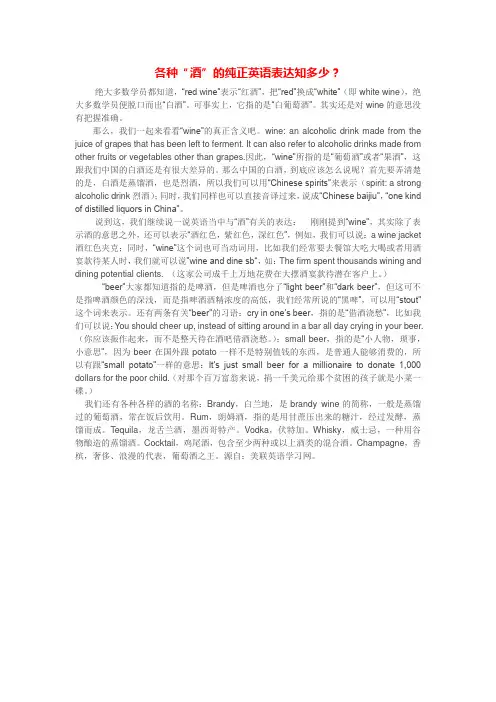
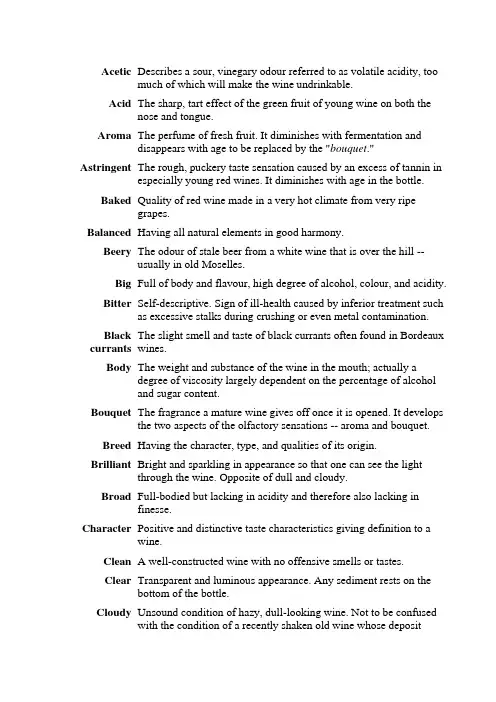
国内专业红酒词汇 英语
- 格式:doc
- 大小:15.70 KB
- 文档页数:4
国内专业红酒词汇 英语
Professional Wine Terminology in China.
Wine, a beverage enjoyed across the globe, has a rich
vocabulary associated with it. In China, the wine industry
has evolved significantly, adopting both traditional and
modern practices, leading to a unique blend of terminology.
This article aims to delve into the professional wine
vocabulary in China, highlighting key terms related to red
wine, its production, and the overall wine-drinking culture.
1. Classification of Red Wine.
Dry Red Wine: This refers to red wine that has a low
sugar content, resulting in a dry, tannin-rich finish.
Semi-dry Wine: As the name suggests, these wines are
slightly less dry than dry red wines, with a balance of
acidity and tannins.
Rose Wine: Also known as blush wine, rose wine is a
light-colored red wine with a hint of pink, offering a
delicate flavor profile.
2. Production Terms.
Claret: This term refers to a fresh, young red wine,
especially those produced in the Bordeaux region of France.
In China, it is often used to describe fresh, fruity red
wines.
Botrytised Wine: This refers to wines that have been
affected by noble rot, a fungal infection that concentrates
the sugar and flavor of the grapes, resulting in rich,
intense wines.
Fortified Wine: These are wines that have been
strengthened with brandy or another type of distilled
spirit, increasing their alcohol content and complexity.
3. Wine Tasting and Flavor Characteristics.
Flavored Wine: Wines that have been flavored with
herbs, fruits, or spices, providing additional complexity
and interest to the flavor profile.
Tasting Notes: When tasting wine, specific terms are
used to describe the aroma, flavor, and feel of the wine.
Common descriptors include apple, pear, citrus, melon,
pineapple, peach, butter, honey, vanilla, butterscotch, and
spice.
4. Wine Styles and Occasions.
Appetizer Wine (Aperitif): Lighter wines meant to
stimulate the appetite and prepare the palate for a meal.
Table Wine: Wines designed to accompany a meal, often
chosen based on the type of food being served.
Dessert Wine: Sweeter wines enjoyed after a meal,
often pairing well with desserts.
Champagne: A type of sparkling wine produced in the Champagne region of France, often associated with
celebrations and special occasions.
5. Wine and Culture.
In China, wine has become an integral part of social
gatherings, business meetings, and special occasions. The
gifting of wine is also a common custom, often reflecting
respect and friendship. Wine clubs and wine tasting events
are becoming increasingly popular, providing a platform for
wine enthusiasts to share their knowledge and experiences.
In conclusion, the vocabulary of wine in China is rich
and diverse, reflecting the country's unique wine-drinking
culture and history. As the wine industry continues to
develop, it is likely that this vocabulary will continue to
evolve and expand.