
一般过去时态
- 格式:ppt
- 大小:1.42 MB
- 文档页数:30
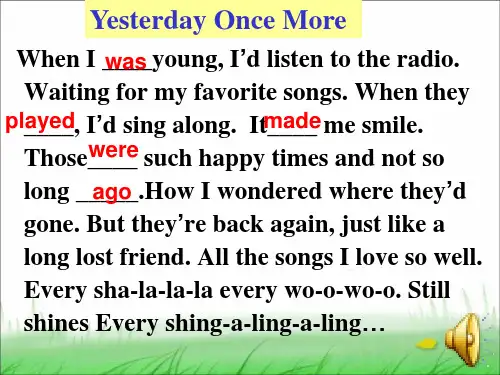

英语语法————一般过去时态一.定义:一般过去时表示过去某个时间发生的动作或存在的状态。
常和表示过去的时间状语连用。
如:last year, yesterday等;也可表示过去经常反复发生的动作,常和often, always等频率副词连用二用法:(1)表示过去某一时刻或某一段时间内所发生的动作或情况,通常一般过去式带有表示动作时间状语的词,词组或从句,如 yesterday, the day before last, last week, two days ago 等,上下文清楚时可以不带时间状语。
I worked in that factory last year. 去年我在那一家工厂工作。
I went to the Tian Long Mountain yesterday. 昨天我们去了天龙山。
(2)一般过去时态:表示过去某一时间所发生的动作或存在的状态。
谓语动词要用一般过去式。
时间标志:yesterday(昨天), last week(上周), last month(上个月), last year(去年), two months ago (两个月前), the day before yesterday(前天),in 1990 (在1990年), in those days (在那些日子里), just now (刚才) , that day , this morning 等表示过去的时间状语。
如: I was born in 1990. (我出生在1990年)。
When did you go to the park? (你是什么时候去的公园)。
I went to the park last week. (我是上周去的公园)在上面的句子中第一句属于be动词的一般过去时态;第二句和第三句属于实义动词的一般过去时态。
三.句型结构1. Be 动词的一般过去时态在没有实义动词的句子中使用be动词, am is 的过去式为was; are的过去式为were.构成:肯定句:主语+was (were) +宾语 ,如:I was late yesterday. (昨天我迟到了。

一般过去时态的结构及用法一般过去时是英语中用来描述已经发生或已经完成的动作、状态或事件的时态。
它常用于叙述过去的经历、故事或历史事件。
一般过去时态的结构基本上由一个动词的过去式构成,而且不需要使用助动词来表示时间。
以下是一般过去时的结构及用法的相关参考内容:一、结构:1. 肯定句结构:主语 + 动词过去式 + 其他成分例句:I studied English last night.2. 否定句结构:主语 + 动词过去式 + not + 其他成分例句:She did not go to the party.3. 疑问句结构:助动词 (did) + 主语 + 动词原形 + 其他成分 + ?例句:Did they watch the movie?二、用法:1. 表示过去的经历或事件:例句:I visited my grandparents last summer.We went to the beach yesterday.2. 表示过去的习惯或状态:例句:He used to smoke, but he quit last year.We lived in London for ten years.3. 在时间状语从句中:例句:I saw her while I was walking home.He was cooking dinner when the phone rang.4. 与过去的比较或对比:例句:She was much taller when she was young.It was colder last winter than this winter.5. 与现在进行时态的对比:一般过去时表示的是过去的动作或状态,而现在进行时表示的是现在正在进行的动作或状态。
例句:Last night, I studied for the exam. (过去发生的动作)Right now, I am studying for the exam. (现在正在进行的动作)6. 与过去进行时态的对比:一般过去时表示的是过去的动作或状态,而过去进行时表示的是过去某个时间点正在进行的动作。
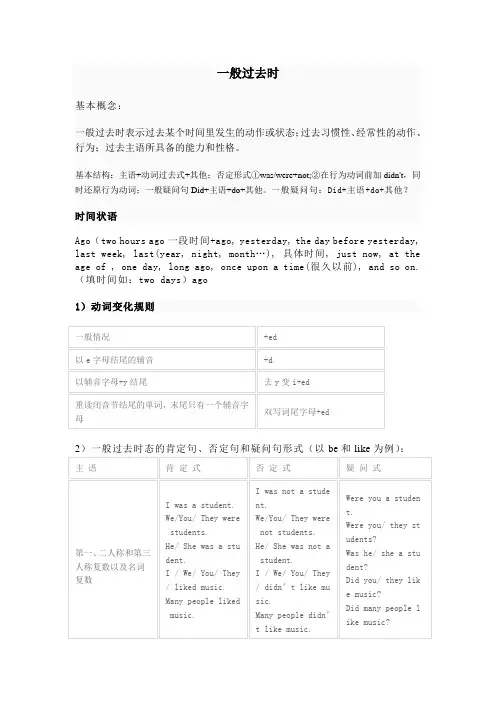
一般过去时基本概念:一般过去时表示过去某个时间里发生的动作或状态;过去习惯性、经常性的动作、行为;过去主语所具备的能力和性格。
基本结构:主语+动词过去式+其他;否定形式①was/were+not;②在行为动词前加didn't,同时还原行为动词;一般疑问句Did+主语+do+其他。
一般疑问句:Did+主语+do+其他?时间状语Ago(two hours ago一段时间+ago, yesterday, the day before yesterday, last week, last(year, n ight, month…), 具体时间, just now, at the age of , one day, long ago, once upon a time(很久以前), and so on.(填时间如:two days)ago1)动词变化规则2)一般过去时态的肯定句、否定句和疑问句形式(以be和like为例):3)一般过去时的用法:1.过去发生的动作。
例如:The police stopped me on my way home last night.2.过去存在的状态。
例如:They weren't able to come because they were so busy.3. 常用于一般过去时的时间状语:yesterday,three months ago,last year,in 1979,often,always 例题解析:举一反三,学的更轻松!1. r. Mott is out. But he ______ here a few minutes ago.A. wasB. isC. will beD. would be解析:时分钟前发生的动作,应该用一般过去时。
应选 A,2.---Hi, Tom.---Hello, Fancy. I ______ you were here.A.don't knowB.won't thinkC. thinkD. didn't know解析:虽然句中没有明确的时间状语,但是可以通过上下文语境判断出,我说这话之前不知道,但是现在知道了,表示过去的动作,要用过去时态。

一般过去时班级姓名一般过去时的功能:一般过去时表示过去某个时间发生的动作或存在的状态,常和表示过去的时间状语连用。
一般过去时也表示过去经常或反复发生的动作。
一般过去时的构成:1.be动词:主语+be动词过去式(was, were)+其它。
e.g:I was a student twenty years ago.注意:在一般过去时中主语单数be动词用was, 主语复数be动词用were。
2.行为动词:主语+行为动词过去式(+其它)。
e.g:We watched TV last night.。
一般过去时标志用语Just now, a moment ago, …ago, yesterday, last…,on Sunday中文“了”动词过去式的变化规则1.一般情况下,直接加-ed,如:pull-pulled, cook-cooked2.以e结尾只加d,如:taste-tasted3.以“辅音字母+y”结尾,变y为i, 再加-ed,如:study-studied4. 双写末尾的辅音字母,再加-ed,如:stop-stopped5.不规则的单独记练习:一、写出下列动词的过去式am/is are study play gohave/has meet do/does sing eatmake read see sit tell二、用be动词的适当形式填空1.They _______ glad to see each other last month.2.He ________ at the camp last week.3.I _____ an English teacher, but I _______ a middle schoolstudent twentyyears ago.4.Yang Ling ________ eleven years old last year.5.There ________ a lot of milk in the glass ten minutes ago.6.There ________an apple on the plate yesterday.7.There ________ some cakes in the fridge on Sunday.8.Today _______ the second of June. Yesterday ______ the first of June. It_____ Children's Day. All the students ______ very excited.二、用所给词的适当形式填空1. We often___________(play) in the playgound.2. He _________(see) a play last Friday.3. What (do) he usually (do) after school?4. Danny (study) English,Chinese,Maths, Science and Art at school.5. The sign on the grass (mean)‘Keep off the grass’.6. ________ Mike________(read) English every day?7. Did you (fly) kites? No, I (make) a kite.8. Where you a moment ago? I in the bedroom. (be)9. We _______ (have) a party last Halloween.10. __ they _____ (play) chess in the classroom last PE lesson?11. My parents didn’t ________ (work) last Friday.12、I ________ (not taste) oranges on the farm yesterday.三、中译英1. 我们上周五看了一部电影。