
外交部口译的笔记符号
- 格式:pdf
- 大小:2.57 MB
- 文档页数:9
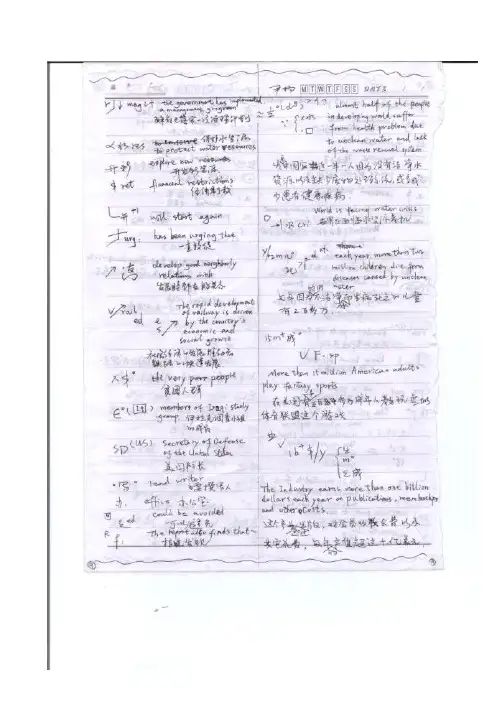

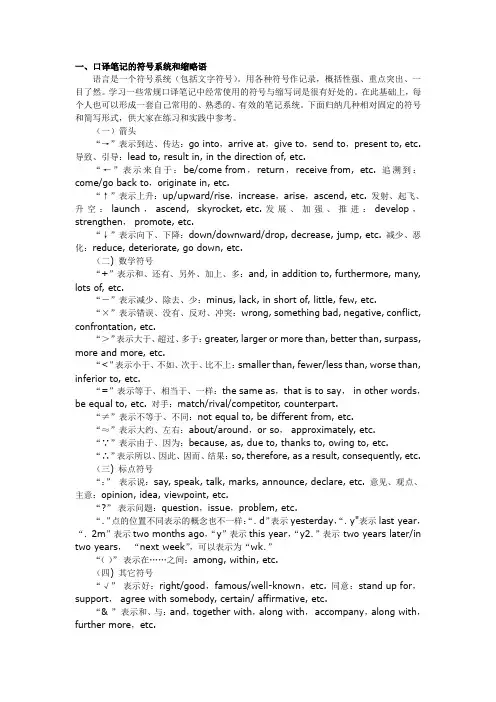
一、口译笔记的符号系统和缩略语语言是一个符号系统(包括文字符号)。
用各种符号作记录,概括性强、重点突出、一目了然。
学习一些常规口译笔记中经常使用的符号与缩写词是很有好处的。
在此基础上,每个人也可以形成一套自己常用的、熟悉的、有效的笔记系统。
下面归纳几种相对固定的符号和简写形式,供大家在练习和实践中参考。
(一)箭头“→”表示到达、传达:go into,arrive at,give to,send to,present to, etc. 导致、引导:lead to, result in, in the direction of, etc.“←”表示来自于:be/come from,return,receive from, etc. 追溯到:come/go back to,originate in, etc.“↑”表示上升:up/upward/rise,increase,arise,ascend, etc. 发射、起飞、升空:launch,ascend, skyrocket, etc.发展、加强、推进:develop,strengthen, promote, etc.“↓”表示向下、下降:down/downward/drop, decrease, jump, etc. 减少、恶化:reduce, deteriorate, go down, etc.(二) 数学符号“+”表示和、还有、另外、加上、多:and, in addition to, furthermore, many, lots of, etc.“-”表示减少、除去、少:minus, lack, in short of, little, few, etc.“×”表示错误、没有、反对、冲突:wrong, something bad, negative, conflict, confrontation, etc.“>”表示大于、超过、多于:greater, larger or more than, better than, surpass, more and more, etc.“<”表示小于、不如、次于、比不上:smaller than, fewer/less than, worse than, inferior to, etc.“=”表示等于、相当于、一样:the same as,that is to say, in other words,be equal to, etc. 对手:match/rival/competitor, counterpart.“≠”表示不等于、不同:not equal to, be different from, etc.“≈”表示大约、左右:about/around,or so, approximately, etc.“∵”表示由于、因为:because, as, due to, thanks to, owing to, etc.“∴”表示所以、因此、因而、结果:so, therefore, as a result, consequently, etc.(三) 标点符号“:”表示说:say, speak, talk, marks, announce, declare, etc. 意见、观点、主意:opinion, idea, viewpoint, etc.“?”表示问题:question,issue,problem, etc.“.”点的位置不同表示的概念也不一样:“.d”表示yesterday,“.y"表示last year,“.2m”表示two months ago,“y”表示this year,“y2.”表示 two years later/in two years,“next week”,可以表示为“wk.”“()”表示在……之间:among, within, etc.(四) 其它符号“√”表示好:right/good,famous/well-known,etc. 同意:stand up for,support, agree with somebody, certain/ affirmative, etc.“& ”表示和、与:and,together with,along with, accompany,along with,further more,etc.“☆”表示重要的、杰出的、优秀的、榜样:important, best,outstanding,brilliant,model, etc.“∥”表示结束:end,stop,halt,bring something to a standstill/stop, etc.“°”表示人、者:person, people, 如经济学家可以表示为“经°”,中国人可以表示为“中°”,etc.“⊙”表示会议、讨论、谈判:meeting, seminar, discussion, negotiation, etc.“♂”表示男人:man, male, boy, etc.“♀”表示女人:woman, female, girl, etc.“□”表示国家:country, state, nation, etc.“△”表示代表:represent, on behalf of, etc.“∽”表示交流、交换、替代、相互:exchange, mutual, each other, communication, replace, etc.(五) 缩略词英语缩写词的写法一般有以下几种:●拿掉所有元音。
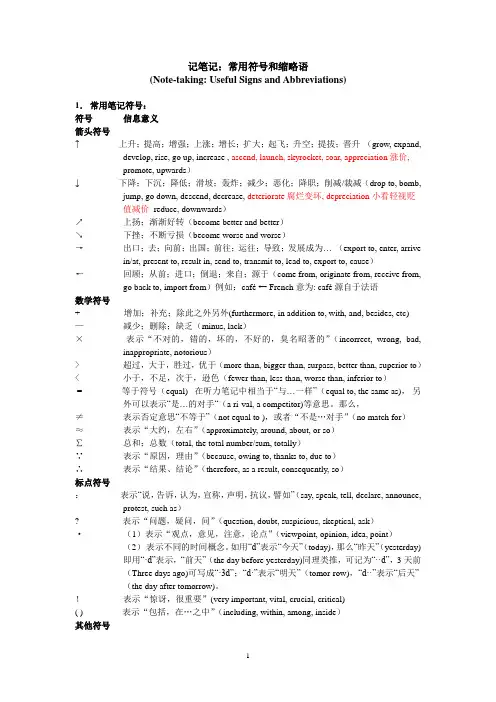
记笔记:常用符号和缩略语(Note-taking: Useful Signs and Abbreviations)1.常用笔记符号:符号信息意义箭头符号↑上升;提高;增强;上涨;增长;扩大;起飞;升空;提拔;晋升(grow, expand, develop, rise, go up, increase , ascend, launch, skyrocket, soar, appreciation涨价,promote, upwards)↓ 下降;下沉;降低;滑坡;轰炸;减少;恶化;降职;削减/裁减(drop to, bomb, jump, go down, descend, decrease, deteriorate腐烂变坏, depreciation小看轻视贬值减价reduce, downwards)↗上扬;渐渐好转(become better and better)↘下挫;不断亏损(become worse and worse)→出口;去;向前;出国;前往;运往;导致;发展成为…(export to, enter, arrive in/at, present to, result in, send to, transmit to, lead to, export to, cause)←回顾;从前;进口;倒退;来自;源于(come from, originate from, receive from, go back to, import from)例如:café← French意为: café源自于法语数学符号+ 增加;补充;除此之外另外(furthermore, in addition to, with, and, besides, etc) —减少;删除;缺乏(minus, lack)×表示“不对的,错的,坏的,不好的,臭名昭著的”(incorrect, wrong, bad, inappropriate, notorious)> 超过,大于,胜过,优于(more than, bigger than, surpass, better than, superior to)< 小于,不足,次于,逊色(fewer than, less than, worse than, inferior to)= 等于符号(equal) 在听力笔记中相当于“与…一样”(equal to, the same as),另外可以表示“是…的对手“(a ri-val, a competitor)等意思。
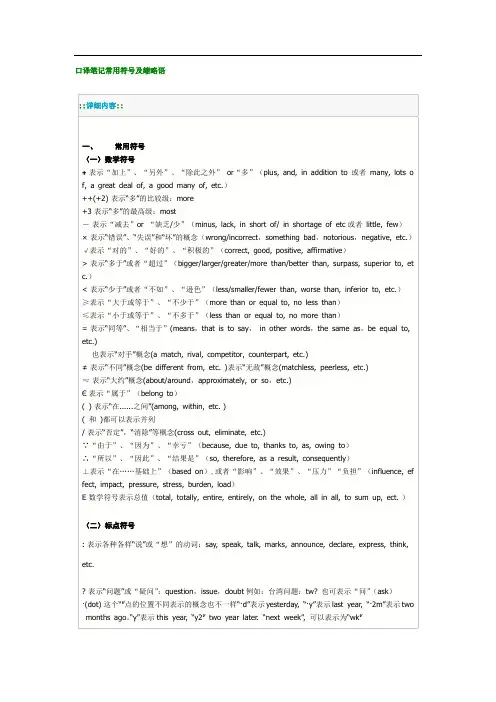
口译笔记常用符号及缩略语::详细内容::一、常用符号(一)数学符号+表示“加上”、“另外”、“除此之外”or“多”(plus, and, in addition to 或者many, lots o f, a great deal of, a good many of, etc.)++(+2) 表示“多”的比较级:more+3 表示“多”的最高级:most-表示“减去”or “缺乏/少”(minus, lack, in short of/ in shortage of etc或者little, few)×表示“错误”、“失误”和“坏”的概念(wrong/incorrect,something bad,notorious,negative, etc.)√表示“对的”、“好的”、“积极的”(correct, good, positive, affirmative)> 表示“多于”或者“超过”(bigger/larger/greater/more than/better than, surpass, superior to, et c.)< 表示“少于”或者“不如”、“逊色”(less/smaller/fewer than, worse than, inferior to, etc.)≥表示“大于或等于”、“不少于”(more than or equal to, no less than)≤表示“小于或等于”、“不多于”(less than or equal to, no more than)= 表示“同等”、“相当于”(means,that is to say,in other words,the same as,be equal to, etc.)也表示“对手”概念(a match, rival, competitor, counterpart, etc.)≠表示“不同”概念(be different from, etc. )表示“无敌”概念(matchless, peerless, etc.)≈表示“大约”概念(about/around,approximately, or so,etc.)Є表示“属于”(belong to)( ) 表示“在......之间”(among, within, etc. )( 和)都可以表示并列/ 表示“否定”,“消除”等概念(cross out, eliminate, etc.)∵“由于”、“因为”、“幸亏”(because, due to, thanks to, as, owing to)∴“所以”、“因此”、“结果是”(so, therefore, as a result, consequently)⊥表示“在……基础上”(based on),或者“影响”、“效果”、“压力”“负担”(influence, ef fect, impact, pressure, stress, burden, load)E 数学符号表示总值(total, totally, entire, entirely, on the whole, all in all, to sum up, ect. )(二)标点符号: 表示各种各样“说”或“想”的动词:say, speak, talk, marks, announce, declare, express, think, etc.表示“问题”或“疑问”:question,issue,doubt例如:台湾问题:tw? 也可表示“问”(ask)·(dot) 这个“·”点的位置不同表示的概念也不一样“·d”表示yesterday, “·y”表示last year, “·2m”表示two months ago。