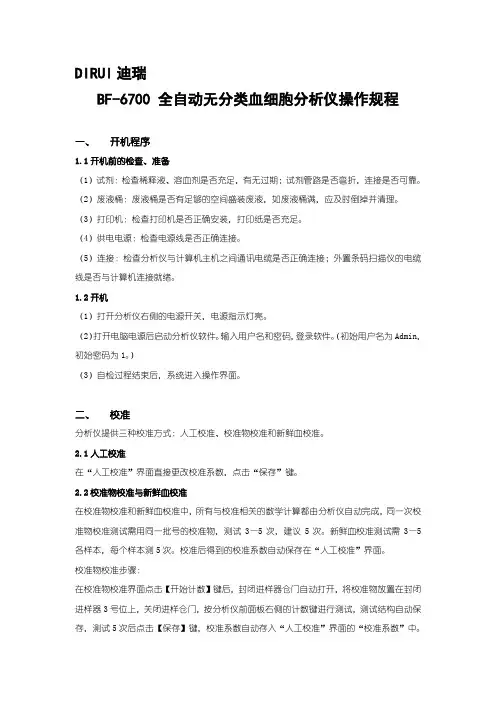
全血细胞分析仪操作流程
- 格式:doc
- 大小:16.36 KB
- 文档页数:4
全血细胞分析仪操作流程
英文回答:
The operating procedure of a whole blood cell analyzer
typically involves the following steps:
1. Sample Preparation: Start by collecting a blood
sample from the patient using a sterile needle and syringe.
Ensure that the sample is properly labeled and stored at
the required temperature until analysis. It is important to
follow the standard safety precautions while handling and
disposing of the blood sample.
2. Calibration and Quality Control: Before running any
patient samples, it is crucial to calibrate the analyzer
using appropriate calibration materials provided by the
manufacturer. This ensures the accuracy and reliability of
the results. Additionally, perform regular quality control
checks using control materials to verify the performance of
the analyzer.
3. Sample Loading: Open the analyzer's sample loading
compartment and carefully place the blood sample into the
designated sample cup or tube. Ensure that the sample is
properly sealed to prevent any contamination or spillage.
4. Analysis: Close the sample loading compartment and
initiate the analysis process. The analyzer will
automatically aspirate a small volume of the sample and
perform various measurements, such as complete blood count
(CBC), white blood cell differential, and hemoglobin
concentration. The analysis may take a few minutes to
complete, depending on the instrument.
5. Result Interpretation: Once the analysis is complete,
the analyzer will generate a report with various parameters
and their corresponding values. Interpret the results based
on the reference ranges provided by the manufacturer or
established medical guidelines. Consult with a healthcare
professional if any abnormal findings are observed.
6. Maintenance and Troubleshooting: After each analysis, clean the analyzer according to the manufacturer's
instructions to avoid cross-contamination. Regularly
perform maintenance procedures, such as cleaning the sample
probe, replacing reagents, and ensuring proper instrument
calibration. In case of any instrument malfunction or
unexpected results, consult the instrument's user manual or
contact technical support for troubleshooting assistance.
中文回答:
全血细胞分析仪的操作流程通常包括以下步骤:
1. 样本准备,使用无菌针头和注射器从患者身上采集血样。确保样本被正确标记,并在所需温度下储存,直到进行分析。在处理和处理血样时,遵循标准的安全预防措施是非常重要的。
2. 校准和质量控制,在运行任何患者样本之前,使用制造商提供的适当的校准材料对分析仪进行校准。这可以确保结果的准确性和可靠性。此外,使用控制材料进行定期质量控制检查,以验证分析仪的性能。
3. 样本加载,打开分析仪的样本加载仓,将血样小心地放入指定的样本杯或管中。确保样本被正确密封,以防止任何污染或泄漏。
4. 分析,关闭样本加载仓,启动分析过程。分析仪将自动吸取少量样本,并进行各种测量,如完整血细胞计数(CBC)、白细胞分类计数和血红蛋白浓度。分析过程可能需要几分钟,具体时间取决于仪器的性能。
5. 结果解读,分析完成后,分析仪将生成一个包含各种参数及其相应值的报告。根据制造商提供的参考范围或已建立的医学指南解读结果。如果发现任何异常结果,请咨询医疗专业人员。
6. 维护和故障排除,每次分析后,根据制造商的说明书清洁分析仪,以避免交叉污染。定期进行维护程序,如清洁样本探针、更换试剂和确保正确的仪器校准。如果出现任何仪器故障或意外结果,可以查阅仪器的用户手册或联系技术支持进行故障排除。