
一般将来时和过去进行时
- 格式:ppt
- 大小:556.00 KB
- 文档页数:21
一般将来时和过去将来时的用法
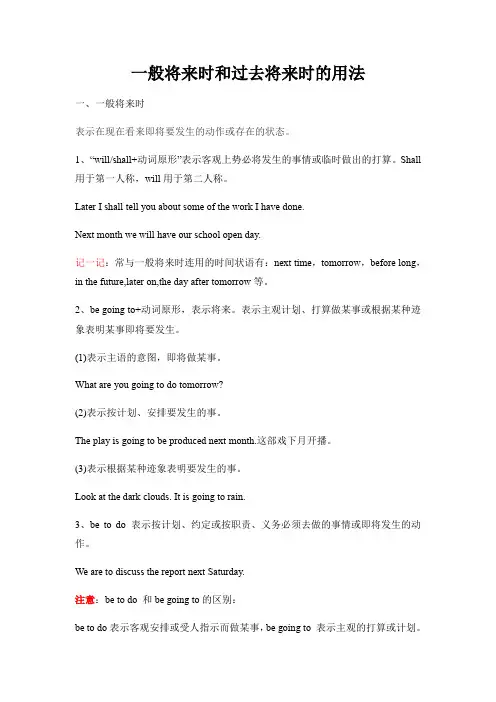
一、一般将来时
表示在现在看来即将要发生的动作或存在的状态。
1、“will/shall+动词原形”表示客观上势必将发生的事情或临时做出的打算。Shall用于第一人称,will用于第二人称。
Later I shall tell you about some of the work I have done.
Next month we will have our school open day.
记一记:常与一般将来时连用的时间状语有:next time,tomorrow,before long,in the future,later on,the day after tomorrow等。
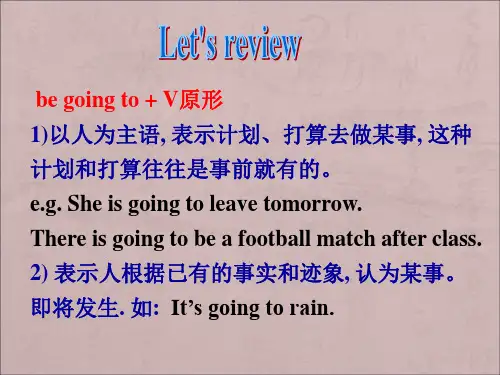
2、be going to+动词原形,表示将来。表示主观计划、打算做某事或根据某种迹象表明某事即将要发生。
(1)表示主语的意图,即将做某事。
What are you going to do tomorrow?
(2)表示按计划、安排要发生的事。
The play is going to be produced next month.这部戏下月开播。
(3)表示根据某种迹象表明要发生的事。
Look at the dark clouds. It is going to rain.
3、be to do 表示按计划、约定或按职责、义务必须去做的事情或即将发生的动作。
We are to discuss the report next Saturday.
注意:be to do 和be going to的区别:
be to do表示客观安排或受人指示而做某事,be going to 表示主观的打算或计划。 I am to play football tomorrow. 明天下午我去踢球。(客观安排)
I am going to play football tomorrow. 明天下午我想去体足球。(主观打算)
让学习成为一种习惯!
诚信比生命更重要! 1 将来进行时和过去将来时小练
I. 单项选择。
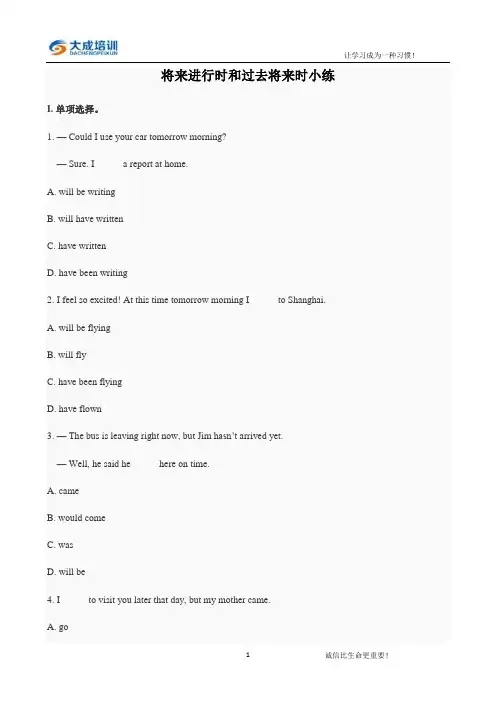
1. — Could I use your car tomorrow morning?
— Sure. I _____ a report at home.
A. will be writing
B. will have written
C. have written
D. have been writing
2. I feel so excited! At this time tomorrow morning I _____ to Shanghai.
A. will be flying
B. will fly
C. have been flying
D. have flown
3. — The bus is leaving right now, but Jim hasn’t arrived yet.
— Well, he said he _____ here on time.
A. came
B. would come
C. was
D. will be
4. I _____ to visit you later that day, but my mother came.
A. go 让学习成为一种习惯!
一般现在时、一般过去时、现在进行时、一般将来时 专题训练
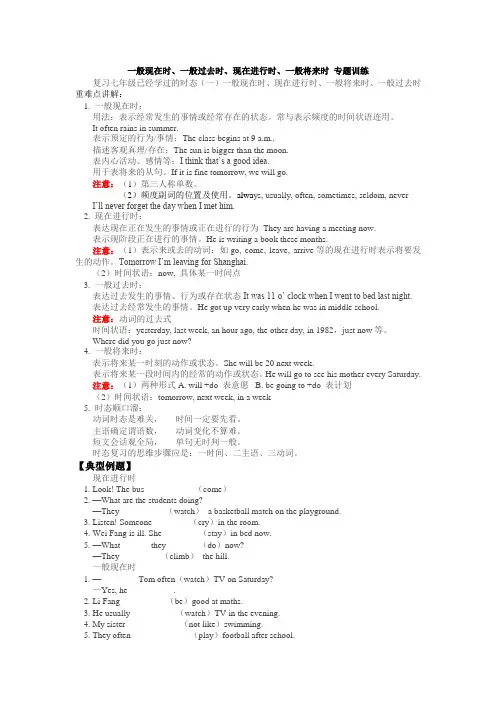
复习七年级已经学过的时态(一)一般现在时、现在进行时、一般将来时、一般过去时
重难点讲解:
1. 一般现在时:
用法:表示经常发生的事情或经常存在的状态。常与表示频度的时间状语连用。
It often rains in summer.
表示预定的行为/事情;The class begins at 9 a.m..
描述客观真理/存在;The sun is bigger than the moon.
表内心活动、感情等;I think that’s a good idea.
用于表将来的从句。If it is fine tomorrow, we will go.
注意:(1)第三人称单数。
(2)频度副词的位置及使用。always, usually, often, sometimes, seldom, never
I’ll never forget the day when I met him.
2. 现在进行时:
表达现在正在发生的事情或正在进行的行为 They are having a meeting now.
表示现阶段正在进行的事情。He is writing a book these months.
注意:(1)表示来或去的动词:如go, come, leave, arrive等的现在进行时表示将要发生的动作。Tomorrow I’m leaving for Shanghai.
(2)时间状语:now, 具体某一时间点
3. 一般过去时:
表达过去发生的事情、行为或存在状态It was 11 o’ clock when I went to bed last night.
表达过去经常发生的事情。He got up very early when he was in middle school.
注意:动词的过去式
时间状语:yesterday, last week, an hour ago, the other day, in 1982,just now等。

一般将来时与过去完成时
I. 选择填空
1. Li Ming said he _____happy if Brian_____to China next month.
A. as; come B. was; would come
C. would be; came D. will be; come
2. Jenny said she _____her holiday in China.
A. spent B. would spent
C. was going to spent D. would spend
3. —What did your son say in the letter?
—He told me that he ______ the Disney World the next day.
A. will visit B. has visited
C. is going to visit D. would visit
4. I hoped Tina ______ to my birthday party on time the next Wednesday.
A. to come B. is coming
C. will come D. was coming
5. Father said that he ______ me to Beijing the next year.
A. took B. would take C. takes D. will take
6. We were not sure whether they ______ more vegetables.
A. are going to grow B. were going to grow
C. will grow D. have grown