高一_直接引语变间接引语
- 格式:doc
- 大小:45.00 KB
- 文档页数:2
一、概述
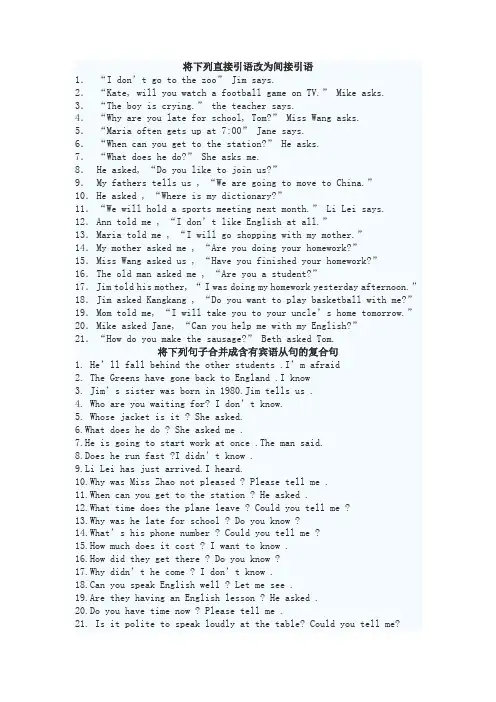
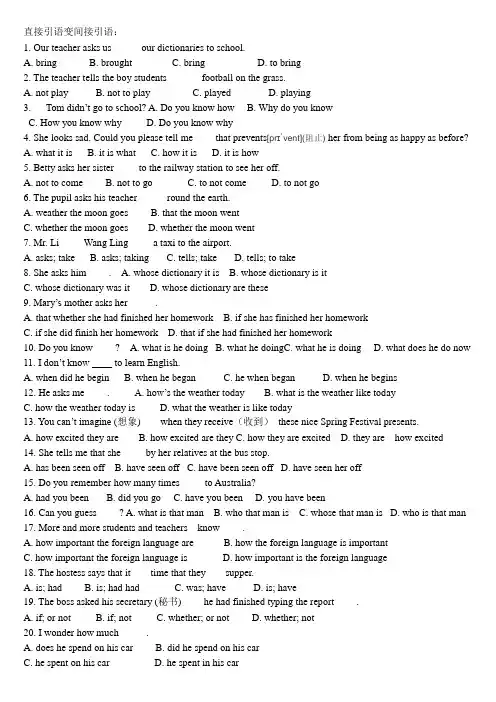
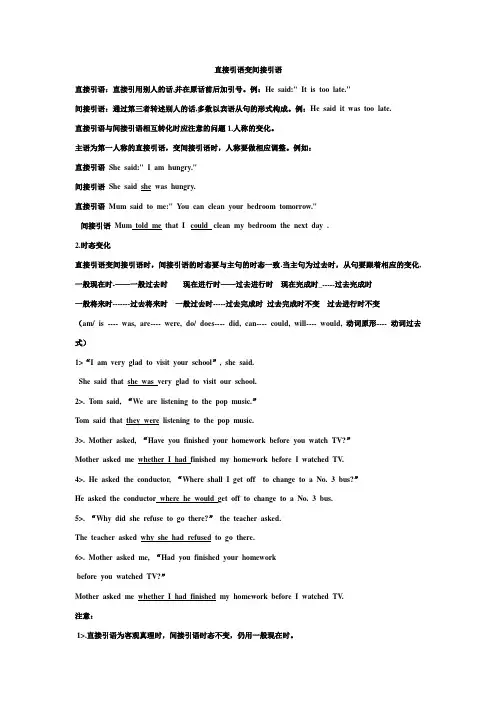
引用或转述别人说的话时有两种方法:直接引述别人的原话,这叫做直接引语(direct speech)。用自己的话转述别人的话,叫间接引语(indirect speech)。一般地讲,直接引语前后要加引号,间接引语不用引号,而用宾语从句来表达。
Mr. Black said, “I'm busy.”布菜克先生说:“我很忙”。(直接引语)
Mr. Black said that he was busy.布菜克先生说他很忙。(宾语从句是间接引语)
二,变化
1、人称的变化
直接引语改为间接引语人称要相应的变化,第一,二人称都要变。第三人称(he,him,his,she,her,hers, it,its, they, their,theirs,them)变为间接引语时,人称不变。
He said , “I like it very much.” 他说:“我非常喜欢它”。
→He said that he liked it very much. 他说他非常喜欢它。(I改为he, it不变)
He said, “You told me this story.”他说:“你给我讲过这个故事。”
→He said that I had told him that story.他说我给他讲过那个故事。
He said to me, “She’s left her book in your room”.
他对我说:“她把书放在你的房间里去了。”
He told me that she had left her book in my room. 他对我说她把书放在我的房间里去了。(She’s→she had, her不变,your→my)
2、时态的变化
(1)主句的谓语动词是一般过去时
注意:直接引语如果是客观真理、名人名言、与一个具体的过去时间连用说明客观事实时,变为间接引语时,时态不变。
The teacher said, “The earth is round. ”老师说:“地球是圆的。”
→The teacher said that the earth is round.老师说地球是圆的。 直接引语 间接引语
一般现在时 一般过去时
现在进行时 过去进行时
现在完成时 过去完成时
一般过去时 过去完成时
过去完成时 过去完成时(不变)
一般将来时 过去将来时
一般将来进行时 过去将来进行时
一般将来完成时 过去将来完成时 He said, “I was born in Shangdong in 1965.” 他说: “我1965年生于山东。”
→He said that he was born in Shangdong in 1965. 他说他1965年生于山东。
(2)主句的谓语动词是现在时或将来时
如果主句的谓语动词是现在时或将来时,直接引语变为间接引语时,时态一律不变
He says, “I finished the work.”他说:“我做完工作了。”
He says that he finished the work. 他说他做完工作了。
He will say, “I have watered the flowers.” 他会说:“我己经浇花了。”
He will say he has watered the flowers. 他会说他己经浇花了。
3、指示代词、时间状语和地点状语的相应变化
直接引语 间接引语
指示代词 this/these that/those
时间状语 now then
today that day
tonight that night
this week (month„) that week (month„)
yesterday the day before
last week (month„) the week (month„)before
two weeks (month)ago two weeks (months)before
tomorrow the next day
next week (month„) the next week (month„)
地点状语 here there
动 词 come go
bring take