jacs
- 格式:pdf
- 大小:1.23 MB
- 文档页数:7
© XXXX American Chemical Society
■
Figure 1. Representative examples of iron catalysts for asymmetric epoxidations, and current substrate scope.
system are the requirement of relatively high catalyst loadings (up to 10%) and long reaction times (from 24 to 168 h). In addition, α and α′ substituted enones are not valid substrates for the system. Highly enantioselective epoxidations that could
Article /JACS来自Iron Catalyzed Highly Enantioselective Epoxidation of Cyclic Aliphatic Enones with Aqueous H2O2
Olaf Cusso,́ † Marco Cianfanelli,† Xavi Ribas,† Robertus J. M. Klein Gebbink,*,‡ and Miquel Costas*,†
†
QBIS Research Group, Institut de Química Computacional i Catal̀ isi (IQCC) and Departament de Química, Universitat de Girona, Campus Montilivi, Girona E-17071, Catalonia Spain ‡ Organic Chemistry & Catalysis, Debye Institute for Nanomaterials Science, Utrecht University, Universiteitsweg 99, 3584 CG Utrecht, The Netherlands
INTRODUCTION Asymmetric epoxidation is a valuable reaction because chiral epoxides are versatile building blocks in synthetic organic chemistry.1−4 Catalytic epoxidation methodologies based on iron complexes and peroxides (especially H2O2), which can be considered as biologically inspired, are interesting because of the availability and low environmental impact of these reagents.5−16 Despite their appeal, the approach is challenging because it requires the design of iron coordination complexes that can activate the OO bond of peroxides to create selective metalbased oxidants and avoid the often facile production of hydroxyl radicals via the Fenton reaction.10,11,17,18 Recent reports have disclosed successful examples where asymmetric epoxidation is accomplished, in some cases producing high levels of stereoselectivity (Figure 1).19−27 Highly enantioselective epoxidation of difficult substrates such as β,β-disubstituted aromatic enones and α-alkyl styrenes, not accessible by other methods, have also been described.23,24 However, a major limitation still resides in the fact that iron catalyzed asymmetric epoxidations have been limited in scope to olefins conjugated to aromatic rings19−35 and remains to be accomplished for aliphatic substrates. Particularly interesting are cyclic aliphatic enones. Cyclic α-epoxide enones are structures found in a number of natural products,36 and are also valuable synthons that can be further elaborated into precious building blocks for organic synthesis.37 However, their asymmetric epoxidation is notoriously difficult. Modest to good enantioselectivities have been obtained with chiral hydroperoxides,38,39 poly(amino acids) catalysts,40 ammonium salt catalysts,41−43 and metal based catalysts,21,22,44 but excellent enantioselectivities have only been described by List36,45 and coworkers using cinchona alkaloid derived organocatalysts and hydrogen peroxide as oxidant. The main drawbacks of this
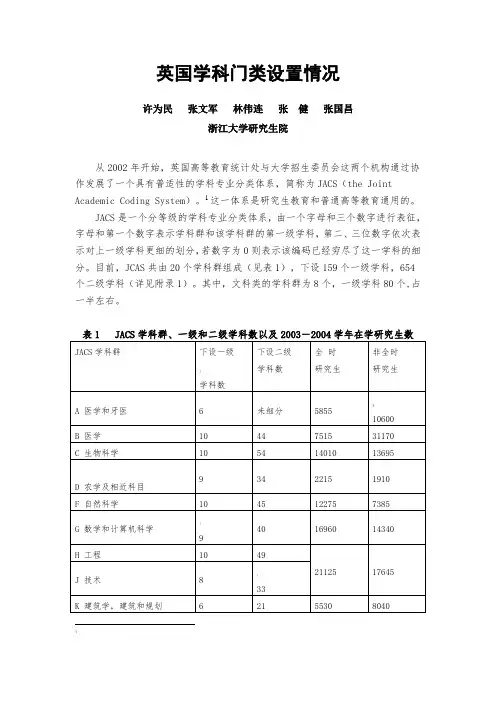
(ee)% 75 84 72 81 85 74 75 77 88 90 90
1 dMM 1 IQ 1 TIPS 1 2 3 4 5 6 7 7
Unless stated, reaction conditions are (S,S′)-catalyst (1 mol %), H2O2 (2.3 equiv), and 2-eha (1.4 equiv) in CH3CN at −30 °C during 30 min. bEpoxide yields and substrate conversion determined by GC. Ee’s determined by GC with a chiral stationary phase. The absolute configuration (2R,3R) of the epoxide was determined from its optical rotation, and by comparison from the literature.21 c3 mol % of catalyst.
Received: December 4, 2015
A
DOI: 10.1021/jacs.5b12681 J. Am. Chem. Soc. XXXX, XXX, XXX−XXX
Journal of the American Chemical Society improve these aspects will be a competitive alternative. In this regard, an iron catalyzed H2O2-activation methodology was envisioned as a potential option because they commonly entail powerful, fast reacting oxidants.12 However, the high reactivity of this kind of systems can be rapidly recognized as a challenging aspect for elaborating them into highly enantioselective catalysts. Herein, we face some of these challenges by describing the first example of an iron catalyst that epoxidizes cyclic aliphatic enones in high yields and with good to excellent stereoselectivities, employing H2O2 as oxidant. The optimum catalyst is C1symmetric and contains a tetradentate ligand built in a modular manner by combining a bulky picoline, a benzimidazole ring, and a chiral bipyrrolidine (catalyst 7, Figure 2). Reactions are fast (30
■
Figure 1. Representative examples of iron catalysts for asymmetric epoxidations, and current substrate scope.
system are the requirement of relatively high catalyst loadings (up to 10%) and long reaction times (from 24 to 168 h). In addition, α and α′ substituted enones are not valid substrates for the system. Highly enantioselective epoxidations that could
Article /JACS来自Iron Catalyzed Highly Enantioselective Epoxidation of Cyclic Aliphatic Enones with Aqueous H2O2
Olaf Cusso,́ † Marco Cianfanelli,† Xavi Ribas,† Robertus J. M. Klein Gebbink,*,‡ and Miquel Costas*,†
†
QBIS Research Group, Institut de Química Computacional i Catal̀ isi (IQCC) and Departament de Química, Universitat de Girona, Campus Montilivi, Girona E-17071, Catalonia Spain ‡ Organic Chemistry & Catalysis, Debye Institute for Nanomaterials Science, Utrecht University, Universiteitsweg 99, 3584 CG Utrecht, The Netherlands
INTRODUCTION Asymmetric epoxidation is a valuable reaction because chiral epoxides are versatile building blocks in synthetic organic chemistry.1−4 Catalytic epoxidation methodologies based on iron complexes and peroxides (especially H2O2), which can be considered as biologically inspired, are interesting because of the availability and low environmental impact of these reagents.5−16 Despite their appeal, the approach is challenging because it requires the design of iron coordination complexes that can activate the OO bond of peroxides to create selective metalbased oxidants and avoid the often facile production of hydroxyl radicals via the Fenton reaction.10,11,17,18 Recent reports have disclosed successful examples where asymmetric epoxidation is accomplished, in some cases producing high levels of stereoselectivity (Figure 1).19−27 Highly enantioselective epoxidation of difficult substrates such as β,β-disubstituted aromatic enones and α-alkyl styrenes, not accessible by other methods, have also been described.23,24 However, a major limitation still resides in the fact that iron catalyzed asymmetric epoxidations have been limited in scope to olefins conjugated to aromatic rings19−35 and remains to be accomplished for aliphatic substrates. Particularly interesting are cyclic aliphatic enones. Cyclic α-epoxide enones are structures found in a number of natural products,36 and are also valuable synthons that can be further elaborated into precious building blocks for organic synthesis.37 However, their asymmetric epoxidation is notoriously difficult. Modest to good enantioselectivities have been obtained with chiral hydroperoxides,38,39 poly(amino acids) catalysts,40 ammonium salt catalysts,41−43 and metal based catalysts,21,22,44 but excellent enantioselectivities have only been described by List36,45 and coworkers using cinchona alkaloid derived organocatalysts and hydrogen peroxide as oxidant. The main drawbacks of this
(ee)% 75 84 72 81 85 74 75 77 88 90 90
1 dMM 1 IQ 1 TIPS 1 2 3 4 5 6 7 7
Unless stated, reaction conditions are (S,S′)-catalyst (1 mol %), H2O2 (2.3 equiv), and 2-eha (1.4 equiv) in CH3CN at −30 °C during 30 min. bEpoxide yields and substrate conversion determined by GC. Ee’s determined by GC with a chiral stationary phase. The absolute configuration (2R,3R) of the epoxide was determined from its optical rotation, and by comparison from the literature.21 c3 mol % of catalyst.
Received: December 4, 2015
A
DOI: 10.1021/jacs.5b12681 J. Am. Chem. Soc. XXXX, XXX, XXX−XXX
Journal of the American Chemical Society improve these aspects will be a competitive alternative. In this regard, an iron catalyzed H2O2-activation methodology was envisioned as a potential option because they commonly entail powerful, fast reacting oxidants.12 However, the high reactivity of this kind of systems can be rapidly recognized as a challenging aspect for elaborating them into highly enantioselective catalysts. Herein, we face some of these challenges by describing the first example of an iron catalyst that epoxidizes cyclic aliphatic enones in high yields and with good to excellent stereoselectivities, employing H2O2 as oxidant. The optimum catalyst is C1symmetric and contains a tetradentate ligand built in a modular manner by combining a bulky picoline, a benzimidazole ring, and a chiral bipyrrolidine (catalyst 7, Figure 2). Reactions are fast (30