
be-going-to--与will的用法及区别
- 格式:ppt
- 大小:2.80 MB
- 文档页数:18


be going to do和will的区别与用法
1、be going to 用于主观判断,及说话人主观上计划或安排将要去做的事情.will则多用于客观的情况,即客观上将要发生的事情.
2、be going to 表示近期、眼下就要发生的事情,will 表示的将来时间则较远一些.
扩展资料
用法区别:
一、可表示说话人按照他的意图将要发生或进行的动作时,各有侧重:
若表示没有经过事先计划或考虑,而是在说话的当时临时想到的意图或临时作出的`决定时,则要用will.若表示经过事先考虑好的意图时,要用be going to.例如:
I’ll answer the telephone.我去接电话.(事先没经过考虑)
I’m going to meet him at the railway station. 我去火车站接他.(已经过考虑)
二、在有条件从句的主句中一般不用 be going to, 而多用will,因为此时多少带有些意愿.例如:
I won’t go if he doesn’t come.他不来,我就不去.
三、在正式的通知(如新闻媒体公布的官方消息,气象预报等)中用will结构.例如:
Ji’an will be cloudy with the temperature from eighteen to twenty-eight.吉安阴,气温十八到二十八摄氏度.
四、表示有迹象表明要发生某事,只用be going to,不用will.例如:
Look at the clouds, it’s going to be another storm.瞧瞧这些云,暴风雨又要来了.。
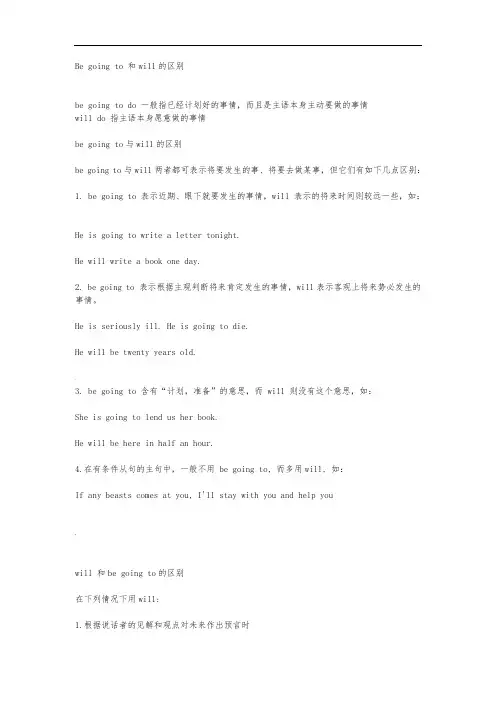
Be going to 和will的区别be going to do 一般指已经计划好的事情,而且是主语本身主动要做的事情will do 指主语本身愿意做的事情be going to与will的区别be going to与will两者都可表示将要发生的事、将要去做某事,但它们有如下几点区别:1. be going to 表示近期、眼下就要发生的事情,will 表示的将来时间则较远一些,如:.He is going to write a letter tonight.He will write a book one day.2. be going to 表示根据主观判断将来肯定发生的事情,will表示客观上将来势必发生的事情。
He is seriously ill. He is going to die.He will be twenty years old.,3. be going to 含有“计划,准备”的意思,而 will 则没有这个意思,如:She is going to lend us her book.He will be here in half an hour.4.在有条件从句的主句中,一般不用 be going to, 而多用will, 如:If any beasts comes at you, I'll stay with you and help you·will 和be going to的区别在下列情况下用will:1.根据说话者的见解和观点对未来作出预言时I think Smiley will make a good footballer.Smith will beat Patterson with a knock-out in the second round.:2.在说话时突然作出的决定时,一般用will的缩约式’llI’m tired. I think I’ll go to bed.— Come to supper.—OK, thanks. I’ll bring a bottle.3.表示意图、提议、许诺、自愿做某事或坚持做某事时—There’s the door-bell. —I’ll go.》I will stop smoking— I really will!4.表示请求和邀请时Will you give me a handWill you come in and have a drink5.表示命令或威胁时@You will start work at six o’clock.I’ll bit you if you do that again.6.表示习惯和规律时She will greet me when she meets me.Man will die.在下列情况下用be going to`1.根据现在所见,预计不久肯定会发生的事情时Look!—it’s going to rain!The car is going to turn over.2.谈及打算或事先决定了的事情时What are you going to be when you grow up:—Why have you torn the paper into pieces—I am going to rewrite it.附加内容:将来时的六种表示方法be going to do将会...%一般用于将来时态例句与用法:1. I am assuming that the present situation is going to continue.我认为目前的情况将会继续下去.2. It's going to cost 200 or as near as dammit.这要花200英镑上下.3. How did you find out that Burns was going to be promoted你是怎么知道伯恩斯将会得到提升的]4. You must be out of your mind if you think I'm going to lend you 50! 你以为我会借给你50英镑, 你准是疯了!5. I'm just going to check in these books at the library.我要去图书馆还这些书。
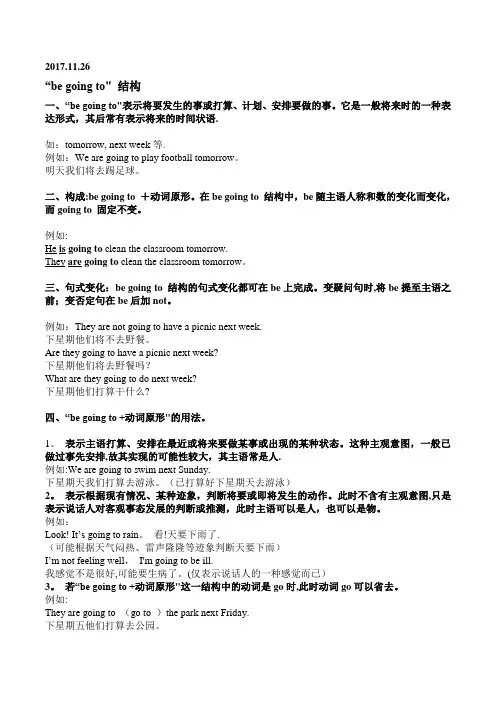
2017.11.26“be going to" 结构一、“be going to"表示将要发生的事或打算、计划、安排要做的事。
它是一般将来时的一种表达形式,其后常有表示将来的时间状语.如:tomorrow, next week等.例如:We are going to play football tomorrow。
明天我们将去踢足球。
二、构成:be going to +动词原形。
在be going to 结构中,be随主语人称和数的变化而变化,而going to 固定不变。
例如:He is going to clean the classroom tomorrow.They are going to clean the classroom tomorrow。
三、句式变化:be going to 结构的句式变化都可在be上完成。
变疑问句时,将be提至主语之前;变否定句在be后加not。
例如:They are not going to have a picnic next week.下星期他们将不去野餐。
Are they going to have a picnic next week?下星期他们将去野餐吗?What are they going to do next week?下星期他们打算干什么?四、“be going to +动词原形"的用法。
1。
表示主语打算、安排在最近或将来要做某事或出现的某种状态。
这种主观意图,一般已做过事先安排,故其实现的可能性较大,其主语常是人.例如:We are going to swim next Sunday.下星期天我们打算去游泳。
(已打算好下星期天去游泳)2。
表示根据现有情况、某种迹象,判断将要或即将发生的动作。
此时不含有主观意图,只是表示说话人对客观事态发展的判断或推测,此时主语可以是人,也可以是物。
例如:Look! It’s going to rain。