
动词的时态和语态-PPT课件
- 格式:ppt
- 大小:816.00 KB
- 文档页数:25


实用文档 动词的时态和语态
时 态
一般现在时
(1)可表示客观真理、科学事实。
The sun rises in the east and sets in the west.
太阳从东方升起,从西方落下。
(2)可用在由if,unless引导的条件状语从句,由even/if/though引导的让步状语从句,由when,before,until/till,as soon as,the moment引导的时间状语从句,由no
matter what/who/when/where/how或whatever,whoever等引导的让步状语从句中,这时主句往往表将来或主句是祈使句。
I’ll go with you as soon as I finish it.
我一做完,就与你一同去。
Whatever you say,I will not change my mind.
无论你说什么,我都不会改变主意。
一般过去时
表示“刚才,在过去”之意,暗示现在已“不再这样”。
—Your phone number again?I didn’t quite catch it.
——再重述一下你的电话号码好吗?我没记下来。
—It’s 9568686. 实用文档 ——是9568686。
一般将来时
(1)“will+动词原形”表示事物的固有属性与必然趋势。
Fish will die without water.离开水,鱼就会死。
(2)“be going to+动词原形”可表示根据迹象对未来进行推断。
Look at the dark clouds.It is going to rain.
看那乌云,要下雨了。
(3)“be about to+动词原形”表示立即的将来,很少与时间状语连用。
The train is about to start.火车就要开了。
(4)位移动词如come,go,arrive等,其一般现在时表按时间表将要发生的事,现在进行时可表计划、安排要做的事。
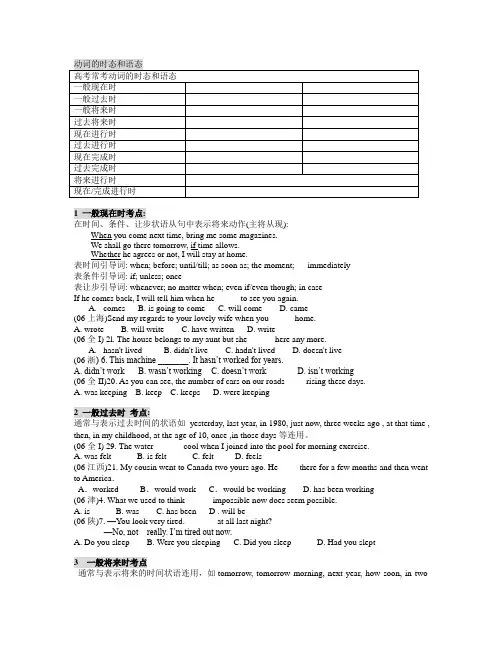
动词的时态和语态
高考常考动词的时态和语态
一般现在时
一般过去时
一般将来时
过去将来时
现在进行时
过去进行时
现在完成时
过去完成时
将来进行时
现在/完成进行时
1 一般现在时考点:
在时间、条件、让步状语从句中表示将来动作(主将从现):
When you come next time, bring me some magazines.
We shall go there tomorrow, if time allows.
Whether he agrees or not, I will stay at home.
表时间引导词: when; before; until/till; as soon as; the moment; immediately
表条件引导词: if; unless; once
表让步引导词: whenever; no matter when; even if/even though; in case
If he comes back, I will tell him when he _____ to see you again.
A. comes B. is going to come C. will come D. came
(06上海)Send my regards to your lovely wife when you _____ home.
A. wrote B. will write C. have written D. write
(06全I) 2l. The house belongs to my aunt but she______ here any more.
A. hasn't lived B. didn't live C. hadn't lived D. doesn't live

初中英语常用词组复习(3)
动词的时态和语态
(一)动词是谓语动所表示的动作或情况发生时间的各种形式。英语动词有
16种时态,但是常用的只有9种:一般现在时、一般过去时、一般将来时、现
在进行时、过去进行时、现在完成时、过去完成时、过去将来时、现在完成进
行时。下面分别介绍。
1、一般现在时的用法
1)表示经常性、习惯性的动作;表示现在的状态、特征和真理。句中常用
often,usually,everyday等时间状语。例如:
a.Hegoestoschooleveryday.
b.Heisveryhappy.
c.Theearthmovesaroundthesun.
2)在时间状语从句和条件状语从句中,用一般现在时表示将来。例如:
a.Ifyoucomethisafternoon,we’llhaveameeting.
b.WhenIgraduate,I’llgotocountryside.
3)有时这个时态表示按计划、规定要发生的动作(句中都带有时间状语),但
限于少数动词,如:begin,come,leave,go,arrive,start,stop,
return,open,close等。例如:
a.Themeetingbeginsatseven.
b.Therainstartsatnineinthemorning.
4)表示状态和感觉的动词(be,like,hate,think,remember,find,sound
等)常用一般现在进行时。
a.IlikeEnglishverymuch.
b.Thestorysoundveryinteresting.
5)书报的标题、小说等情节介绍常用一般现在时。
2.一般现在时的用法
1)表示过去某时间发生的事、存在的状态或过反复发生的动作。
a.HesawMr.Wangyesterday.
b.Heworkedinafactoryin1986.
2)表示过去经常发生的动作,也可用“usedto“和“would+动词原
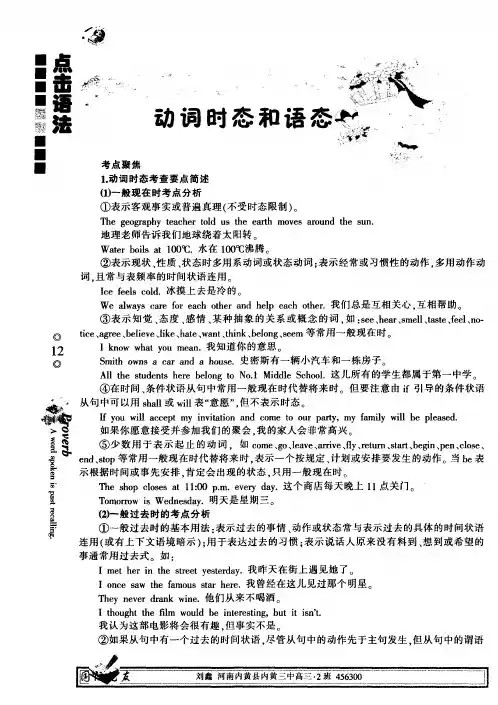
动词时态和语态
考点聚焦 1.动词时态考查要点简述
(1)一般现在时考点分析 ①表示客观事实或普遍真理(不受时态限制)。
The geography teacher told US the earth moves around the sun. 地理老师告诉我们地球绕着太阳转。
Water boils at IO0 ̄C.水在IO0 ̄C沸腾
②表示现状、性质、状态时多用系动词或状态动词;表示经常或习惯性的动作,多用动作动 词,且常与表频率的时间状语连用。
Ice feels cold.冰摸上去是冷的 We always care for each other and help each other.我们总是互相关心,互相帮助。
③表示知觉、态度、感情、某种抽象的关系或概念的词,如:see、hear、smell、taste、feel、no. tice、agree、believe、like、hate、want、think、belong、seem等常用一般现在时。 I know what voU mean.我知道你的意思。 Smith owns a car and a house.史密斯有一辆小汽车和一栋房子
All the students here bel0ng t0 No.1 Middle Schoo1.这儿所有的学生都属于第一中学。
④在时间、条件状语从句中常用一般现在时代替将来时。但要注意由if引导的条件状语
从句中可以用shall或will表“意愿”。但不表示时态。
If you will accept my invitation and come to our party.my family will be pleased. 如果你愿意接受并参加我们的聚会.我的家人会非常高兴。
⑤少数用于表示起止的动词,如come、go、leave、arrive、fly、return、start、begin、pen、close、 end、stop等常用一般现在时代替将来时。表示一个按规定、计划或安排要发生的动作。当be表 示根据时问或事先安排.肯定会出现的状态,只用一般现在时。