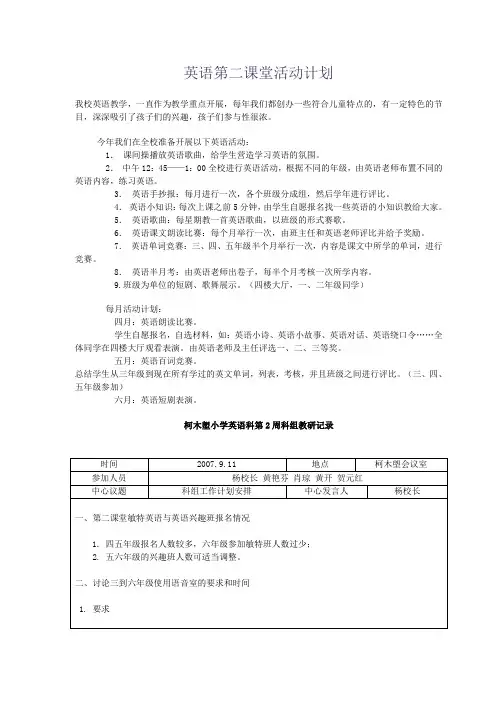
英语教师第二课堂工作计划As an English teacher, the second classroom work plan plays a crucial role in ensuring effective teaching and learning. It is important to have a clear plan in place to guide the activities and lessons in the classroom. This work plan will outline the goals, objectives, and activities for the second classroom, as well as the resources and materials needed to achieve these goals.Goals and Objectives:The main goal of the second classroom work plan is to provide students with a well-rounded and comprehensive English education. This includes helping students develop their reading, writing, speaking, and listening skills, as well as their understanding of grammar and vocabulary. The objectives of the work plan are to:- Engage students in meaningful learning experiences that will help them improve their English skills.- Provide students with opportunities to practice and apply their English knowledge in a variety of contexts.- Foster a positive and supportive learning environment that encourages students to take risks and try new things.- Help students develop a love for English language and literature.Activities:In order to achieve the goals and objectives of the work plan, a variety of activities will be implemented in the second classroom. These activities will include:- Reading: Students will engage in reading activities such as silent reading, guided reading, and shared reading. They will also participate in literature circles, book clubs, and reading workshops to explore different genres and authors.- Writing: Students will be given opportunities to practice different forms of writing, such as narrative, argumentative, and expository writing. They will also work on grammar and editing skills to improve their writing.- Speaking and Listening: Students will engage in discussions, debates, and oral presentations to practice their speaking and listening skills. They will also work on pronunciation and intonation to improve their spoken English.- Grammar and Vocabulary: Students will work on building their grammar and vocabulary knowledge through activities such as word games, vocabulary quizzes, and grammar exercises.- Projects: Students will work on individual and group projects that require them to apply their English skills in authentic contexts. This may include creating a magazine, writing a play, or presenting a research project.Resources and Materials:In order to carry out the activities outlined in the work plan, a variety of resources and materials will be needed. These may include:- Textbooks: A selection of English language textbooks will be used to provide students with a structured approach to learning English.- Supplementary Materials: Additional materials such as readers, workbooks, and audiovisual resources will be used to supplement the textbooks and provide students with a variety of learning experiences.- Technology: Utilizing technology such as computers, tablets, and interactive whiteboards will help enhance the learning experience for students and provide them with access to a wealth of English language resources.- Classroom Library: A collection of English language books, magazines, and other reading materials will be available for students to use during independent reading time.- Writing Supplies: Students will have access to a variety of writing supplies, including notebooks, pens, pencils, and markers, to help them complete their writing assignments.Assessment:To ensure that students are meeting the goals and objectives outlined in the work plan, assessments will be conducted to measure their progress. These assessments may include:- Formative Assessments: Ongoing assessments such as quizzes, essays, and class discussions will be used to monitor students' progress and provide them with feedback on their learning.- Summative Assessments: Periodic assessments such as tests, projects, and presentations will be used to evaluate students' overall understanding of the English language and their ability to apply their skills in various contexts.- Rubrics: Clear and specific rubrics will be used to evaluate students' work and provide them with meaningful feedback on their performance.- Self-Assessment: Students will be encouraged to engage in self-assessment activities to reflect on their own learning and set goals for improvement.Professional Development:As an English teacher, it is important to continually seek professional development opportunities to improve teaching practices and stay current with the latest research in English education. This may include attending workshops, conferences, and professional development courses, as well as collaborating with other educators to share ideas and resources.In conclusion, the second classroom work plan is an essential tool for guiding the activities and lessons in the English classroom. By setting clear goals and objectives, implementing a variety of activities, and providing the necessary resources and materials, students can have a rewarding English learning experience. Additionally, ongoing assessment and professional development will help ensure that students receive a high-quality education and are able to develop their English skills to the fullest.。