仪表礼仪概述
- 格式:docx
- 大小:39.47 KB
- 文档页数:5
仪表礼仪概述
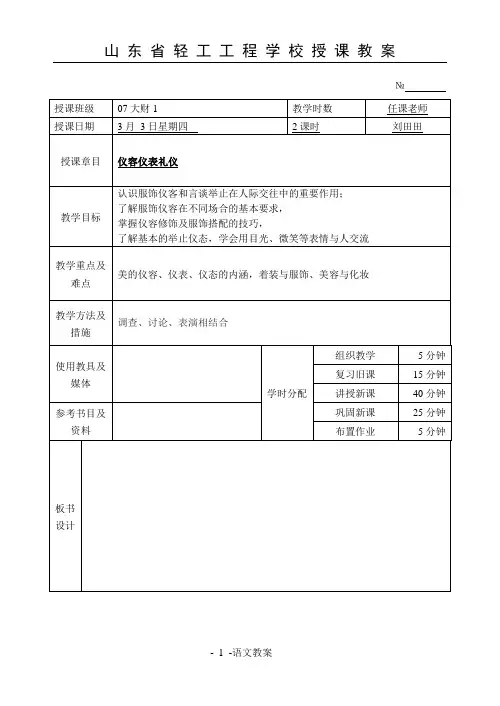
仪表礼仪是一种社会文化现象,是指人们在社交场合中,通过外在的仪表形象与言谈举止来展示自己的修养和教养。它以一种良好的仪表行为规范为基础,体现出一种尊重他人、对社会习俗有所了解,并且处事得当的态度。在现代社会中,仪表礼仪成为了人们交际行为中不可或缺的一部分。
仪表礼仪的重要性不可忽视。首先,良好的仪表礼仪能给人留下深刻的印象。无论是在求职面试还是商务会议中,一个注重仪表礼仪的人往往更容易给人留下好的印象,增强自己的竞争力。其次,仪表礼仪能够提高人际交往的顺畅度。在与他人交流时,通过遵循相应的礼仪规范,我们能够更好地沟通和理解彼此,避免冲突和误解。再次,仪表礼仪有助于塑造个人形象。一个以礼待人、举止优雅的人更容易获得他人的尊重和信任,从而得到更好的发展机会。
在仪表礼仪中,外在形象是最先给人留下印象的方面之一。首先,要注重着装。合理的着装能够展示一个人的品味和自信。在不同场合中,我们需要根据场合的特点和要求,选择适当的服装。比如在正式场合,我们应穿着合身、得体的正装,给人一种庄重而有信仰的感觉。其次,要注意仪表的整洁。无论是发型、面容还是服饰,都应保持整洁,衣着要干净整齐,不要有破损或脏污的地方。此外,干净利落的修剪指甲和整齐的鞋履也是仪表整洁的一部分。
言谈举止也是仪表礼仪中很重要的一部分。首先,要注重言辞的文明。在与他人交流时,我们要用礼貌、尊重的语言来表达自己的意见,不使用粗俗的词语或侮辱性的言辞。其次,要注意声音的抑扬顿挫。说话时,可以适当使用抑扬顿挫的语调,以表达自己的情感和语气,但不要夸张或过分夸大。此外,要注意肢体语言的运用。在交流中,肢体语言往往能够起到强调和补充语言内容的作用。但要注意不要过于夸张和恶意,以免给人留下不好的印象。
仪表礼仪还包括一些行为准则和社交习俗方面的规范。首先,要尊重他人的隐私和个人空间。在与他人相处时,要保持适当的距离,避免过度亲密或冒犯对方。其次,要遵守社会公共场所的规则。在公共场合,我们要注意维护秩序、保持安静,不要喧哗和马虎。此外,也要尊重他人的时间和安排。在与他人约定的时间和地点上,我们应准时到达,不要迟到或突然取消。
总之,仪表礼仪是一种社会价值影响和文化传承的体现。通过良好的仪表礼仪,我们能够展示自己的修养和教养,与他人更好地交流和理解。同时,它也是个人形象建设和提升的重要一环。在现代社会中,仪表礼仪已经成为了一种基本素养和必备技能。我们每个人都应该注重培养自己的仪表礼仪,以提升自己的综合素质和社交能力。只有不断追求进步和提高,我们才能更好地融入社会、与他人和谐相处,取得更多的成功和成就。Title: The Impact of Technology on Education: A Paradigm Shift
in Learning
Introduction:
Technology has revolutionized almost every aspect of our lives,
and education is no exception. Over the past few decades, there has
been a significant shift in the way students learn and how teachers teach, all thanks to the rapid advancement of technology. This
essay explores the various ways in which technology has
influenced education, examining how it has transformed the
learning experience, empowered teachers, and promoted access to
education for all.
Body:
1. Enhanced Learning Experience:
The integration of technology in education has brought about a
transformative learning experience for students. With the advent of
interactive multimedia tools, online platforms, and virtual reality
applications, students are no longer limited to passive learning
from textbooks. Instead, they can actively engage with the subject
matter through visual and auditory aids, simulations, and real-life
examples. This hands-on learning experience not only deepens
understanding but also increases student engagement and interest
in learning.
2. Personalized Learning:
Technology has enabled personalized learning, catering to the
individual needs and pace of each student. Adaptive learning
platforms can assess a student's strengths and weaknesses and
create a customized learning path accordingly. This individualized
approach ensures that students are challenged at an appropriate
level, enhancing their academic performance and fostering a sense
of achievement. Moreover, the use of education apps and digital
resources allows students to review materials at any time,
encouraging self-paced learning and independent thinking.
3. Empowered Teachers:
Technology has empowered teachers by providing them with
innovative tools and resources to deliver engaging and effective
lessons. With the aid of educational software, teachers can create
interactive presentations, virtual experiments, and online quizzes
that facilitate active participation and knowledge retention.
Additionally, cloud-based platforms and learning management
systems enable efficient lesson planning, collaboration with
colleagues, and easy assessment and feedback on students' work.
By incorporating technology, teachers can focus more on
individualized instruction and facilitating critical thinking, rather
than spending excessive time on administrative tasks.
4. Global Access to Education:
One of the most significant impacts of technology on education is
the promotion of access to quality education for students
worldwide. Online learning platforms and Massive Open Online
Courses (MOOCs) have made high-quality educational resources
available to anyone with an internet connection. This accessibility
is particularly beneficial for individuals in remote areas,
disadvantaged communities, or those who are unable to access
traditional educational institutions due to financial constraints or
physical disabilities. Through online forums and video
conferencing, students can interact with educators and peers from
diverse backgrounds, fostering cultural understanding and global
collaboration.
5. Challenges and Concerns:
While the integration of technology in education brings numerous
benefits, there are also challenges and concerns that need to be