
2020高考英语复习 情态动词和虚拟语气
- 格式:ppt
- 大小:1.43 MB
- 文档页数:61

雨竹林高考 5年高考3年模拟专题专练 2010年高考必备资料
51 情态动词和虚拟语气
第一部分 近年高考题荟萃
2009年高考题
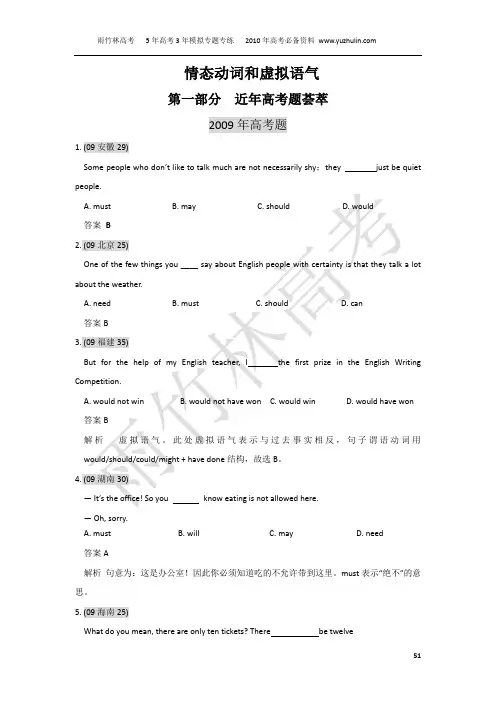
1. (09安徽29)
Some people who don’t like to talk much are not necessarily shy;they just be quiet
people.
A. must B. may
C. should D. would
答案
B
2. (09北京25)
One of the few things you ____ say about English people with certainty is that they talk a lot
about the weather.
A. need B. must C. should D. can
答案B
3. (09福建35)
But for the help of my English teacher, I the first prize in the English Writing
Competition.
A. would not win B. would not have won C. would win D. would have won
答案B
解析 虚拟语气。此处虚拟语气表示与过去事实相反,句子谓语动词用would/should/could/might + have done结构,故选B。
4. (09湖南30)
— It’s the office! So you know eating is not allowed here.
榜首部分、神态动词
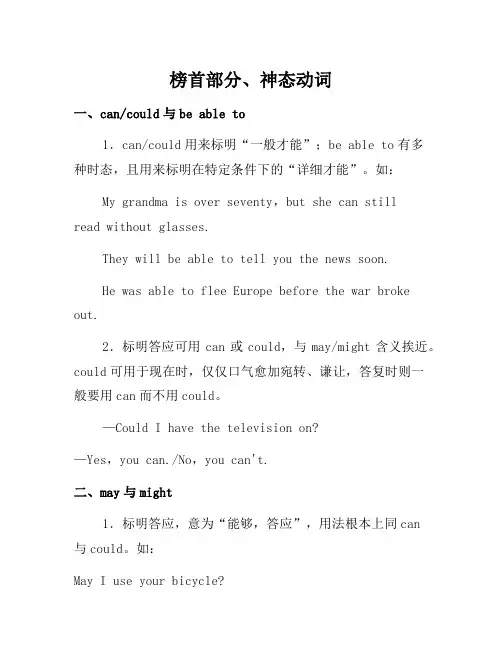
一、can/could与be able to
1.can/could用来标明“一般才能”;be able to有多种时态,且用来标明在特定条件下的“详细才能”。如:
My grandma is over seventy,but she can still
read without glasses.
They will be able to tell you the news soon.
He was able to flee Europe before the war broke
out.
2.标明答应可用can或could,与may/might含义挨近。could可用于现在时,仅仅口气愈加宛转、谦让,答复时则一般要用can而不用could。
—Could I have the television on?
—Yes,you can./No,you can't.
二、may与might
1.标明答应,意为“能够,答应”,用法根本上同can与could。如:
May I use your bicycle? 2.标明或许性,意为“或许,或许”。如:
According to the weather forecast, it may rain
tomorrow.
3.may能够放在句首,标明祝福。如:
May good luck be yours!
三、must与have to
1.must用来标明说话人的片面观点;have to标明客观的需求,着重外界压力,不得已而为之。如:
He said that they must work hard。
他说他们有必要努力工作。(片面上要做这件事)
My brother was ill, so I had to call the doctor
in the middle of the night.
我弟弟生病了,我只得半夜里把医师请来。(客观上需求做这件事)
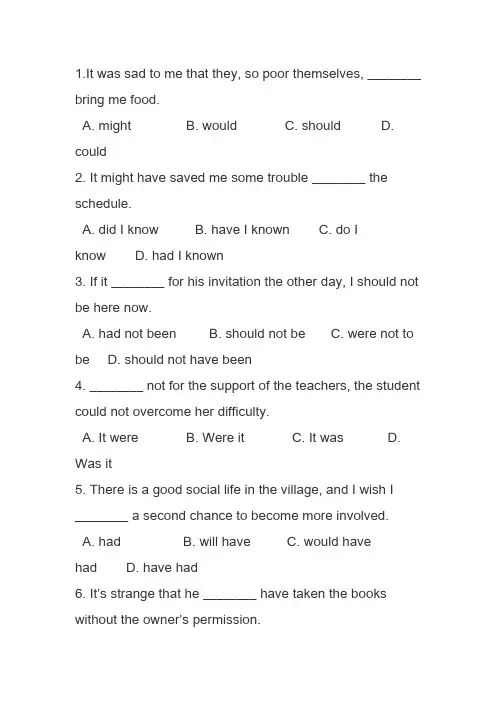
1.It was sad to me that they, so poor themselves, ________
bring me food.
A. might B. would C. should D.
could
2. It might have saved me some trouble ________ the
schedule.
A. did I know B. have I known C. do I
know D. had I known
3. If it ________ for his invitation the other day, I should not
be here now.
A. had not been B. should not be C. were not to
be D. should not have been
4. ________ not for the support of the teachers, the student
could not overcome her difficulty.
A. It were B. Were it C. It was D.
Was it
5. There is a good social life in the village, and I wish I
________ a second chance to become more involved.
A. had B. will have C. would have
had D. have had

新高考英语专题复习-情态动词和虚拟语气
情态动词的基本用法
(一)can和could的用法
1.表示“能力”,意为“能,会”。
(2018·北京卷)Samuel, the tallest boy in our class, can easily reach the books on the top shelf.
塞缪尔是我们班最高的男孩,他能轻易地够着书架顶层的书。
(湖北卷)It was several minutes before I could take in what he was saying.
过了好几分钟,我才理解他说的是什么。
■名师点津
was/were able to表示过去有能力做并且成功做了某事,相当于managed to do
sth./succeeded in doing sth.。
The fire spread through the hotel very quickly but everyone was able to get out. 尽管这场大火迅速蔓延到了整个宾馆,但是每个人都逃了出来。
2.表示推测,意为“可能”,用于否定句或疑问句中。can比could语气强。
That can’t be Mary—she is in London now.
那不可能是玛丽——现在她在伦敦。
3.表示理论上的可能性,意为“有时候可能会”,用于肯定句。
(2019·北京卷)In today’s information age, the loss of data can cause serious problems for a
company.
在今天的信息时代,数据的丢失有时会对一个公司造成严重的问题。
4.表示礼貌地请求,意为“能,可以”。在疑问句中could可代替can, 语气更委婉。
(江苏卷)—Can you tell us your recipe for happiness and a long life? ——你能告诉我们你幸福和长寿的秘诀吗?