英语并列句及连词的用法(基础讲解)
- 格式:doc
- 大小:27.00 KB
- 文档页数:3
并列句及连词的用法【真题再现】1. Ben was busy taking a training class,______we had to wait for him for half an hour.【2012 广东】A. soB. ifC. orD. but2. We should give the boy another chance ______he has made some mistakes. 【2012 河南】A. thoughB. whenC. unlessD. because3. —Where are you going for the coming winter camp? 【2012 湖北宜昌】—I won’t decide on the place ___the end of this month.A. untilB. unlessC. thoughD. through4. -Tell us something about Canada, OK? 【2012山东日照】-I’m sorry. _________ Jack _________ I have ever been there.A. Either; orB. Not only; but alsoC. Both; andD. Neither; nor5. —Could we go and watch the football game? 【2012山东泰安】—No, ______ you have the tickets.A. ifB. unlessC. becauseD. since6. There are no buses, ____ you’ll have to walk. 【2012北京】A. soB. orC. butD. for7. We can easily become unhappy_____ we work out our problems in our daily life. 【2011山东菏泽】A. afterB. ifC. untilD. unless8. —What was your brother doing at this time yesterday? 【2011山东滨州】—He was reading a magazine ________ I was writing an e-mail at home.A. as soon asB. afterC. untilD. while【答案与解析】1.A。
本题考查连词用法,根据句意可知前后句是因果关系,所以选A答案。
2. A。
句意为“尽管那个男孩犯了一些错误,但是我们应该再给他一些机会”。
所以选A答案,though意为“尽管”。
3.A。
这里考查not…until的句式,意为“直到……才”。
句意为“直到这个月月底,我才能决定去的地方”。
4.D。
考查连词短语的意义区别。
either…or…意为“或者……或者”;not only…but also意为“不但……而且”;both…and意为“两者都”;neither…nor意为“既不……也不”。
根据句意“我和杰克都没去过那个地方。
”所以选D答案。
5.B。
答语为“除非你有票,否则我不去看足球比赛”。
unless意为“除非”,相当于if not。
6.A。
句意为“因为没有公共汽车,所以你必须步行”,故选A。
7. D。
句意为“在日常生活中,如果我们解决不了问题,我们很容易变的不高兴”。
unless=if not 如果不……;after在……之后;if如果;until直到……为止。
故选D。
8. D。
考查连词的用法。
as soon as“一……就……”;after“在……之后”;until“直到……”;while“当……时候,和……同时”。
由答语“他在读杂志而我在写电子邮件”可知,两个动作同时进行,故选D。
【用法讲解】考试要求:近年来,全国各地的中考英语试题对连词的考查主要集中在以下几方面:1. 对并列连词的考查,要求必须确切地理解句子的意义,在此基础上确定词与词之间及两个分句之间的关系,从而确定正确的并列连词。
2. 对从属连词的考查,侧重于对从句的理解,正确把握从属连词。
1. 并列连词及并列句并列连词表示单词、短语、从句或句子间有并列关系。
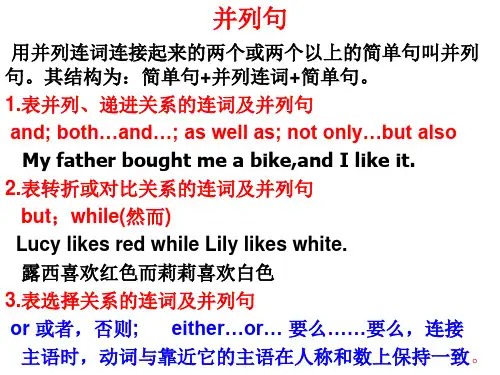
用并列连词连接起来的两个或两个以上的简单句叫做并列句。
其结构为“简单句+并列连词+简单句”。
常用并列关系的连词有:and “和”;both…and…“两个都”;as well as“也”;not only…but also…“不但……,而且……”;neither…nor…“既不……,也不……”,either…or…“或者……或者”等。
(1)and可以用来连接两个或两个以上的单词、短语或句子,表示一种顺接的关系。
and在译成中文时,不一定要翻译出“和”来。
例如:My father bought me a present, and I like it very much.爸爸给我买了一件礼物,我非常喜欢。
(2)both…and…可用来连接两个并列的主语、谓语、宾语、表语和状语等。
连接两个并列的主语时谓语动词通常用复数形式。
例如:Both you and I are league members. 我和你都是共青团员。
I can speak both English and Chinese. 我不仅能说英语,而且也能说汉语。
(3)not only… but also…,,neither…nor…都能连接两个相同的句法单位,如主语、谓语、宾语、表语等。
如果它们连接两个并列主语时,谓语动词用就近原则。
例如:He is not only tall but also strong. 他不仅个子高,而且很健壮。
Not only Jim but also I have visited the famous artist.不但吉姆而且我也拜访过那位著名的艺术家。
Neither he nor I can speak a foreign language. 我和他都不会说外语。
(4)as well as 语意同not only… but also…,意为“除了,还有”。
但是not only… but also…强调的是后者,而as well as强调的是前者。
且当as well as引导并列主语时,谓语动词的数与前面的主语保持一致。
例如:He as well as his students gets up at 6 o’clock.不仅他的学生们而且他也是6点钟起床。
2. 表示转折关系的连词及并列句表示转折关系的连词有:but“但是”;while“而”;however“然而”;though(although)“虽然”等。
要注意,but和though(although)在句中只能选用一个,句意不变。
例如:The doctors tried to save the patient, but they failed.= Although the doctors tried to save the patient, they failed.尽管医生们尽力抢救那个病人,但是失败了。
Lucy likes red while Lily likes white. 露西喜欢红色,而莉莉喜欢白色。
He worked hard. However, he failed. 他很努力,然而还是失败了。
3. 表示选择关系的连词及并列句(1)either…or…“不是……就是……”这两个连词主要表示一种选择关系时,需要注意的是either…or…通常引导两个相同的句法单位,当连接两个并列主语时,谓语动词用就近原则。
例如:Either he or she is going to help you. 不是他帮你就是她帮你。
(2)or 用在选择疑问句中连接被选择的对象,意为“或,还是”;用于否定句中连接并列成分,表示“和,与”的意思。
例如:Would you like coffee or tea? 你想要咖啡还是茶?I don’t like bread, rice or porridge. 我不喜欢面包、米饭还有稀饭。
注意:在否定句中,如果所接的两部分都有否定词,那么用and而不用or连接。
例如:There is no water and no air on the moon. 月球上没有水,也没有空气。
or在祈使句中意为“否则”,句型为:“祈使句,or …”=“If you don’t…,you’ll…”,or 在这里表示“(请你干…)否则你就会…”,含有明显的转折意味。
Hurry up,or you will be late.=If you don’t hurry up,you will be late. 快点,否则你会迟到的。
IV.表示因果关系的连词及并列句表示因果关系的并列连词有so(所以),for(因为)。
for可译为“因为”,但只是为主句中所说的话提供推断的理由加以解释,且for引导的句子往往放于主句之后,前面用逗号隔开。
Kate was ill, so she didn’t go to school. 凯特生病了,所以她没有去上学。
I have to stay up late, for I have lots of homework to do.我不得不熬夜,因为我有许多作业要做。