
中文FMEA
- 格式:ppt
- 大小:575.00 KB
- 文档页数:84


最新卓越管理方案您可自由编辑供参考1潜在失效模式及后果分析(FMEA)集体讨论什么情况下会导致一次培训失效品质管理FMEAFMEA中英文潜在失效模式及后果分析(PotentialFailureMode供参考andEffectsAnalysis)是一种系统化的可靠性定性分析方法。
通过对产品/过程各组成部分进行事前分析,发现、评价产品/过程中潜在的失效模式及起因2/机理,查明其发生的可能性及对系统的影响程度,以便采取措施进行预防。
失效(Failure)实体全部或部分失去了完成其功能的能力。
其中实体是指产品、过程或系统。
潜在有可能发生有可能不发生的事情。
供参考3PotentialFailureModeandEffectsAnalysis(FMEA)DiscussionWhatmayleadthetrainingfailed?DefinitionofFMEAPotentialFailureModeandEffectsAnalysis(FMEA)canbedescri bedasasystemizedandqualitativeanalysismethodforreliability. ThepurposeofFMEAistoRecognizeandanalyzethepotentialfailureo faproduct/process,evaluatitseffectsandprobabilitybeforethee vent,identifyactionswhichcouldeliminateorreducethechanceoft hepotentialfailureoccurring.供参考FailureItisamannerwhichthethingscouldfailtomeettheintentpartly orwholely.Thethingsmaytheproduct,processorsystem. PotentialThefailuremayhappenornot.FMEA的类型SFMEA——是针对产品开发、过程策划进行的FMEA。
![FMEA常用词中英[1]..](https://imgs-1438308264.cos.ap-hongkong.myqcloud.com/258c5bff770bf78a652954a9.webp)
16.潜在失效模式及后果分析(FMEA)常用语(中英文双语) 设计/过程FMEA (design/process FMEA)项目名称(item)主要参加人员(core team)设计/过程责任部门(design/process responsibility)关键日期(key date)编制(prepared by)审批(approved by)过程功能(process function)要求(requirements)潜在失效模式(potential failure mode)潜在失效后果(potential effects of failure)严重度数(severity) 级别(classification)潜在的失效起因/机理(potential causes/mechanisms of failure)频度数(occurrence)现行过程控制(current process control)预防(prevention)探测(detection)风险顺序数(risk priority number)建议的措施(recommended actions)责任和目标完成日期(responsibility & target completion date)措施结果(action results)采取措施(actions taken)影响产品特性/二次加工周期/外观/装配功能(affect product characteristic/ postprocessing period/ appearance/assembling function )用料不符合要求(inconformable material to the requirements)温度控制不当(incorrect temperature control)模具/机板不平行(die/machine platen in unparallel)锁模力过小(lack of locking force)模具温度过低(lower die temperature)射料力/打锤时间不足(lack of injection force/shot time)料温过低/过高(lower/excessive metal temperature)模具过热(excessive hot die)运水量过低(lower volume of cool water)喷雾过大(release agent to excess)射速太快(rapid injection velocity)喷雾频次过少或喷雾不均匀(infrequent/ uneven spraying release agent ) 模温过高导致蚀模(excessive hot die leads to die corrosion)模具尺寸不符合要求(die size out of the specification)工模行位柯磨损(core slides worn out)开模时间过短(shortage of die-open time)顶出时间过短(shortage of ejector time)冲剪夹具有缝隙(trimming die with crack)操作时摆放不正确(lay products in disorder during operation)除批锋时操作不当而刮伤表面(surface scratch due to the improper handling in removing flash)摆放不正确堆积产品(pile products up due to laying in disorder)磨光轮选择不合适(unsuitable polishing wheels)布轮(polishing/cotton wheels)麻轮(sisal/sisal buffing wheels)砂布轮(sanding wheels)铜丝轮(brass brush wheels)磨料(abrasive medium)手工磨光(manual polishing)抽取样品时产品有碰撞(bump at sampling)货与货之间碰撞(bump among products)电子磅误差超标(digital balance out of allowable error)主管对员工培训不足(lack of necessary training for employees)按工作指示设定压铸参数/锁模力/射料力/射料速度/打锤时间/喷雾量/开模时间/顶出时间/压力参数/料温/控制温度/作业(set die-casting parameter/locking force/ injection force/injection velocity/shot time/ volume of release agent/die-open time/ ejector time/pressure rating/metal temperature/ control temperature/ operation according to WI)开拉前培训(training before operation)定期校准电子磅(regular calibration for digital balance)。

fmea知识点FMEA知识点详解1. 什么是FMEA•FMEA全称是Failure Mode and Effects Analysis,中文为失效模式与影响分析。
•FMEA是一种通过系统化的方法,识别和评估潜在失效模式的工具,目的是提前采取措施预防或减少失效对系统带来的影响。
2. FMEA的作用•预防潜在问题:通过分析失效模式,识别问题的潜在来源,以便在实施之前采取预防措施。
•减少产品风险:通过评估失效的后果和严重程度,降低不可接受的产品风险。
•提高产品质量:通过改进设计、工艺和控制方法,提高产品质量和可靠性。
•优化维修计划:通过了解失效的影响和维修难度,制定更有效的维修计划。
3. FMEA的步骤1.识别过程/系统:确定要进行FMEA分析的过程或系统。
2.列出功能:列出该过程或系统的功能,即它应该实现的目标或任务。
3.确定失效模式:对每个功能,确定可能的失效模式,即功能无法正常实现的原因。
4.评估失效后果:评估每个失效模式的后果和严重程度,包括安全、环境和经济等方面。
5.确定失效原因:识别每个失效模式发生的潜在原因。
6.评估现有控制措施:评估现有的控制措施是否足够有效,能够防止或减轻失效的影响。
7.确定改进措施:基于评估结果,制定改进措施来预防或减少失效对系统的影响。
8.应用改进措施:实施和验证改进措施的有效性。
9.更新FMEA:根据实施改进措施的结果,更新FMEA以反映最新的信息。
4. FMEA的关键术语•失效模式(Failure Mode):指组件或系统在执行功能时,无法实现设计意图的方式。
•失效效果(Failure Effect):指失效模式对产品性能、安全、环境或经济等方面的不利影响。
•失效原因(Failure Cause):指导致失效模式发生的潜在原因,可以是设计、制造、操作等方面的问题。
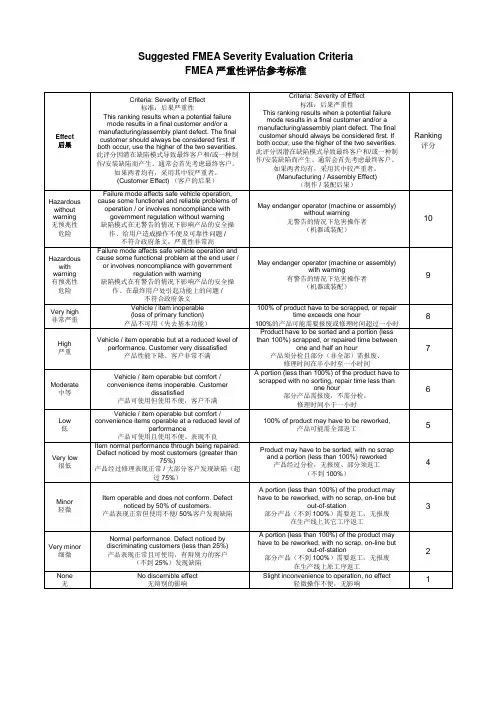
•严重程度(Severity):评估失效效果对产品或系统的重要性和影响程度。
•发生概率(Occurrence):评估失效模式发生的频率或概率。