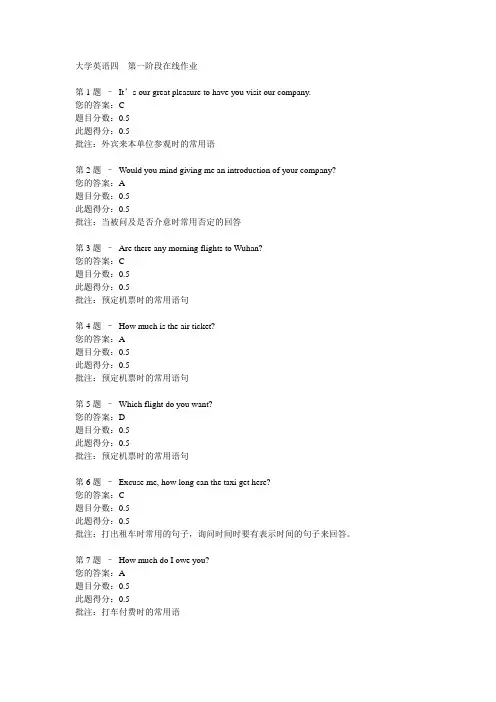
北师大大学英语四在线作业一答案
- 格式:docx
- 大小:20.38 KB
- 文档页数:7
参考答案:B.collar
28.请点击此链接查看题目
25
A. will he B. he will
C. has he D. he has
参考答案:C. has he
29.请点击此链接查看题目
26
A. than B. as
C. and D. when
参考答案:A.than
30.请点击此链接查看题目
27
C. You don't have to be a sportsman to take part. D. The bus trip to the place of the competition is free.
参考答案:B.You can watch it without paying.
18.Passage 2
作业题目列表
单选
1.-You've been busy, haven't you?
- __________.
A. I was busy last week B. Yes, I've been working hard on my paper
C. I will get busy with my English studies D. I'd like to get busy like our teachers.
参考答案:B.Yes, I've been working hard on my paper
2.-Would you please hold these bags for me?
- _____
A. That's very kind of you indeed. B. What are these bags?
A. race B. practice
C. part of the training D. part of the tour
参考答案:D.part of the tour
17.Passage 2
What is special about the rock climbing competition?
A. A foreign team takes part in it. B. You can watch it without paying.
- _____ .
A. That's possible B. Not at all
C. That's very kind of you. Thanks D. I think so
参考答案:C. That's very kind of you. Thanks
9.Passage 1
How would you treat temporary loneliness according to the passage?
参考答案:尽管他犯了很多错误我们还是很敬佩他,毕竟他是一个伟人。
论述
1.请根据下面所给的题目用英语写出一篇不少于80词的短文。
- _____
A. There's no worry. B. Yes, go ahead.
C. No, not at all. D. Is that so?
参考答案:B.Yes, go ahead.
7.-What's after the play?
- _____
A. Is it very interesting? B. I don't mind watching this play.
If you want to find something to do for Saturday afternoon, which telephone number will you call?
A. 4675027 B. 7143177
C. 50l2372 D. 7144850
参考答案:C.50l2372
A. worthwhile B. worthy
C. worth D. cost
参考答案:C. worth
22. ____ you've found, you must give it back to the person it belongs to.
A. Whichever B. No matter how
C. That's all right. D. I'm not sure. May be it's a football match.
参考答案:D. I'm not sure. May be it's a football match.
8.-Here's my car. Do you want a ride?
C. it seems D. is it seem
参考答案:A.does it seem
26.请点击此链接查看题目
23
A. hinted B. suggested
C. asked D. mentioned
参考答案:B.suggested
27.请点击此链接查看题目
24
A. dog B. collar
C. caller D. dollar
C. However D. Whatever
参考答案:D. Whatever
23. Shocked at what he had just been told, Julian put his phone down as if he _____ a ghost.
A. just saw B. has just seen
A. 35 kilometers B. 55 kilometers
C. 75 kilometers D. 110 kilometers
参考答案:D.110 kilometers
16.Passage 2
The underlined word "leg" in "Bicycle tour and race" probably means_____.
A. one problem of loneliness is a person's social contacts. B. we depend on various people for different reasons
C. lonely people don't have many social problems D. lonely people don't have many friends
What is the best tile for the passage?
A. Three Kinds of Loneliness. B. Loneliness and Disease.
C. Loneliness and Social Contacts. D. Chronic Loneliness.
C. things to do for the weekend D. prices to pay for the sports events
参考答案:C.things to do for the weekend
15.Passage 2
If you take part in the bike tour, you will ride for ____.
C. Yes, with pleasure. D. Are these bags very important to you?
参考答案:C. Yes, with pleasure.
3.请点击此链接查看题目
30
A. for B. at
C. in D. with
参考答案:B.at
4.请点击此链接查看题目
A. Talk to friends. B. Just ignore it.
C. Go to see a doctor. D. Ask your teachers for guidance.
参考答案:B.Just ignore it.
10.Passage 1
"It" in the last sentence of the second paragraph refers to ________ .
参考答案:A.Three Kinds of Loneliness.
14.Passage 2
The main purpose of announcing the above events is to give information about ____ .
A. visiting teams B. famous players
A. in week-ends B. in week-end
C. by week-ends D. at week-ends
参考答案:D. at week-ends
简答
1. People always hate mice, but one mouse won the people's heart of the whole world.
19.You can hardly imagine Jane ____ the housework all by herself.
A. to do B. doing
C. do D. did
参考答案:B.doing
20. You ____ out yesterday without a coat. No wonder you caught cold.
A. shouldn't have gone B. mustn't have gone
C. couldn't have gone D. needn't have gone
28.请点击此链接查看题目
25
A. will he B. he will
C. has he D. he has
参考答案:C. has he
29.请点击此链接查看题目
26
A. than B. as
C. and D. when
参考答案:A.than
30.请点击此链接查看题目
27
C. You don't have to be a sportsman to take part. D. The bus trip to the place of the competition is free.
参考答案:B.You can watch it without paying.
18.Passage 2
作业题目列表
单选
1.-You've been busy, haven't you?
- __________.
A. I was busy last week B. Yes, I've been working hard on my paper
C. I will get busy with my English studies D. I'd like to get busy like our teachers.
参考答案:B.Yes, I've been working hard on my paper
2.-Would you please hold these bags for me?
- _____
A. That's very kind of you indeed. B. What are these bags?
A. race B. practice
C. part of the training D. part of the tour
参考答案:D.part of the tour
17.Passage 2
What is special about the rock climbing competition?
A. A foreign team takes part in it. B. You can watch it without paying.
- _____ .
A. That's possible B. Not at all
C. That's very kind of you. Thanks D. I think so
参考答案:C. That's very kind of you. Thanks
9.Passage 1
How would you treat temporary loneliness according to the passage?
参考答案:尽管他犯了很多错误我们还是很敬佩他,毕竟他是一个伟人。
论述
1.请根据下面所给的题目用英语写出一篇不少于80词的短文。
- _____
A. There's no worry. B. Yes, go ahead.
C. No, not at all. D. Is that so?
参考答案:B.Yes, go ahead.
7.-What's after the play?
- _____
A. Is it very interesting? B. I don't mind watching this play.
If you want to find something to do for Saturday afternoon, which telephone number will you call?
A. 4675027 B. 7143177
C. 50l2372 D. 7144850
参考答案:C.50l2372
A. worthwhile B. worthy
C. worth D. cost
参考答案:C. worth
22. ____ you've found, you must give it back to the person it belongs to.
A. Whichever B. No matter how
C. That's all right. D. I'm not sure. May be it's a football match.
参考答案:D. I'm not sure. May be it's a football match.
8.-Here's my car. Do you want a ride?
C. it seems D. is it seem
参考答案:A.does it seem
26.请点击此链接查看题目
23
A. hinted B. suggested
C. asked D. mentioned
参考答案:B.suggested
27.请点击此链接查看题目
24
A. dog B. collar
C. caller D. dollar
C. However D. Whatever
参考答案:D. Whatever
23. Shocked at what he had just been told, Julian put his phone down as if he _____ a ghost.
A. just saw B. has just seen
A. 35 kilometers B. 55 kilometers
C. 75 kilometers D. 110 kilometers
参考答案:D.110 kilometers
16.Passage 2
The underlined word "leg" in "Bicycle tour and race" probably means_____.
A. one problem of loneliness is a person's social contacts. B. we depend on various people for different reasons
C. lonely people don't have many social problems D. lonely people don't have many friends
What is the best tile for the passage?
A. Three Kinds of Loneliness. B. Loneliness and Disease.
C. Loneliness and Social Contacts. D. Chronic Loneliness.
C. things to do for the weekend D. prices to pay for the sports events
参考答案:C.things to do for the weekend
15.Passage 2
If you take part in the bike tour, you will ride for ____.
C. Yes, with pleasure. D. Are these bags very important to you?
参考答案:C. Yes, with pleasure.
3.请点击此链接查看题目
30
A. for B. at
C. in D. with
参考答案:B.at
4.请点击此链接查看题目
A. Talk to friends. B. Just ignore it.
C. Go to see a doctor. D. Ask your teachers for guidance.
参考答案:B.Just ignore it.
10.Passage 1
"It" in the last sentence of the second paragraph refers to ________ .
参考答案:A.Three Kinds of Loneliness.
14.Passage 2
The main purpose of announcing the above events is to give information about ____ .
A. visiting teams B. famous players
A. in week-ends B. in week-end
C. by week-ends D. at week-ends
参考答案:D. at week-ends
简答
1. People always hate mice, but one mouse won the people's heart of the whole world.
19.You can hardly imagine Jane ____ the housework all by herself.
A. to do B. doing
C. do D. did
参考答案:B.doing
20. You ____ out yesterday without a coat. No wonder you caught cold.
A. shouldn't have gone B. mustn't have gone
C. couldn't have gone D. needn't have gone