
课堂教学词汇..
- 格式:ppt
- 大小:1.49 MB
- 文档页数:50

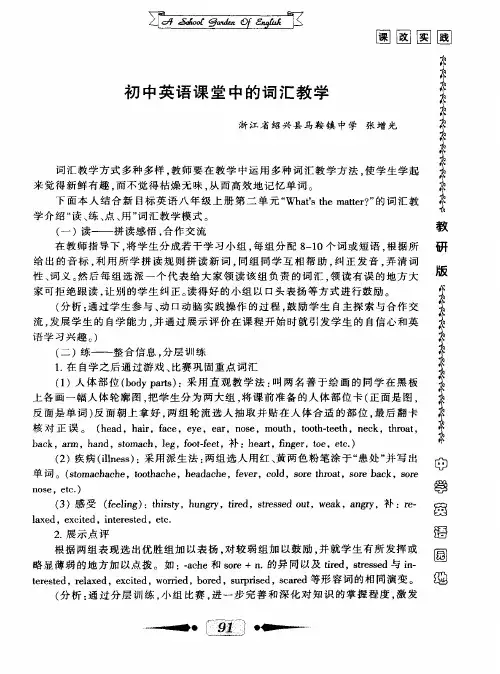
英语基础课堂词汇教学设计五篇通过集体备课、轮流说课及做好讲学稿、老师补充等使各位老师更准确地把握教材、灵活运用教材,真正落实“用教材去教,而不是教教材”的教学指导思想。
下面是小编整理的英语基础课堂词汇教学设计5篇,欢迎大家阅读分享借鉴,希望大家喜欢,也希望对大家有所帮助。
英语基础课堂词汇教学设计1教学目标1.能够听说读写单词和短语:have a cold, have a toothache, have a fever, hurt, have a headache, have a sore throat.2.能够听说读句型:What’s the matter, Mike? I feel sick. I have a fever.并进行关键词的替换操练。
3.能够理解会并吟唱Let’s chant的歌谣。
教学重难点教学重点、难点:1.重点是掌握A-Let’s learn的四会单词和短语,并询问别人的身体状况。
2.难点是正确拼写四会单词和短语。
教学过程1、 Warm-up(1)播放录音PEP4Unit6歌曲“My father is a doctor.”(2)日常口语对话,复习职业单词。
What’s your father/mother?2、 Presentation and practice(1)教师出示Let’s start的教学挂图,说:Look! We have some new friends here. Who are they? What’s the matter with them?…帮助学生回答,并引导学生通过观察图片或教师的肢体动作来帮助学生熟悉答句中的新单词和短语。
(2)播放Let’s chant的录音,重点领读句子:I have a headache.I have the flu.(3)教师出示一支体温表,说:This is a thermometer. If I have a fever, it will tell me. Let’s see Mike. Mike doesn’t feel well. Hehas a fever.指着Let’s learn的图片的 Mike,教学“have a fever”。

教育教学英语词汇大全从学校到课堂提升教学能力的重要工具教育教学英语词汇大全——从学校到课堂提升教学能力的重要工具引言:教育教学是社会进步与发展的关键所在,而英语作为全球通用的语言,具备良好的英语教学能力对于学生的全面发展至关重要。
本文将介绍一些教育教学中常用的英语词汇,旨在帮助教育者从学校到课堂提升其教学能力。
一、课程规划与设计教学目标(learning objectives):明确阐述学生应达到的知识、技能和能力要求。
课程大纲(syllabus):详细描述课程的内容、学习目标、评估要求等信息。
教学策略(teaching strategies):用于传授知识和培养学生能力的方法和技巧。
评估与反馈(assessment and feedback):主要包括考试、作业评估和个性化反馈等方式。
二、教学方法与手段多媒体教学(multimedia teaching):利用图像、音频、视频等多种媒体形式进行教学。
合作学习(cooperative learning):学生通过小组合作,分享知识、解决问题。
个性化教学(individualized instruction):根据学生的差异,制定个性化教学计划。
激励与奖励(motivation and rewards):通过鼓励和奖励来激发学生的学习积极性。
三、教学策略与技巧启发式教学(scaffolding):提供一系列的提示和引导,帮助学生逐步掌握知识和技能。
问题解决(problem-solving):通过引导学生思考、寻找解决问题的方法来培养其批判性思维能力。
批判性思维(critical thinking):培养学生分析、评估和解决问题的能力,促进深度学习。
口头表达(oral expression):教学者通过口头表达的方式帮助学生提高听说能力。
写作技巧(writing skills):培养学生撰写各类文体的能力,提高写作水平。
四、教育教学相关词汇教育观(educational philosophy):对于教育目标、理念和价值观的看法。

英语语法术语课堂教学用语常见的语法术语摘要1.名词noun 动词verb 形容词adjective 数词numeral 代词pronoun2.介词preposition 副词adverb 连词conjunction 冠词article 感叹词interjection3.结构:structure 简单句simple sentences 并列句compoundsentences4.复合句complex sentences 倒装句inverted sentences 省略句elliptical sentences5.陈述句statement sentences 疑问句interrogative sentences6.祈使句imperative sentences 感叹句exclamatory sentences7.否定句negative sentences 被动句passive sentences8.虚拟语气句subjunctive sentences 同义句synonymoussentences9.歧义句ambiguous sentences 委婉句euphemisms 强调句emphasis10.疑难句difficult sentences 叙述句narrative sentences 说明句expository sentences11.议论句argumentative sentences 人物描写句descriptivesentences of people12.动作描写句:descriptive sentences of actions13.环境描写句descriptive sentences of environment14.日常口语句sentences for everyday talk15.实用情景句sentences of actual situations16.课堂教学句sentences of classroom teaching17.名人语句quotations 格言句maxims 谚语句proverbs18.状语adverbial 补语complement 宾语object 宾语补助语objective complement19.表语predicative 主语subject 谓语predicate 谓语动词finite verb20.非谓语动词non-finite verb 情态动词modal verb21.并列coordination 选择alternative 转折transition 对比contrast22.原因cause 结果effect 解释explanation23.动词时态verb tenses24.一般现在时simple present (tense)25.一般过去时simple past (tense) 一般将来时simple future(tense)26.过去将来时future (tense) in the past 现在完成时present perfect(tense)27.过去完成时past perfect (tense) 将来完成时future perfect(tense)28.现在进行时present continuous (tense) 过去进行时pastcontinuous (tense)29.将来进行时future continuous (tense)30.现在完成进行时present perfect continuous (tense)31.主句main clause 从句subordinate clause32.限定性定语从句restrictive attributive clause33.非限定性定语从句non-restrictive attributive clause34.宾语从句object clause 壮语从句adverbial clause 主语从句subject clause35.表语从句predicative clause 同位语从句appositive clause36.双重复合句double complex sentences37.多重复合句multiple complex sentences38.插入语parenthesis39.IT引导的句子IT sentences40.THERE引导句THERE sentences41.省略名词omission of noun42.判断句statements 列举句enumeration 比较句comparison让步句concession43.一般疑问句general question 特殊疑问句special question44.选择疑问句alternative question 反意疑问句disjunctivequestion45.陈述式疑问句declarative question 省略疑问句ellipticalquestion46.一般否定general negation 全部否定complete negation 部分否定partial negation47.双重否定double negation 否定句negative sentences 肯定句affirmative sentences48.主格subjective case 宾格objective case 所有格possessivecase49.单数与复数singular and plural 语序word order50.不定式infinitive 动名词gerund 现在分词presentparticiple51.主动的active 被动的passive 语态voice 标点符号punctuation mark52.抽象的abstract 具体的concrete 名言saying 语气mood53.典故allusion 习语idiom 俚语slang 外来语foreign word行话jargon54.直接引语direct speech 间接引语indirect speech 命题proposition课堂教学句sentences of classroom teaching开始上课beginning of the class1.我们开始吧Let’s start/ Let’s begin now2.让我们开始上课Let’s begin our lesson.3.今天我们上新课,先学生词,然后读课文We are going to have anew lesson today. We’ll learn the new words first. Then we’ll read the text.4.我们先学课文,然后提问。