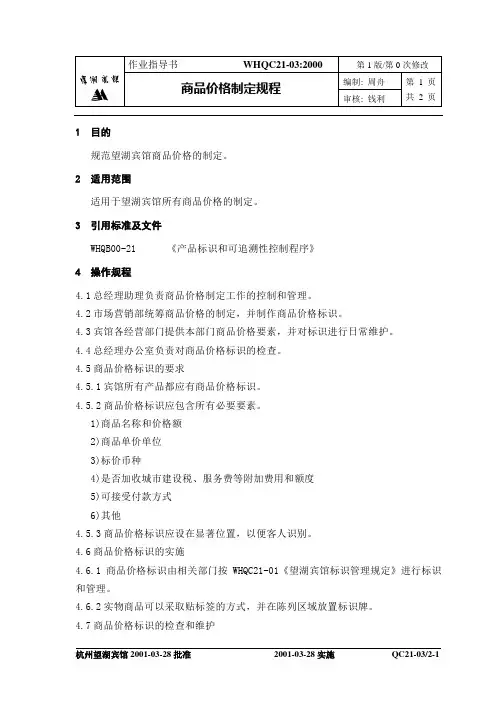
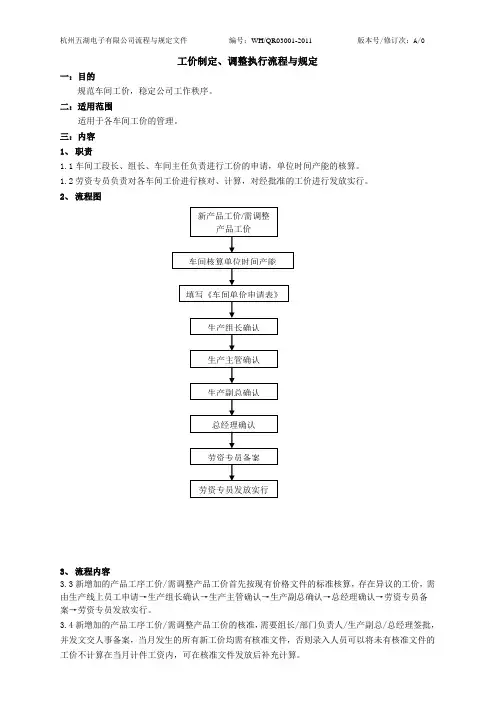
价格制定与调整流程
- 格式:doc
- 大小:16.49 KB
- 文档页数:5
价格制定与调整流程
英文回答:
Pricing is a crucial aspect of business operations, as
it directly impacts revenue and profitability. The process
of setting and adjusting prices involves several steps and
considerations. Let's delve into the pricing process and
explore how it is done.
1. Market Research: The first step in pricing is
conducting thorough market research. This involves
analyzing customer preferences, competitor pricing
strategies, and market trends. By understanding the market
dynamics, businesses can identify pricing opportunities and
potential pricing strategies.
2. Cost Analysis: After conducting market research,
businesses need to analyze their own costs. This includes
determining fixed costs (such as rent, utilities, and
salaries) and variable costs (such as raw materials and production costs). By understanding the cost structure,
businesses can establish a baseline for pricing decisions.
3. Pricing Objectives: Once market research and cost
analysis are complete, businesses need to set pricing
objectives. These objectives can include maximizing profits,
gaining market share, or maintaining a competitive position.
Pricing objectives provide a clear direction for pricing
decisions.
4. Pricing Strategy: Based on the pricing objectives,
businesses can develop a pricing strategy. Common pricing
strategies include cost-plus pricing, value-based pricing,
penetration pricing, and skimming pricing. Each strategy
has its own advantages and considerations, and businesses
need to choose the most suitable one for their specific
situation.
5. Price Setting: With the pricing strategy in place,
businesses can determine the actual price for their
products or services. This involves considering factors
such as perceived value, competitive pricing, and customer willingness to pay. Price setting requires careful
consideration to ensure it aligns with the pricing
objectives and strategy.
6. Testing and Adjustment: Once the price is set,
businesses may conduct testing and gather feedback from
customers and the market. This feedback can help identify
any necessary adjustments to the pricing strategy and price
levels. Continuous monitoring and adjustment are essential
to ensure pricing remains effective and competitive.
7. Competitive Analysis: Pricing is not a one-time
decision but an ongoing process. Businesses need to
continuously monitor the pricing strategies of their
competitors to stay competitive. This involves analyzing
competitor price changes, promotions, and overall market
dynamics. By staying informed, businesses can make timely
adjustments to their own pricing strategies.
中文回答:
价格制定与调整流程对于企业的运营至关重要,因为它直接影响收入和盈利能力。制定和调整价格的过程涉及多个步骤和考虑因素。让我们深入了解价格制定过程,并探讨它是如何进行的。
1. 市场研究,价格制定的第一步是进行全面的市场研究。这包括分析客户偏好、竞争对手的定价策略和市场趋势。通过了解市场动态,企业可以确定定价机会和潜在的定价策略。
2. 成本分析,在进行市场研究之后,企业需要分析自身的成本。这包括确定固定成本(如租金、水电费和工资)和可变成本(如原材料和生产成本)。通过了解成本结构,企业可以为定价决策建立一个基准。
3. 定价目标,在完成市场研究和成本分析后,企业需要设定定价目标。这些目标可以包括最大化利润、获取市场份额或保持竞争地位。定价目标为定价决策提供了明确的方向。
4. 定价策略,基于定价目标,企业可以制定定价策略。常见的定价策略包括成本加成定价、价值定价、渗透定价和撇皮定价。每种策略都有其优势和考虑因素,企业需要选择最适合其特定情况的策略。
5. 价格设定,在制定定价策略后,企业可以确定其产品或服务的实际价格。这涉及考虑感知价值、竞争定价和客户愿意支付的因素。价格设定需要仔细考虑,以确保与定价目标和策略保持一致。
6. 测试和调整,确定价格后,企业可以进行测试,并收集客户和市场的反馈意见。这些反馈意见有助于确定定价策略和价格水平的任何必要调整。持续监测和调整对于确保定价的有效性和竞争力至关重要。
7. 竞争分析,定价不是一次性的决策,而是一个持续的过程。企业需要不断监测竞争对手的定价策略,以保持竞争力。这包括分析竞争对手的价格变动、促销活动和整体市场动态。通过及时了解情况,企业可以对自己的定价策略进行及时调整。