【范文】新版pep六年级英语上册1-6单元知识点总结
- 格式:doc
- 大小:22.48 KB
- 文档页数:30
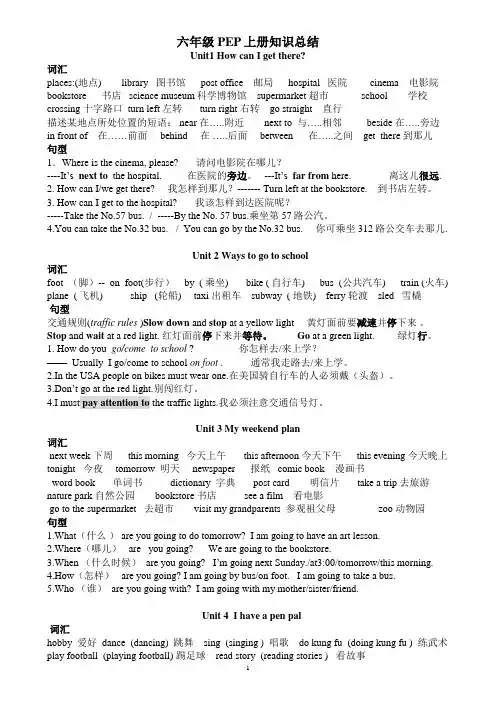
新版pep六年级英语上册1-6单元知识点总结本资料为woRD文档,请点击下载地址下载全文下载地址六年级PEP上册知识总结Unit1HowcanIgetthere?图书馆邮局医院左转turnright右转places:电影院gostraight直行书店科学博物馆十字路口超市学校一、描述某地点所处位置的短语near在…..附近nextto与…..相邻beside在…..旁边infrontof在……前面behind在…..后面between在…..之间二、问路.whereisthecinema,please? 请问电影院在哪儿?nexttothehospital.在医院的旁边。
infrontoftheschool.在学校的前面.It’sbehindthepark在公园的后面nearthezoo.在动物园的附近.farfromhere.离这儿很远./2.Excuseme,isthereacinemanearhere 请问这附近有电影院吗?yes,thereis./No,thereisn’t.有./没有。
3.HowcanI/wegetthere?我怎样到那儿?Turnleftatthebookstore.到书店左转4.HowcanIgettothehospital?我该怎样到达医院呢?TaketheNo.57bus.乘坐第57路公汽。
BytheNo.57bus.注意:到那儿getthere到某地gettocanada/Australia/Beijing/Shanghai/wuhangettothehospital/zoo/bookstore三、指引路.youcantaketheNo.32bus.你可乘坐312路公交车去那儿.注意:youcangobytheNo.32bus.与上句意思一样,只是说法不同。
2.Gostraightandturnleftatthebookstore.先直行然后在书店那儿左转弯。
3.Turnright/leftatthe…在…地方向右/左转.4.Isitfarfromhere?离这儿远吗?yes,itis./No,itisn’t. 是的很远/不是很远。
四.第79页的常用表达法Unit2waystogotoschool 一.知识点归纳(一)、词汇四会bikebyslowdown慢下来busgotoschool(上学)planeonfoot(步行)trainhow(怎样)shipstop停下来taxi出租车ferry轮渡sled雪橇subway(交通工具前加by,表示乘坐但步行要用onfoot)(二)、重点句型①询问交通方式用疑问代词how.Howdoyougo/cometoschool?你怎样去/来上学?UsuallyIgo/cometoschoolonfoot.通常我走路去/来上学。
2.Howdoeshe/she/Petergo/cometoschool?他/她/皮特怎样去/来上学?He/Sheusuallygoes/comestoschoolbybike.他/她通常骑自行车去/来上学。
3.Howdoesyourfathergotowork?你父亲怎样去上班?Hegoestoworkbysubway.他坐地铁去上班。
②询问地点,用疑问代词where whereisyourhome?你家在哪里?It’snearthepostoffice.在邮局旁边。
wherearetheteachers?老师们在哪儿Theyareintheteacher’soffice.在老师的办公室。
③问路Howcan/doIgettotheFuxingHospital?我怎么到福星医院?youcantaketheNo.1bus.④交通规则Slowdownandstopatayellowlight黄灯面前要减速并停下来Stopandwaitataredlight.红灯面前停下来并等待Goatagreenlight.绿灯行.课本第16面的一些交通规则InchinaandtheUSAdriversdriveontherightsideoftheroad.在中国和美国,司机靠右行驶。
InEnglandandAustralia,driversdriveontheleftsideoftheroad.但是在英国和澳大利亚,司机靠左边行驶。
第79面的常用表达法Unit3myweekendplan一.知识点归纳(一)、词汇四会nextweek下周newspaper报纸thismorning今天上午comicbook漫画书Timethisafternoon今天下午wordbook单词书thisevening今天晚上dictionary字典tonight今夜postcard明信片tomorrow明天takeatrip去旅游naturepark自然公园activitiesseeafilm看电影othersbookstore书店(活动gotothesupermarket 去超市(其他)supermarket超市visitmygrandparents 拜访祖父母zoo动物园二、重点句式和句型:本单元中出现的一个重点语法是一般将来时:表示将要发生的动作或状态,常和表示将来的时间连用。
构成:陈述肯定句:主语+begoingto+动词原形+其他否定句:主语+be+notgoingto+动词原形+其他一般疑问句:Be+主语+goingto+动词原形+其他特殊疑问句:特殊疑问词+一般疑问句?将来时态还可以用情态动词will+动词原形表示例1.Iamgoingtovisitmygrandparentsthisafternoon.Iwillvisitmygrandparentsthisafternoon.2.Iamnotgoingtovisitmygrandparentsthisafternoon.Iwon’tvisitmygrandparentsthisafternoon.3.Areyougoingtovisityourgrandpaents?yes,Iam./No,Iamnot.4.willyouvisityourgrandparents?yes,Iwill. /No,Iwon’t.注意:won’t=willnot5.what(什么)areyougoingtodotomorrow? Iamgoingtohaveanartlesson.where(哪儿)areyougoing?wearegoingtothebookstore.when(什么时候)areyougoing?I’mgoingnextSunday./at3:00/tomorrow/thismorning. How(怎样)areyougoing?Iamgoingbybus/onfoot.Iamgoingtotakeabus.who(谁)areyougoingwith?Iamgoingwithmymother/sister/friend.三、重点句型:.常用表达法:whatareyougoingtodotomorrow?你明天打算做什么?I’mgoingtohaveanartlesson.我要去上美术课。
we’regoingtodrawsomepicturesinRenminPark.我们要到人民公园去画画whereareyougoing?你们打算去哪?wearegoingtothecinema.我们打算去电影院whenareyougoing?你们什么时候去?2.课文中的重点语句Ihavetodomyhomeworknow.现在我不得不要做我的作业了mycousinjackisgoingtovisitmenextweek.我表弟杰克打算下星期来看我we’regoingtoseeafilmaboutspacetravel.我们打算去看一部关于太空旅行的电影Haveagoodtime。
玩得开心Ihavelotsofcomicbooksaboutspace.我有许多关于太空的连环画册whynotgoonTuesday?为什么不星期二走?whynot后面接动词原形,表示建议,意思是:为什么不?mygrandmawilltellusastoryaboutchang’e.我奶奶将给我们讲关于嫦娥的故事whatareyougoingtobe?=whatdoyouwanttobe?I’mgoingtobeabusinessman.=Iwanttobeabusinessman.Unit4Ihaveapenpal知识点归纳:一.本单元主要是谈论某人的兴趣爱好。
二.语法是动词的-ing形式和动词的第三人称单数形式。
三.词汇:dance跳舞sing唱歌hobbyplayfootball踢足球(爱好)readstory看故事dokungfu练武术live居住,住like喜欢teach教studygo去goeshiking去远足第三人单数watch看电视读cookdodoeswordpuzzles玩字谜四.句型:1.询问某人的爱好:whatareyour/his/her/Peter’shobbies? Ilikereadingstoriesandsinging.whatdo/doesyou/he/shelike?He/Shelikesswimmingandplayingfootball.2.由助动词Do/Does引出的一般疑问句:Doyou/they/weliveinSydney?.yes,I/they/wedo.No,I/they/wedon’t.he/she/xxxliveinSydney?Doeshe/she/xxxlikedoingwordpuzzlesandgoinghiling?yes,he/shedoes.No,he/shedoesn’t.助动词Do/Does引出的问句中一定有一个实意动词,为动词原形。
助动词一出现,后面动词就不变。
五.语法:一般现在时的用法(1)表示经常或习惯性的动作或状态,常与everyday/morning/evening,often,usually,always等状语连用。
如:wedomorningexerciseseveryday.Heusuallygoestoschoolb ybike.结构:肯定句:主语+动词原形或者单三式动词+其他。
如:IteachEnglish.misswhiteteachesEnglish.否定句:主语+don’t/doesn’t+动词原形+其他Idon’tteachEnglish.misswhitedoesn’tteachEnglish.一般疑问句:Do/Does+主语+动词原形+其他?如:DoyouteachEnglish? DoesmisswhiteteachEnglish?肯否定回答:yes,Ido./No,Idon’t.yes,shedoes.No,shedoesn’t.六.课文中的重点语句:Helivesonafarm,sosometimeshereadstothecows.他住在农场上,所以有时他读书给奶牛听IliveinBeijing.我住在北京Healsolikessinging.他也喜欢唱歌I’mgoingtoteachhimthechinesesong”jasmineFlower”我打算教他唱中国歌曲“茉莉花“””I’mwritinganemailtomynewpenpalinAustralia.我正在写邮件给我澳大利亚的笔友canIalsobehispenpal?Sure.whynot?我也可以成为他的笔友吗?当然,为什么不能?Doyouwanttolearnaboutrobbots?你想了解机器人吗?Heteachesstudentstomakerobots.他教学生制作机器人whodoesthedishes?谁洗盘子whoteachesmath?谁教数学whocooksnoodles?谁煮面条Unit5whatdoeshedo?一、知识点归纳(一)词汇四会singer writer Hongkonghead teacher校长dancer舞蹈家seaworker cleaner清洁工factorypostman driver司机staybusinessmansecretary秘书university TVreporter help fisherman money scientist gym policeofficer usefootballplayer足球运动员typecoachquickly(二)重点句型①询问职业whatdoeshedo?/whatishe? 他是做什么的?Heisadoctor.他是一个医生。