
战胜拖延症英文
- 格式:ppt
- 大小:730.00 KB
- 文档页数:17
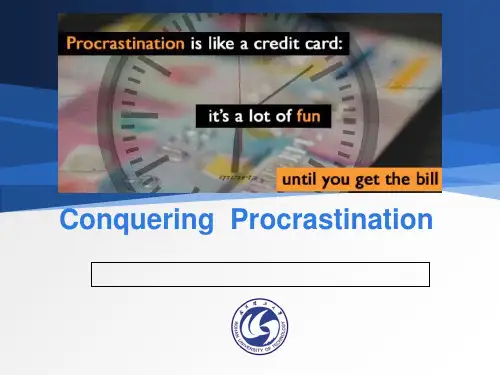

改掉拖延症英语作文60字英文回答:Procrastination, the act of delaying or postponing a task or set of tasks, is a common problem that can have a significant impact on our lives. It can lead to missed deadlines, lower quality work, and increased stress.There are many reasons why people procrastinate. Some people are afraid of failure, while others are simply overwhelmed by the task at hand. Whatever the reason, procrastination can be a difficult habit to break.However, there are a number of things you can do to overcome procrastination. Here are a few tips:Break down large tasks into smaller ones. If a task seems too daunting, it can be helpful to break it down into smaller, more manageable chunks. This will make the task seem less overwhelming and more achievable.Set realistic deadlines. When you set deadlines for yourself, make sure they are realistic. If you set a deadline that is too ambitious, you are more likely to give up.Reward yourself for completing tasks. When you complete a task, reward yourself with something you enjoy. This will help you to stay motivated and make procrastination less appealing.Find an accountability partner. Having someone to hold you accountable can be a great way to stay on track. Find a friend, family member, or colleague who can check in with you regularly and help you to stay motivated.中文回答:拖延症是我们生活中普遍存在的一个问题,它会对我们的生活产生重大影响。

改掉拖延症的建议英语作文英文版:Let's Kick Start Productivity - A Plan to Conquer Procrastination Procrastination is a common problem that plagues many of us. We all know it's bad for us, but it's so easy to fall into the habit of putting things off until tomorrow. However, the longer we delay, the greater the likelihood that our tasks will become increasingly overwhelming and stressful. It's time to take a stand against procrastination and take back control of our lives.Here are some practical tips to help you overcome your procrastination:1. Set clear goals and deadlines. Knowing what you want to achieve and when you want to do it can help you stay focused and avoid getting overwhelmed by tasks. Create a realistic schedule and stick to it.2. Break tasks into smaller steps. Rather than facing a huge project head-on, break it down into smaller, more manageable tasks. This helps to reduce the intimidation factor and keep you motivated as you progress.3. Avoid multitasking. It's tempting to try to do several things atonce, but it actually decreases productivity and causes us to lose focus. Concentrate on one task at a time and take breaks when necessary to avoid burnout.4. Create a productive workspace. Choose a space that's conducive to work and eliminate distractions, such as checking social media or watching TV while you're trying to work.5. Reward yourself. Create a system of small rewards for completing tasks or achieving goals. This can help you stay motivated and keep yourself on track.6. Get enough sleep and exercise. Poor sleep and lack of exercise can negatively impact our productivity and concentration levels. Make sure you get enough rest and engage in regular physical activity to improve your overall well-being.7. Practice mindfulness. Be aware of your thoughts and actions throughout the day. Challenge negative self-talk and replace it with positive affirmations. Mindfulness can help you stay present and avoid getting caught up in worrying about the future or regretting past actions.中文版:克服拖延症,重拾高效生活拖延症,这个无形的小恶魔,常常在我们的生活中肆虐。

摆脱拖延症的英语作文英文回答:Procrastination, the chronic avoidance of tasks, is a prevalent issue affecting individuals of all ages and backgrounds. Its consequences can be far-reaching, ranging from missed deadlines and poor performance to stress and anxiety. Overcoming procrastination requires a multifaceted approach that encompasses both behavioral and cognitive strategies.Cognitive Strategies:Identify the underlying causes: Explore the reasonswhy you procrastinate. Is it fear of failure, perfectionism, or a lack of motivation? Understanding the root causes can help you develop targeted strategies.Challenge negative thoughts: Procrastination often stems from irrational beliefs and negative self-talk.Replace these with positive and realistic affirmations that inspire action.Set realistic goals: Break down overwhelming tasksinto smaller, more manageable chunks. Setting achievable goals can reduce feelings of inadequacy and make procrastination less likely.Behavioral Strategies:Use the Pomodoro Technique: Alternate between 25-minute work sessions and 5-minute breaks. This structure helps maintain focus and prevents burnout.Eliminate distractions: Create a distraction-free workspace where you can concentrate on your tasks. Remove unnecessary notifications and minimize social media usage.Apply rewards and consequences: Establish small rewards for completing tasks and consequences for procrastinating. This can provide motivation and accountability.Additional Tips:Start with small steps: Don't try to tackle everything at once. Begin with a small task and gradually increase the difficulty level as you build momentum.Find an accountability partner: Share your goals with a friend or family member who can provide support and encouragement.Practice self-compassion: It's important to be kind to yourself when you face setbacks. Procrastination is a common issue, and it's okay to make mistakes.By adopting these strategies, you can gradually overcome procrastination and cultivate a more productive and fulfilling life.中文回答:摆脱拖延症。

克服拖延症英文作文I used to be a chronic procrastinator. I would always leave things until the last minute, thinking I could do them later. But later never came, and I ended up rushing to finish everything. It was stressful and exhausting, and I knew I had to make a change.One day, I decided to break my tasks into smaller, more manageable parts. Instead of looking at a big project and feeling overwhelmed, I focused on completing one small task at a time. This made everything seem less daunting, and I found myself making progress without the pressure of a looming deadline.Another thing that helped me overcome procrastination was setting specific, achievable goals for myself. I would create a schedule and set deadlines for each task, and I made sure to hold myself accountable. This helped me stay on track and motivated me to keep working towards my goals.I also found that removing distractions was crucial in overcoming procrastination. I would turn off my phone, find a quiet place to work, and set a timer for focused periods of work. This helped me stay focused and prevented me from getting sidetracked by things like social media or TV.I also learned to recognize when I was making excuses for not doing something. Instead of giving in to those excuses, I would challenge myself to push through and get started on the task. Once I got going, I found that it was much easier to keep going and finish what I had started.Finally, I realized that it was important to give myself a break. I would allow myself to take short breaks in between tasks to rest and recharge. This helped me avoid burnout and kept me from feeling overwhelmed by the workload.Overall, overcoming procrastination was a gradual process, but by implementing these strategies, I was able to break free from the cycle of putting things off andstart being more productive.。