高中英语语法一点通——时态
- 格式:docx
- 大小:46.70 KB
- 文档页数:8
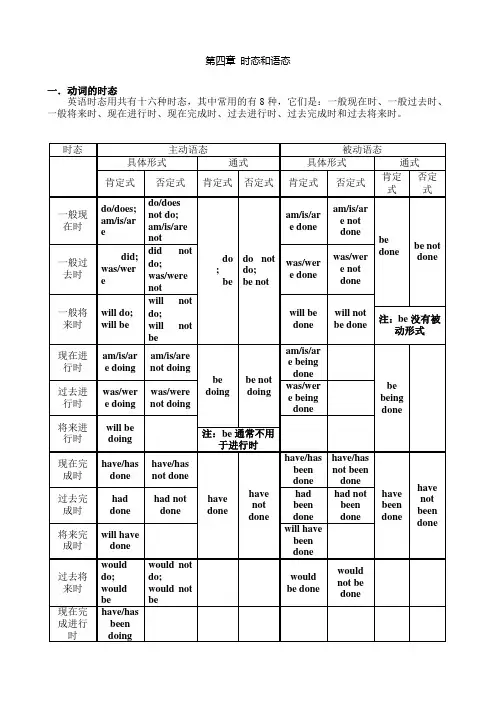
动作
时间
一般
进行
完成
完成进行
现在
work/works
一般现在时
am/is/are working
现在进行时
has/have worked
现在完成时
has/have been working
现在完成进行时
过去
worked
一般过去时
was/were working
过去进行时
had worked
过去完成时
3、一般将来的用法
1“will+动词原形”表示将来必然会发生的事实,强调事物的属性或者必然趋势,也可以表示愿意、乐意去做某事,而且没有事先准备地即兴去做某事。
Fish will die out of water.
--Iwill close the window for you.
1、一般现在时的用法
①表示现在经常性、习惯性发生的动作或存在的状态。
We have mealsthree times a day.
He is always ready to help others.
②表示客观真理、科学事实或者客观时刻表。
The sun rises in the east.
The flight takes off at ten o’clock.
表示过去某个具体的时刻正在发生的动作,常与具体的过去时间点连用,或者用于when和while引导的时间状语从句中。
Whatwere you doing at nine last night?
The reporter said that the UFO was travelling from east to west when he saw it.
2“be going to”表示“打算、计划要做某事”,另外,还可以表示根据客观迹象,推测未来可能发生的事情。
Our schoolis going to hold a sports meeting next week.
Look at the dark clouds. It is going to rain.
表示过去习惯性或者经常性发生的动作。
When the old man lived in the village, he would walk his dog in the morning.
3、进行式
1、现在进行时的用法
表示现在正在进行的动作。
The workers are painting the room now.
高中英语语法一点通——时态
知识清单
1、时态的定义及分类
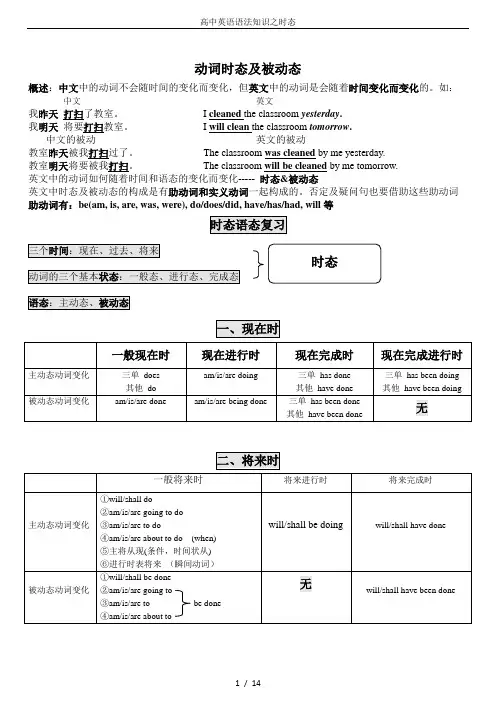
1、定义:英语中的时态表示一个动作发生的时间及动作发生时的状态,不同的时态对应不同的动词形式。
2、分类:时态由动作发生的“时间”以及发生时的“状态”组合而来,英语中的时间可以分为四大类:现在、过去、将来、过去将来;动作发生时的状态也可以分为四大类:一般式、进行式、完成式、完成进行式。四个时间和四个动作组成了英语中十六种时态(如下表所示)。
一般过去将来时
should/would be working
过去将来进行时
should/would have worked
过去将来完成时
should/would have been working
过去将来完成进行时
注:高中阶段需要掌握16种时态中的12种时态(除上表中加了下划线的四种时态)
2、一般式
He smoked a lot when he was young.
The town was old and poor in the past.
②表示过去发生的事情,暗含现在已经不再这样了。
--Come in Peter. I want to show you something.
--Oh, how nice of you! I never thought you were going to bring me a gift.
3“be about to do”表示即可将要发生的动作,该结构不与具体的将来时间状语连用,常同when连用。
The train is about to start.
I am about to leave the house when the telephone rings.
表示位置移动性的动词,如:come, go, leave, fly, arrive, begin, start等,常用现在进行时表示将来。
③用在时间状语从句和条件状语从句中,表示将来,即所谓的“主将从现”。
If it doesn’t rain tomorrow, we will go to the park.
I won’t leave until the lecture is over.
2、一般过去时的用法
①表示过去经常性、习惯性发生的动作或存在的状态。
had been working
过去完成进行时
将来
shall/will work
一般将来时
shall/will be working
将来进行时
shall/will have worked
将来完成时
shall/willhave been working
将来完成进行时
过去
should/would work
“on the point of doing”表示“即将做某事”。
This kind of rare animals is on the point of dying out.
4、过去将来的用法
过去将来时表示从过去看将要发生的动作或状态。
They said they would build another school next year.
常与always, constantly, forever, continually连用,表示反复发生的动作,含有赞赏、厌恶、遗憾等感情色彩。
He is always thinking of others first.
He is always making the same mistake.
2、过去进行时的用法
He is coming here tonight.
They are leaving for Beijing.
“be to do”表示打算、计划要做某事或者表示命令,强调应该或者必须做某事。
She is to be married next month.
You are to report it to the police.
时间
一般
进行
完成
完成进行
现在
work/works
一般现在时
am/is/are working
现在进行时
has/have worked
现在完成时
has/have been working
现在完成进行时
过去
worked
一般过去时
was/were working
过去进行时
had worked
过去完成时
3、一般将来的用法
1“will+动词原形”表示将来必然会发生的事实,强调事物的属性或者必然趋势,也可以表示愿意、乐意去做某事,而且没有事先准备地即兴去做某事。
Fish will die out of water.
--Iwill close the window for you.
1、一般现在时的用法
①表示现在经常性、习惯性发生的动作或存在的状态。
We have mealsthree times a day.
He is always ready to help others.
②表示客观真理、科学事实或者客观时刻表。
The sun rises in the east.
The flight takes off at ten o’clock.
表示过去某个具体的时刻正在发生的动作,常与具体的过去时间点连用,或者用于when和while引导的时间状语从句中。
Whatwere you doing at nine last night?
The reporter said that the UFO was travelling from east to west when he saw it.
2“be going to”表示“打算、计划要做某事”,另外,还可以表示根据客观迹象,推测未来可能发生的事情。
Our schoolis going to hold a sports meeting next week.
Look at the dark clouds. It is going to rain.
表示过去习惯性或者经常性发生的动作。
When the old man lived in the village, he would walk his dog in the morning.
3、进行式
1、现在进行时的用法
表示现在正在进行的动作。
The workers are painting the room now.
高中英语语法一点通——时态
知识清单
1、时态的定义及分类
1、定义:英语中的时态表示一个动作发生的时间及动作发生时的状态,不同的时态对应不同的动词形式。
2、分类:时态由动作发生的“时间”以及发生时的“状态”组合而来,英语中的时间可以分为四大类:现在、过去、将来、过去将来;动作发生时的状态也可以分为四大类:一般式、进行式、完成式、完成进行式。四个时间和四个动作组成了英语中十六种时态(如下表所示)。
一般过去将来时
should/would be working
过去将来进行时
should/would have worked
过去将来完成时
should/would have been working
过去将来完成进行时
注:高中阶段需要掌握16种时态中的12种时态(除上表中加了下划线的四种时态)
2、一般式
He smoked a lot when he was young.
The town was old and poor in the past.
②表示过去发生的事情,暗含现在已经不再这样了。
--Come in Peter. I want to show you something.
--Oh, how nice of you! I never thought you were going to bring me a gift.
3“be about to do”表示即可将要发生的动作,该结构不与具体的将来时间状语连用,常同when连用。
The train is about to start.
I am about to leave the house when the telephone rings.
表示位置移动性的动词,如:come, go, leave, fly, arrive, begin, start等,常用现在进行时表示将来。
③用在时间状语从句和条件状语从句中,表示将来,即所谓的“主将从现”。
If it doesn’t rain tomorrow, we will go to the park.
I won’t leave until the lecture is over.
2、一般过去时的用法
①表示过去经常性、习惯性发生的动作或存在的状态。
had been working
过去完成进行时
将来
shall/will work
一般将来时
shall/will be working
将来进行时
shall/will have worked
将来完成时
shall/willhave been working
将来完成进行时
过去
should/would work
“on the point of doing”表示“即将做某事”。
This kind of rare animals is on the point of dying out.
4、过去将来的用法
过去将来时表示从过去看将要发生的动作或状态。
They said they would build another school next year.
常与always, constantly, forever, continually连用,表示反复发生的动作,含有赞赏、厌恶、遗憾等感情色彩。
He is always thinking of others first.
He is always making the same mistake.
2、过去进行时的用法
He is coming here tonight.
They are leaving for Beijing.
“be to do”表示打算、计划要做某事或者表示命令,强调应该或者必须做某事。
She is to be married next month.
You are to report it to the police.