数字媒体艺术专业 人才培养方案
- 格式:doc
- 大小:29.42 KB
- 文档页数:4
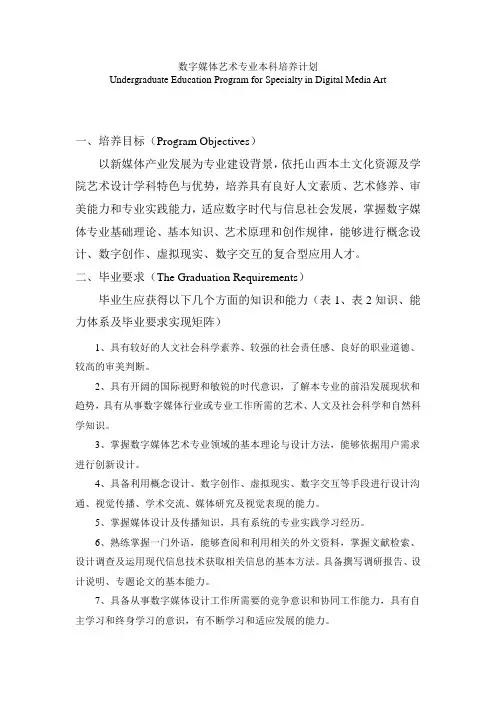
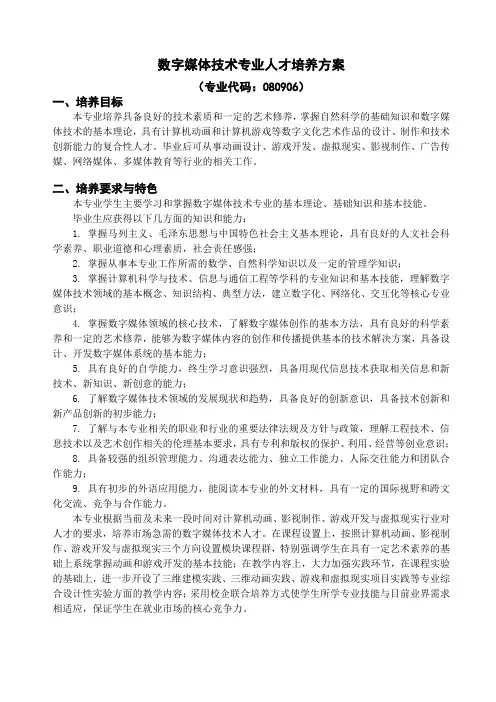
数字媒体艺术专业 人才培养方案
Digital media art major talent cultivation program.
As the digital age continues to evolve, the field of
digital media art has become increasingly important.
Therefore, it is crucial to develop a comprehensive talent
cultivation program for this discipline. In order to meet
the demands of the industry and foster skilled
professionals, a well-designed program should include a
combination of theoretical knowledge, practical skills, and
creative thinking.
随着数字时代的不断发展,数字媒体艺术领域变得越来越重要。因此,制定一套全面的人才培养方案对于这个学科至关重要。为了满足行业需求,并培养出有技能的专业人才,一个设计良好的方案应该包括理论知识、实践技能和创造性思维的结合。
In terms of theoretical knowledge, students in the digital
media art program should be equipped with a solid
understanding of art history, cultural studies, and
aesthetic theories. By studying the history and evolution of artistic forms from traditional to digital mediums,
students can develop a deeper appreciation for different
artistic movements and styles. Additionally, courses on
cultural studies provide students with a broader
perspective on how art intersects with society and
technology. Finally, an understanding of aesthetic theories
helps students critically analyze and evaluate their own
work as well as that of others.
在理论知识方面,数字媒体艺术专业的学生应该具备扎实的艺术史、文化研究和美学理论基础。通过研究从传统到数字媒介的艺术形式的历史和演变,学生可以更深入地欣赏不同的艺术运动和风格。文化研究课程使学生获得了艺术与社会、技术的更广阔视角。最后,对美学理论的了解帮助学生批判性地分析和评价自己及他人的作品。
On the practical skills front, students should be provided
with hands-on training in various digital media tools and
techniques. This includes courses on graphic design, video
editing, animation, web development, and interactive media
design. Through these technical courses, students gain
proficiency in using industry-standard software and acquire
the necessary skills to create engaging digital artworks. Additionally, workshops and projects allow students to
apply what they have learned in a real-world context,
further enhancing their practical abilities.
在实践技能方面,学生应该接受各种数字媒体工具和技术的实际操作培训。这包括平面设计、视频编辑、动画、网页开发和交互媒体设计等课程。通过这些技术课程,学生可以熟练使用行业标准软件,并获得创建引人注目数字艺术品所需的必要技能。工作坊和项目使学生能够将所学知识应用于真实环境中,进一步增强他们的实践能力。
Moreover, cultivating creative thinking is essential for
students in the digital media art program. Courses on
visual storytelling, concept development, and critical
thinking encourage students to explore innovative
approaches to their artistic practice. By encouraging
experimentation and risk-taking, students develop their own
unique artistic voice and are able to push the boundaries
of digital media art. Additionally, interdisciplinary
collaborations with students from other creative
disciplines such as film, design, and music can foster a
rich exchange of ideas and inspire new perspectives.
培养创造性思维对于数字媒体艺术专业的学生至关重要。视觉叙事、概念发展和批判性思维的课程鼓励学生探索创新的艺术实践方法。通过鼓励实验和冒险,学生能够形成自己独特的艺术观点,并能够突破数字媒体艺术的边界。与其他创意学科(如电影、设计和音乐)的学生进行跨学科合作可以促进思想交流,并激发新的视角。
In conclusion, a comprehensive talent cultivation program
for the digital media art major should encompass
theoretical knowledge, practical skills training, and
creative thinking development. By providing a well-rounded
education that combines art history, cultural studies,
technical courses, and opportunities for creativity,
students will be well-prepared to contribute to the ever-changing field of digital media art.
数字媒体艺术专业全面的人才培养方案应该包括理论知识、实践技能培训和创造性思维的发展。通过提供涵盖艺术史、文化研究、技术课程和创造机会的全面教育,学生将能够为不断变化的数字媒体艺术领域做好准备。