小学英语五年级下册第三模块 教案
- 格式:doc
- 大小:116.50 KB
- 文档页数:10
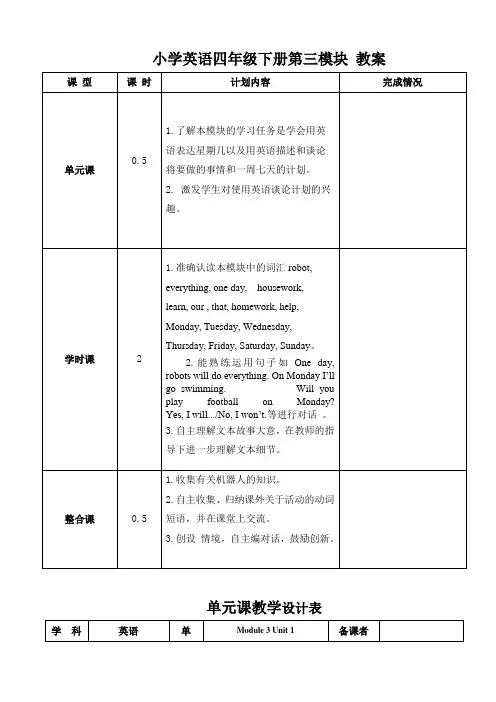
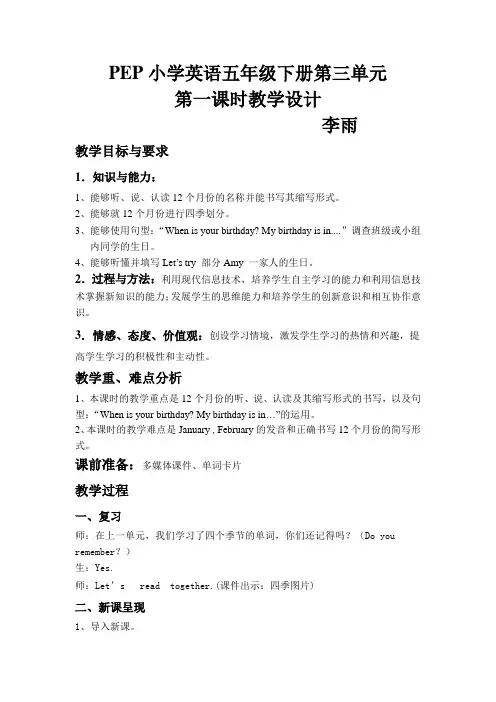
小学英语五年级下册第三模块 教案
学科: 英语 第 3单元 单元主题: English Food
课 型 课 时 计划内容
单元课
0.5
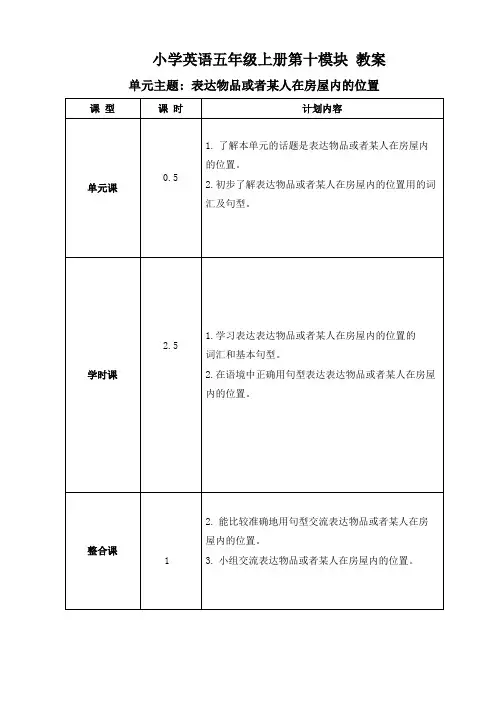
1.知道本模块的主题是正确表述食物名称并用英语进行有关食物的对话。
2.对别人关于食物的问题能做出适当的反应。并学会用恰当的方式表述日常饮食。
学时课
2.5
1.能听懂并认读词汇:email, sandwiches,
traditional,
delicious,ate, hamburger, gave, tonight等。
2. 能理解并初步运用句型:What did she have for
breakfast/lunch/dinner? What did you eat/drink last
night? 等
3.能用句型创编对话,对话需要有一定的情境。
4.分角色有感情地表演对话,进行小组比赛。
整合课
1
1.熟练表达食物名称,通过完成课前前置作业积累更多有关食物的词汇。
2.调查全班同学的日常饮食,尽量用英语表达。
学时课教学设计表
学 科 英语 单 元 Module 3 Unit 1 备课者
课 型 学时课 课 题 She had eggs and
sausages. 执教者及时间
学习
要点 1.能听懂单词 email, sandwiches, traditional ,delicious。
2.能听懂句子 What did she have for breakfast/lunch/dinner?等。
3.了解句子功能:Describing eating habits。
4.能听懂、理解课文内容,并就课文内容回答问题。
学习
目标 1.语言技能:
能用What did she have for breakfast/lunch/dinner? 对别人的日常饮食习惯安排进行询问,也能对类似问题进行回答。
2. 语言知识:
全体学生能听懂新词汇email, sandwiches, traditional ,delicious及句子What
did she have for breakfast/lunch/dinner?
3.情感态度
通过各种形式多样的活动,以及在真实环境下,教授新知识,激发学生的学习兴趣。保持学生对用英语进行交流的兴趣。
4.学习策略:
对所学内容能主动复习和归纳。
5.文化意识:
让学生对西方饮食习惯有一定的了解,并对中西方文化的差异产生兴趣并能主动了解。
探究
问题 中西方饮食文化差异是什么?
应用
作业 作业练习
1.无字幕的纯听,并能正确地跟读,认读
2.用What did she have for breakfast/lunch/dinner?对别人的日常饮食安排进行谈论,也能对类似问题进行回答。
实践应用
脱书,可根据图片提示,有感情地演示课文。 文化
阅读 了解西方饮食文化。
学习
重难点 1. 重点 新单词的认读及句型What did she have for breakfast/lunch/dinner?的使用。
2. 难点 sandwiches, traditional ,delicious等词汇的发音及有关日常时间饮食的自由表达。
教学
过程 学生活动 教师活动 二次备课
Step 1
Pre-class
Preparation
首学
互学
群学
共学 1. Ss do pre-class exercises.
A. Words collection.(food)
B. Cultural reading (Know more about
English food)
2. Ss check answers and understand in
groups.
3. Ss comment about the exercises.
1. Ask Ss to do pre-class
exercises.
2. Require Ss to check
answers and understand
in groups.
3. Ask some Ss to
comment about
exercises.
Step 2
Warm-up
首学
互学
群学
共学 Look some pictures and say the English
(the pictures of food)quickly. Show the pictures
Step 3
Lead in
首学
互学
群学 Free talk
A: What’s your favourite food?
B: My favourite food is…
A: What did you have for dinner? Do a sample with a student
Let the Ss understand
the meaning. 共学 B:….
Step 4
New Text
首学
互学
群学
共学 Activity 1
1.Listen and answer
What did Daming/Sam have for dinner?
2.Listen and follow, then read
Activity 2
1.Watch the flash and answer
Who are talking?
What are they talking about?(email)
2.Listen and find
What did Lingling have for breakfast/lunch
/dinner?
3.Read the answers
4.Learn some new words
breakfast, lunch, sandwich, fish and
chips traditional, dish, delicious
5.Listen and follow the text
6.Read in roles
1.Check the answers
2.Emphasize the
pronunciation
1. Play the flash and
show the questions.
Ask Ss to answer the
questions.
Check the answers with
Ss.
2. Play the record and
show the questions.
3.Check the answers
4. Teach the new words
and talk more about the
words.
5. Correct the students’s
pronunciation.
Step 5
Practice
首学 1.Look the pictures in activity 4
Write the English words under the pictures
2.Make a dialogue 1. Help the Ss make the
dialogue.
2.Evaluate their 互学
群学
共学 What did you have for
breakfast/lunch/dinner yesterday?
3.Show the dialogue
performance
Step 6
Consolidation
首学
互学
群学
共学 Try to make a dialogue
What did she/he… have for…
She /He…had…for… Give an example of the
dialogue.
板书
设计
Module 3 Unit 1 She had eggs and sausages.
What did she have for breakfast/lunch/dinner?
She had…(食物)for breakfast/lunch/dinner
email breakfast, lunch, sandwich, fish and chips traditional,
dish, delicious
教学
后记