
高考英语形容词和副词
- 格式:ppt
- 大小:167.00 KB
- 文档页数:6


高考英语核心形容词和副词一、无聊、厌倦1.boring /ˈbɔːrɪŋ/ adj.无聊的,令人厌烦的,乏味的a boring job/book/evening 无聊的工作/书/夜晚[e.g.] The novel was unspeakably boring.这部小说无聊得无法形容。
→ bore /bɔ:(r)/ v.使厌烦,使讨厌;2.dull /dʌl/ adj.枯燥无聊的;无精打采的;钝的;愚笨的[e.g.] The first half of the game was pretty dull.上半场比赛打得十分沉闷。
【形】doll n.洋娃娃3.tiresome /ˈtaɪəsəm/ adj.烦人的,令人厌烦的a tiresome lecture 令人困乏的演讲[e.g.] Buying a house can be a very tiresome business.买房子会是件很麻烦的事。
→ tire /ˈtaɪə(r)/ v.(使)感到疲劳;厌倦,厌烦4.weary /ˈwɪəri/ adj.使人疲劳的,疲倦的;weary out 消磨筋疲力尽world-weary 厌世的weary of/with 因…而厌烦[e.g.] Weary with toil, I haste me to my bed.精疲力竭,我赶快到床上躺下。
→ wear /weə(r)/ v.①穿,戴;②磨损,损耗;③感到疲劳;厌倦,厌烦5.tedious /ˈtiːdiəs/ adj.无聊的;厌倦的,冗长的,单调乏味的Tedious Summer 漫长夏日tedious journey 枯燥的旅行[e.g.] We had to listen to the tedious details of his operation.我们不得不听他唠叨他那次行动繁琐的细节。
【扩展】1.uninteresting /ʌnˈɪntrəstɪŋ/ adj.无趣味的,乏味的;令人厌倦的;2.humdrum /ˈhʌmdrʌm/ adj.单调的;无聊的;单调;乏味;单调乏味地进行;3.bromidic /brəʊˈmɪdɪk/ adj.陈腐的;无聊的;平庸的;4.jaded /ˈdʒeɪdɪd/ adj.厌倦的;疲倦不堪的;厌倦的二、勇敢1.courageous /kəˈreɪdʒəs/ adj.勇敢的→ courage /ˈkʌrɪdʒ/n.勇气lose courage 失去勇气take courage 鼓起勇气have/lack the courage to do sth.有/缺乏勇气做某事[e.g.] One should have the courage to accept changes in life.人要有勇气直面生活的变化。

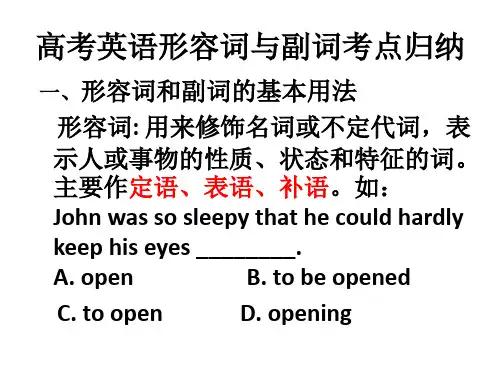
高考英语必考点学案:形容词与副词一、形容词和副词基本用法(一)形容词基本用法1.作定语,修饰名词、代词。
如:I have an interesting book.我有一本有趣的书。
2.作表语。
通常与系动词be , get , grow , bee , feel , appear, prove , seem, look, keep, smell, taste, sound , turn, remain 等连用。
如:The weather is getting cooler and cooler.天气越来越凉爽。
3.作宾补。
如:The news made every one happy.这则消息令每个人都很高兴。
The wall was painted green.墙被刷成了绿色。
4.作状语,用来说明主语的特征、状态。
表示伴随、原因、结果等。
如:Tired and hot, we had to stop to have a break.又累又热,我们不得不停下来休息。
He fell down dead.他倒下死了。
(二)副词基本用法1.作状语。
通常修饰动词、形容词、副词或整个句子。
如He runs fast.他跑得很快。
The book is very interesting.这本书很有趣。
The bus came quite early.公共汽车到得很早。
She left shortly after the meeting.会议刚结束她就走了。
(修饰介词短语)Frankly, I don’t agree with you.说实话,我不同意你的意见。
(修饰句子)2.作表语。
如:Class is over.下课了。
Time is up.时间到。
3.作定语。
如:Do you know the girl upstairs? 你认识楼上的女孩吗?Soon you will be acquainted with the people around. 不久你就会熟悉这附近的人。
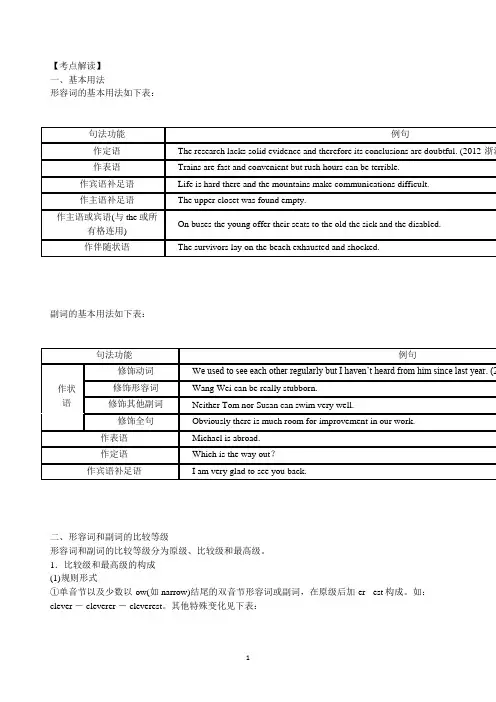
【考点解读】一、基本用法形容词的基本用法如下表:副词的基本用法如下表:二、形容词和副词的比较等级形容词和副词的比较等级分为原级、比较级和最高级。
1.比较级和最高级的构成(1)规则形式①单音节以及少数以-ow(如narrow)结尾的双音节形容词或副词,在原级后加-er -est构成。
如:clever - cleverer - cleverest。
其他特殊变化见下表:②多音节和部分双音节形容词和副词,在原级前加more most构成。
active - more active - most activehappily - more happily - most happily(2)不规则形式good/well - better - bestfar - farther/further - farthest/furthestbad /ill /badly - worse - worstold - older/elder -oldest/eldestmany/much - more - mostlittle - less - least2.基本用法(1)两者相比(甲=乙),用“as+原级+as”表示。
For cheerleaders their sport is just as serious as baxxxxseball or football.【温馨提示】在同等比较级中,若同时出现形容词修饰单数可数名词,其语序为:as+adj.+a+n.+as。
I have never had as boring a day as today.(2)两者相比(甲<乙),用“not as/so+原级+as”表示。
Unfortunately my wife isn’t so fond of them as I am.(3)两者相比(甲>乙),用“比较级+than”表示,(甲<乙)用“less+原级+than”表示。