各种状语从句及练习
- 格式:doc
- 大小:48.50 KB
- 文档页数:17
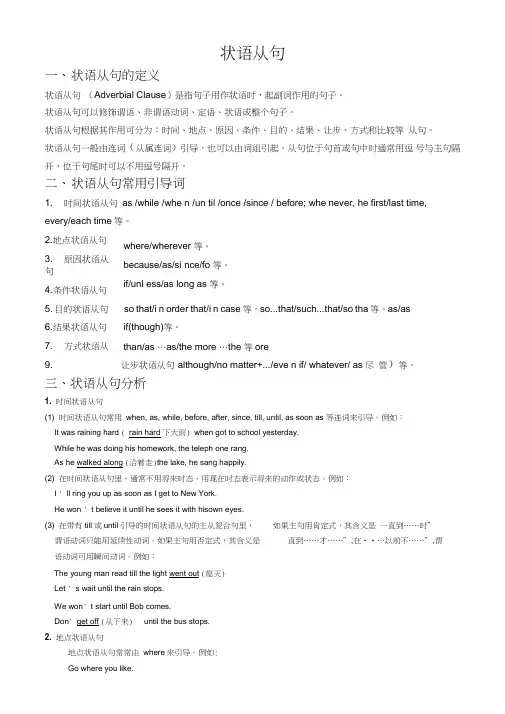
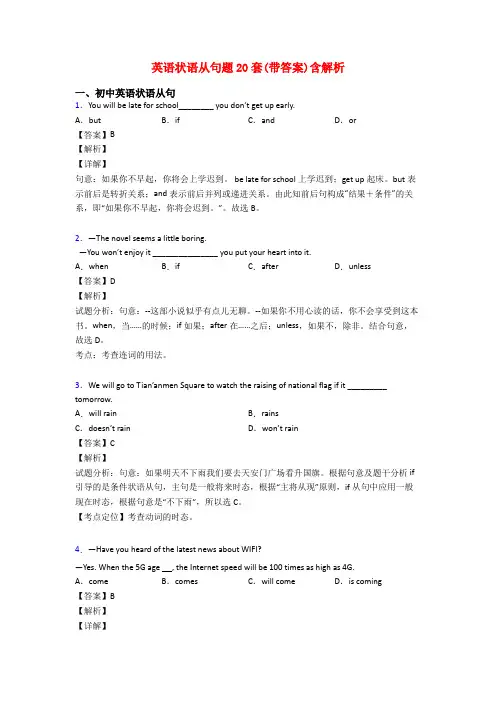
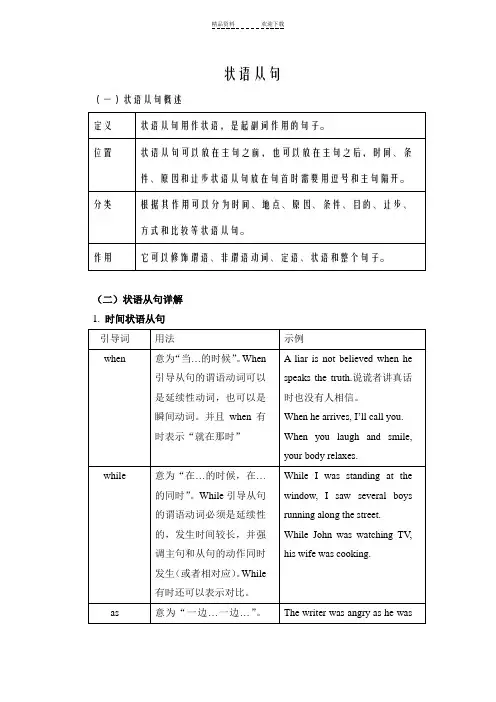
北京四中从句(二)状语从句状语从句就是一种作状语用得从句,修饰主句中得动词、形容词、副词或修饰全句,补充说明时间、地点、原因、条件、方式、程度、状态等。
㈠时间状语从句:通常用下列从属连词引导:when, while, as, before, after, since(自从…以来), till (until), as soon as(刚一…马上就…), once(一旦), whenever等。
如:①I’ll give the note to him as soon as I see him、我一瞧见她就马上把这条子给她。
②The first bell was already ringing before she got to the school gate、她走到学校大门之前,头遍铃已经响了。
③I’ll go and see her after I get the new dress、我买到新衣服之后要去瞧她。
④I won’t go home until I have finished my homework、我直到做完作业再回家。
⑤As you study a globe, you may notice that most of the large land areas are connected、当您研究地球仪时,您会注意到多数大块陆地就是相连得。
⑥Once he understood, he did what he was told to do、一旦她明白了,她就按照吩咐得去做。
⑦When clothes are washed, they don’t get dry very easily、洗了得衣服不容易干。
⑧He has read a lot since he was a child、她从小时候起已经读了许多书。
⑨I’ll discuss the problem with you whenever you are free、无论您什么时间有空,我就同您讨论这个问题。
◆the moment/ minute/ second, immediately, directly等副词式连词也可引导时间状语从句,意为“一…就…”,相当于as soon as, 此时前面不可再加连词,也不可加at, in, on等介词。
如:①I went home directly I had finished work、我一干完活就回家了。
②Please phone me immediately you get home、您一到家就给我打个电话。
③I loved her the moment I saw her、我一瞧见她就爱上了她。
④I want to see him the minute he arrives、她一来到我就要见她。
* hardly …when…与no sooner…than…得意义相当于as soon as, 也可引起时间状语从句,但只能用过去时,即从句谓语动词用一般过去时,主句谓语动词用过去完成时。
如:①I had hardly fallen asleep when I felt a soft touch on my elbow、= Hardly had I fallen asleep when I felt a soft touch on my elbow、我刚一睡着就觉得有人轻轻碰了碰我得胳膊肘。
②I had no sooner come home than it began to snow、= No sooner had I come home that it began to snow、我刚一到家天就开始下起雪来了。
◆ every time, each time, by the time, soon after, shortly after等表示时间得短语也可作为连词使用,引导时间状语从句,此时前面也常不再加连词。
如:①Each time he comes to Baoding, he comes to see me、每一次她来保定得时候都来瞧我。
②You grow younger every time I see you、我每一次见到您得时候您都显得更年轻。
③Shortly after he took office, the Southern States rebelled、她任职之后不久,南方各州就叛乱了。
④By the time he was fourteen years old, he had taught himself advanced mathematics from textbooks、到十四岁得时候,她已自学了课本上得高等数学。
◆until 与not until:当主句中得动词就是延续性动词时,常用:…until…, 表示主句得动作延续到从句表示得动作发生或完成为止。
如:①Jim stayed up until his mother came back last night、昨晚吉姆一直熬夜到她母亲回来。
②I waited until he had finished his work、我一直等到她做完工作。
当主句中得动词就是非延续性动词时,常用:not…until…, 表示“直到…才…”如:①Jim didn’t go to bed until his mother came back last night、昨晚吉姆直到她母亲回来才睡觉。
②I won’t stop shouting until you let me go、直到您放我走我才停止喊叫。
* not until 置于句首时,主句应用倒装语序。
如:Not until his mother came back did Jim go to bed、吉姆直到她母亲回来才睡觉。
* not until 也可用于强调句型:It is/was not until …that…如:It was not until his mother came back that Jim went to bed、吉姆直到她母亲回来才睡觉。
◆ before从属连词,“在…之前”,但在具体得句子中,译法多种多样。
表示“…才…” “没来得及…就” “…后…才…”如:①He measured me before I could get in a word、没等我插上一句话她就给我量好了尺寸。
②She was angry before I could explain to her、我还没来得及向她解释,她就生气了。
③He asked a second question before I could answer the first question、我还没来得及回答第一个问题,她又问了一个问题。
④I hadn’t waited long before he came、我没等多久她就来了。
⑤We can leave early in the morning before it gets too hot、不等天太热,我们一大清早就出发。
⑥They are thinking of buying the house before the prices go up、她们正在考虑趁房价未涨时把房子买下来。
⑦We walked a whole day before we got to the forest、我们走了一整天才到了森林。
*before 还常用于下列句型:It won’t be …before…用不了(多长时间)就会…It will be…before…得过(多长时间)才…It wasn’t …before…没过(多长时间)就…It was…before…过了(多长时间)才…①It will be a long time before we finish the task、我们还需要很长时间才能完成这项任务。
②It wasn’t long before he learned to use the computer、不久她就学会使用计算机了。
③It was some time before he told me about this affair、过了一段时间之后她告诉了我这件事。
④It won’t be long before we meet again、不久之后我们还会再见面得。
◆ when, while 与as:when 既可引导一持续性动作,又可引导一短暂性动作。
它可以表示主句得动作与从句得动作同时发生,或从句得动作发生在主句动作之前。
如:①When he was a child, he used to play toys、她小时候常玩玩具。
(同时)②When the class was over, we began to clean our classroom、下课后我们开始打扫教室。
(从句动作在前)while 指“在某一段时间里”或“在…期间”,表示时段或过程,强调主句与从句得行为或状态同时发生或存在。
因而while从句必须用延续性动词。
如:①While I was in San Francisco, I met him twice、当我在旧金山时,我见过她两次。
②Please don’t talk so loud while others are working、别人在干活得时候,您们不要大声喧哗。
as 当表示一个人得两个动作交替或同时进行时,多用as,表示“一边…一边…”。
另外,当两个短促行为或事件几乎同时发生时,多用as。
这两种情况一般不用when,更不能用while。
如:①She danced as she sang、她一边唱一边跳。
②Just as he caught the worm, he cried out、她刚抓住那只虫子,就大声叫了出来。
* 当when引导得状语从句就是系表结构(名词作表语),其主语又与主句一致时,往往可用as引导得省略从句代替,应注意as在这里就是连词,不就是介词。
如:When he was a young man, he was a storekeeper and a postmaster、= As a young man, he was a storekeeper and a postmaster、她年轻时开过零售店,后来当过邮政所所长。
* when 除了作从属连词引导时间状语从句,还可作并列连词连接两个并列分句,这样用时,when前可以用逗号,也可不用逗号。
此时,when不译作“当…得时候”,而常常表示“正在…时,这时另一件事发生了”。
其句型有三种形式:be about to do sth、when…正要做某事时突然…be doing sth、when… 正在做某事时突然…had done sth、when…某个动作刚开始或持续没多久,这时另一动作突然发生了如:①I was about to start when the telephone rang、我刚要动身电话就响起来了。