
Cancer & Chemicals
- 格式:pptx
- 大小:2.22 MB
- 文档页数:7
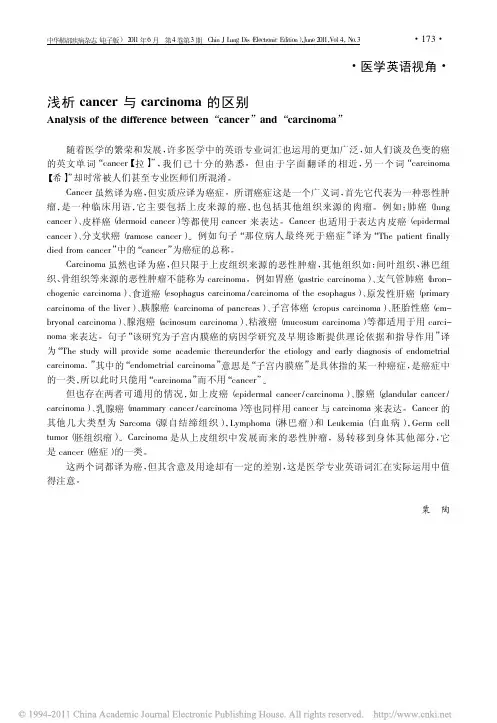
·医学英语视角·浅析cancer 与carcinoma 的区别Analysis of the difference between “cancer ”and “carcinoma ”随着医学的繁荣和发展,许多医学中的英语专业词汇也运用的更加广泛,如人们谈及色变的癌的英文单词“cancer 【拉】”,我们已十分的熟悉。
但由于字面翻译的相近,另一个词“carcinoma【希】”却时常被人们甚至专业医师们所混淆。
Cancer 虽然译为癌,但实质应译为癌症。
所谓癌症这是一个广义词,首先它代表为一种恶性肿瘤,是一种临床用语,它主要包括上皮来源的癌,也包括其他组织来源的肉瘤。
例如:肺癌(lung cancer )、皮样癌(dermoid cancer )等都使用cancer 来表达。
Cancer 也适用于表达内皮癌(epidermal cancer )、分支状癌(ramose cancer )。
例如句子“那位病人最终死于癌症”译为“The patient finally died from cancer ”中的“cancer ”为癌症的总称。
Carcinoma 虽然也译为癌,但只限于上皮组织来源的恶性肿瘤,其他组织如:间叶组织、淋巴组织、骨组织等来源的恶性肿瘤不能称为carcinoma 。
例如胃癌(gastric carcinoma )、支气管肺癌(bron-chogenic carcinoma )、食道癌(esophagus carcinoma /carcinoma of the esophagus )、原发性肝癌(primary carcinoma of the liver )、胰腺癌(carcinoma of pancreas )、子宫体癌(cropus carcinoma )、胚胎性癌(em-bryonal carcinoma )、腺泡癌(acinosum carcinoma )、粘液癌(mucosum carcinoma )等都适用于用carci-noma 来表达。

癌症(cancer)简介一、癌症简介1. 癌:是人体内的一种新生物(就是在正常情况下不应该有的东西)。
这种新生物由一群不随生理需要而自由发展的癌细胞所组成.是组织来源为上皮组织的恶性肿瘤,其细胞常侵及周围健康组织,引起邻近或远隔部位的转移。
2.肿瘤和癌:肿瘤分良性和恶性,其中恶性肿瘤中组织来源为上皮组织的为癌。
如:皮肤、乳腺、粘膜,许多内脏器官及腺体的恶性肿瘤都可能为癌,而其它恶性肿瘤的组织来源于各种间叶组织(结缔组织、脂肪、肌肉、血管、骨、软骨等)如:骨肉瘤、脂肪肉瘤、纤维肉瘤、滑膜肉瘤等(根据肿瘤对人体危害轻重不同,可分为良性肿瘤和恶性肿瘤。
良恶性肿瘤的鉴别依据主要为分化,此外,转移、复发也是重要的判断依据。
)1)良性肿瘤良性肿瘤通常生长缓慢,呈膨胀扩展,边界清楚,常有包膜;肿瘤分化好,色泽及质地接近正常相应组织,组织形态及细胞形态变异较小,核分裂象不易见到,各种细胞器、膜结构、细胞连接变异不大;一般不复发或仅少数复发,不转移,通常预后良好。
主要的良性肿瘤包括以下类型:脂肪瘤,血管瘤,骨瘤,软骨瘤和腺瘤等。
2)恶性肿瘤恶性肿瘤通常生长迅速,呈浸润性生长,可破坏周围组织,无包膜或者仅有假包膜;肿瘤分化差,组织及细胞形态与其相应的正常组织相差甚远,显示异形性,排列紊乱或极性丧失;细胞核形状不规则,常有不同程度的深染,核仁增大增多,核分裂象增多,并出现病理性核分裂象;肿瘤内多出现继发性改变,如出血、坏死、囊性变、感染等。
超微结构也有不同程度改变。
肿瘤细胞代谢功能不正常,核酸代谢旺盛,酶谱改变,细胞的遗传性有显著改变。
肿瘤浸润广泛,经常复发,容易转移,危及生命。
3)交界性肿瘤良性肿瘤和恶性肿瘤之间界线并非绝然,良性向恶性演变也呈渐进性,因此客观上存在着一些良恶性之间的中间型肿瘤、临界性肿瘤或交界性肿瘤。
此外,主观上难以区别良恶性的肿瘤也可称为交界性肿瘤。
3.癌的三个特点:1)分裂不受控制,客观存在总是优先夺取养料,侵压周围健康组织。

医学常用肿瘤名称中英文翻译肿瘤在医学中是一个常见的概念,它指的是异常增生的细胞群体。
肿瘤可以分为良性和恶性两种类型,其中恶性肿瘤常被称为癌症。
在医学领域中,有许多常用的肿瘤名称需要中英文翻译,以便于国际间的交流与合作。
以下是一些常见肿瘤名称及其中英文对照:1. 食管癌 (Esophageal cancer)2. 胃癌 (Gastric cancer)3. 肝癌 (Liver cancer)4. 胰腺癌 (Pancreatic cancer)5. 大肠癌 (Colorectal cancer)6. 肺癌 (Lung cancer)7. 乳腺癌 (Breast cancer)8. 卵巢癌 (Ovarian cancer)9. 子宫颈癌 (Cervical cancer)10. 头颈部肿瘤 (Head and neck tumors)11. 前列腺癌 (Prostate cancer)12. 脑瘤 (Brain tumor)13. 黑色素瘤 (Melanoma)14. 骨肿瘤 (Bone tumors)15. 乳腺瘤 (Breast tumor)16. 十二指肠癌 (Duodenal cancer)17. 胆囊癌 (Gallbladder cancer)18. 肾癌 (Renal cell carcinoma)以上仅为一部分常见肿瘤的中英文对照,实际上在医学名词中有更多肿瘤名称需要进行翻译和对照。
这些肿瘤名称的中英文对照的准确性对于医学领域的研究和诊断具有重要意义。
医学翻译是一项专业性很高的工作,它要求译者具备扎实的医学知识、语言能力和翻译技巧。
在进行肿瘤名称的翻译时,需要注意以下几点:首先,要了解肿瘤的类型、部位和特点,以便准确理解其名称的含义。
肿瘤名称中的每个词汇都具备一定的医学意义,因此译者必须对其进行正确的翻译。
其次,在进行中英文对照时,要确保语义的准确、明确和一致。
翻译过程中需要考虑两种语言的语法结构和表达习惯,以便将原文的意思准确传达到译文中。

癌症中英文对照Cancer - 癌症Cancer is a group of diseases characterized by the uncontrolled growth and spread of abnormal cells in the body. It is one of the leading causes of death worldwide, affecting millions of people each year. In Chinese, cancer is commonly referred to as "癌症" (ái zhèng).Types of Cancer - 癌症类型There are many different types of cancer, each with its own specific characteristics. Here are some common types of cancer and their corresponding Chinese translations:1. Breast Cancer - 乳腺癌(rǔ xiàn ái)2. Lung Cancer - 肺癌 (fèi ái)3. Prostate Cancer - 前列腺癌 (qián liè xiàn ái)4. Colorectal Cancer - 结肠直肠癌 (jié cháng zhí cháng ái)5. Skin Cancer - 皮肤癌(pí fū ái)6. Leukemia - 白血病 (bái xuè bìng)7. Ovarian Cancer - 卵巢癌(luǎn cháo ái)8. Pancreatic Cancer - 胰腺癌 (yí xiàn ái)Causes and Risk Factors - 引起癌症的原因和风险因素The development of cancer can be attributed to a variety of factors, including genetic mutations, environmental exposures, and lifestyle choices. Some common causes and risk factors for cancer include:1. Tobacco Use - 吸烟2. Alcohol Consumption - 饮酒3. Unhealthy Diet - 不健康的饮食4. Exposure to Carcinogens - 接触致癌物质5. Family History of Cancer - 家族癌症史6. Age - 年龄7. Obesity - 肥胖8. Chronic Infections - 慢性感染Early Detection and Treatment - 早期检测和治疗Early detection plays a critical role in improving the prognosis and survival rates of cancer patients. Regular screenings and tests can help identify cancer at an early stage when treatment is most effective. In Chinese, early detection is commonly referred to as "早期检测" (zǎo qī jiǎn cè).Treatment options for cancer vary depending on the type and stage of the disease. Common treatment modalities include surgery, chemotherapy, radiation therapy, immunotherapy, and targeted therapy. In Chinese, treatment is commonly referred to as "治疗" (zhì liáo).Prevention Strategies - 预防策略While not all cancers can be prevented, there are several strategies individuals can adopt to reduce their risk of developing cancer. These strategies include:1. Healthy Lifestyle Choices - 健康的生活方式选择2. Regular Exercise - 定期锻炼3. Healthy Diet - 健康饮食4. Avoidance of Carcinogens - 避免致癌物质5. Vaccinations - 接种疫苗6. Sun Protection - 防晒7. Regular Check-ups - 定期体检Support and Resources - 支持与资源Receiving a cancer diagnosis can be devastating for individuals and their families. However, there are numerous support groups, organizations, and resources available to provide emotional support, financial assistance, and educational materials. In Chinese, support is commonly referred to as "支持" (zhī chí), and resources as "资源" (zī yuán).Conclusion - 结论Cancer is a complex disease that affects millions of people globally. Understanding the terminology and concepts related to cancer in bothEnglish and Chinese is essential for effective communication, research, and patient care. By continuing to advance our knowledge, prevention strategies, and treatment options, we can work towards reducing the burden of cancer and improving the lives of those affected.。