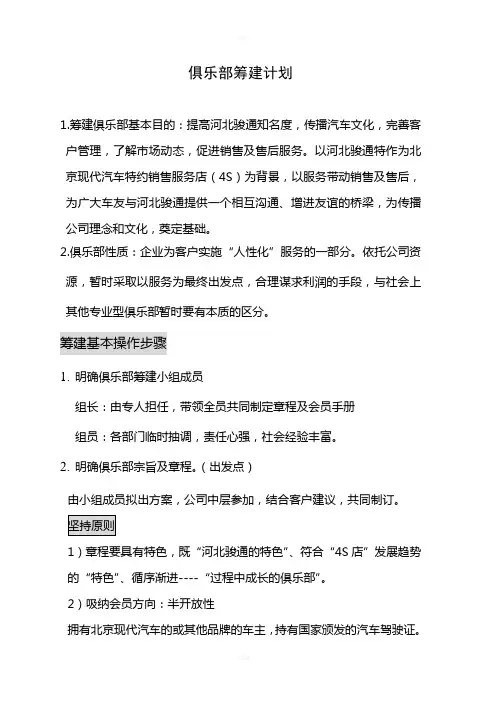
俱乐部建设流程方案
- 格式:doc
- 大小:17.31 KB
- 文档页数:6
俱乐部建设流程方案
英文回答:
Club construction is a complex process that involves
various steps and considerations. It requires careful
planning, effective communication, and efficient execution.
In this response, I will outline a general framework for
club construction.
First and foremost, it is crucial to identify the
purpose and goals of the club. This involves determining
the target audience, the specific activities or services
the club will offer, and the desired outcomes. For example,
if the club aims to promote environmental awareness, the
goals could include organizing educational workshops,
participating in community clean-up events, and advocating
for sustainable practices.
Once the goals are established, the next step is to
gather a group of like-minded individuals who share the same interests and passion. This can be done through
networking, advertising, or reaching out to potential
members. It is important to create a welcoming and
inclusive environment to attract diverse members. For
instance, hosting an introductory event or conducting
interviews can help assess the compatibility of potential
members with the club's vision.
After assembling a core group of members, it is
essential to establish a leadership structure. This
involves electing or appointing individuals to key
positions such as president, vice-president, treasurer, and
secretary. Each role comes with specific responsibilities
and plays a crucial part in the smooth functioning of the
club. For instance, the president is responsible for
overall coordination and decision-making, while the
treasurer manages the club's finances.
With the leadership structure in place, the club can
start developing a detailed action plan. This plan should
outline the specific activities, events, and initiatives
that will be undertaken to achieve the club's goals. It should also include a timeline, budget, and allocation of
responsibilities among members. For example, if the club
plans to organize a fundraising event, the action plan
should specify the tasks involved, such as securing a venue,
promoting the event, and managing the finances.
Once the action plan is finalized, it is time to put it
into action. This involves executing the planned activities,
coordinating with members, and ensuring effective
communication. Regular meetings should be held to discuss
progress, address challenges, and make necessary
adjustments. It is important to foster a collaborative and
supportive atmosphere within the club. For instance,
members can organize study groups or mentorship programs to
help each other achieve their goals.
As the club progresses, it is important to evaluate its
effectiveness and impact. This can be done through feedback
surveys, assessments of member satisfaction, and monitoring
the achievement of goals. Based on the evaluation results,
necessary improvements and adjustments can be made to
enhance the club's performance. For example, if the feedback suggests that members are interested in additional
networking opportunities, the club can organize more social
events or invite guest speakers.
In conclusion, the process of club construction
involves identifying goals, attracting members,
establishing a leadership structure, developing an action
plan, executing activities, and evaluating effectiveness.
It requires careful planning, effective communication, and
continuous improvement. By following this framework, a club
can be successfully built and contribute to the personal
and professional growth of its members.
中文回答:
俱乐部建设是一个复杂的过程,涉及各种步骤和考虑因素。它需要仔细的规划、有效的沟通和高效的执行。在这个回答中,我将概述俱乐部建设的一般框架。
首先,确定俱乐部的目的和目标是至关重要的。这包括确定目标受众、俱乐部将提供的具体活动或服务以及期望的结果。例如,如果俱乐部旨在促进环境意识,目标可以包括组织教育研讨会、参与社区清洁活动和倡导可持续实践。
一旦确定了目标,下一步是通过网络、广告或与潜在会员联系来聚集一群志同道合的人。创建一个友好和包容的环境以吸引多样化的会员是很重要的。例如,举办一个介绍性活动或进行面试可以帮助评估潜在会员与俱乐部愿景的兼容性。
在组建了一支核心成员团队之后,建立领导架构是至关重要的。这包括选举或任命人员担任主席、副主席、财务主管和秘书等关键职位。每个角色都有具体的责任,对俱乐部的顺利运作起着重要作用。例如,主席负责整体协调和决策,而财务主管负责管理俱乐部的财务。
在建立了领导架构之后,俱乐部可以开始制定详细的行动计划。该计划应概述为实现俱乐部目标而采取的具体活动、事件和倡议。它还应包括时间表、预算和成员之间的责任分配。例如,如果俱乐部计划组织一次筹款活动,行动计划应具体规定涉及的任务,如确保场地、促销活动和财务管理。
一旦行动计划最终确定,就是付诸行动的时候了。这包括执行计划的活动、与成员协调和确保有效的沟通。应定期举行会议,讨论进展情况、解决挑战并进行必要的调整。在俱乐部内营造合作和支持的氛围是很重要的。例如,成员可以组织学习小组或导师计划,互相帮助实现各自的目标。
随着俱乐部的发展,评估其效果和影响是很重要的。可以通过反馈调查、评估会员满意度和监测目标的实现情况来进行评估。根据评估结果,可以进行必要的改进和调整,以增强俱乐部的表现。例如,如果反馈表明会员对额外的社交机会感兴趣,俱乐部可以组织更多的社交活动或邀请嘉宾演讲。
总之,俱乐部建设的过程包括确定目标、吸引会员、建立领导架构、制定行动计划、执行活动和评估效果。它需要仔细的规划、有效的沟通和持续改进。通过遵循这个框架,一个俱乐部可以成功建立,并为其成员的个人和职业成长做出贡献。