
英译汉技巧之一—否定句式
- 格式:ppt
- 大小:207.00 KB
- 文档页数:22
……………………………………………………………最新资料推荐…………………………………………………
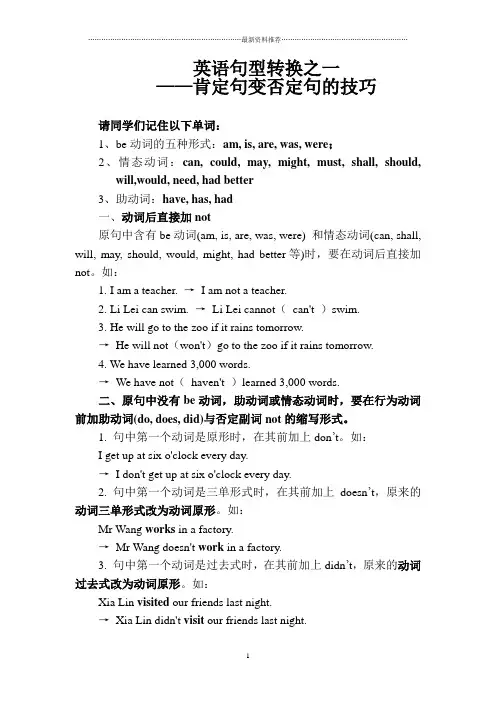
1 英语句型转换之一
——肯定句变否定句的技巧
请同学们记住以下单词:
1、be动词的五种形式:am, is, are, was, were;
2、情态动词:can, could, may, might, must, shall, should,
will,would, need, had better
3、助动词:have, has, had
一、动词后直接加not
原句中含有be动词(am, is, are, was, were) 和情态动词(can, shall,
will, may, should, would, might, had better等)时,要在动词后直接加not。如:
1. I am a teacher. → I am not a teacher.
2. Li Lei can swim. → Li Lei cannot( can't )swim.
3. He will go to the zoo if it rains tomorrow.
→ He will not(won't)go to the zoo if it rains tomorrow.
4. We have learned 3,000 words.
→ We have not( haven't )learned 3,000 words.
二、原句中没有be动词,助动词或情态动词时,要在行为动词前加助动词(do, does, did)与否定副词not的缩写形式。
1. 句中第一个动词是原形时,在其前加上don’t。如:
I get up at six o'clock every day.
→ I don't get up at six o'clock every day.
2. 句中第一个动词是三单形式时,在其前加上doesn’t,原来的动词三单形式改为动词原形。如:
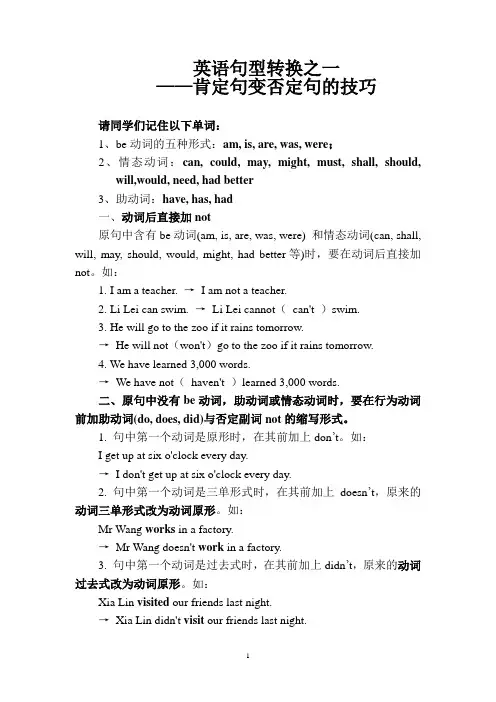
1 英语句型转换之一
——肯定句变否定句的技巧
请同学们记住以下单词:
1、be动词的五种形式:am, is, are, was, were;
2、情态动词:can, could, may, might, must, shall, should,
will,would, need, had better
3、助动词:have, has, had
一、动词后直接加not
原句中含有be动词(am, is, are, was, were) 和情态动词(can, shall,
will, may, should, would, might, had better等)时,要在动词后直接加not。如:
1. I am a teacher. → I am not a teacher.
2. Li Lei can swim. → Li Lei cannot( can't )swim.
3. He will go to the zoo if it rains tomorrow.
→ He will not(won't)go to the zoo if it rains tomorrow.
4. We have learned 3,000 words.
→ We have not( haven't )learned 3,000 words.
二、原句中没有be动词,助动词或情态动词时,要在行为动词前加助动词(do, does, did)与否定副词not的缩写形式。
1. 句中第一个动词是原形时,在其前加上don’t。如:
I get up at six o'clock every day.
→ I don't get up at six o'clock every day.
2. 句中第一个动词是三单形式时,在其前加上doesn’t,原来的动词三单形式改为动词原形。如:
Mr Wang works in a factory.
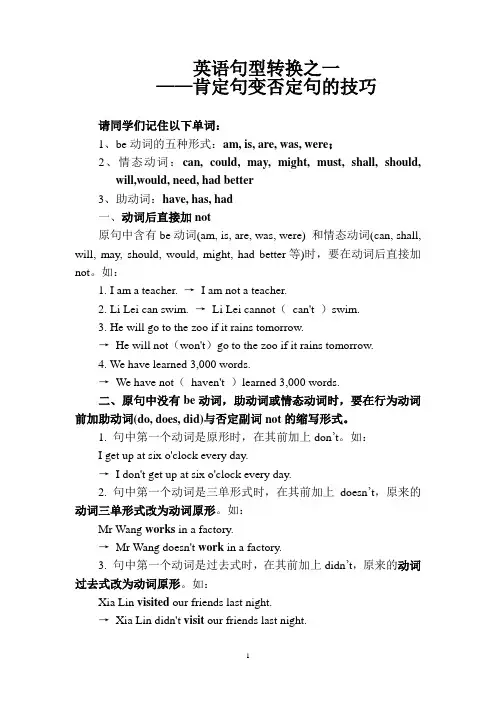
1 英语句型转换之一
——肯定句变否定句的技巧
请同学们记住以下单词:
1、be动词的五种形式:am, is, are, was, were;
2、情态动词:can, could, may, might, must, shall, should,
will,would, need, had better
3、助动词:have, has, had
一、动词后直接加not
原句中含有be动词(am, is, are, was, were) 和情态动词(can, shall,
will, may, should, would, might, had better等)时,要在动词后直接加not。如:
1. I am a teacher. → I am not a teacher.
2. Li Lei can swim. → Li Lei cannot( can't )swim.
3. He will go to the zoo if it rains tomorrow.
→ He will not(won't)go to the zoo if it rains tomorrow.
4. We have learned 3,000 words.
→ We have not( haven't )learned 3,000 words.
二、原句中没有be动词,助动词或情态动词时,要在行为动词前加助动词(do, does, did)与否定副词not的缩写形式。
1. 句中第一个动词是原形时,在其前加上don’t。如:
I get up at six o'clock every day.
→ I don't get up at six o'clock every day.
2. 句中第一个动词是三单形式时,在其前加上doesn’t,原来的动词三单形式改为动词原形。如:
Mr Wang works in a factory.

1 英译汉中的反译法
在英译汉过程中,我们常常遇到这样一种情况,即原词所表达的并不是其字面意义,而是其字面意义的反义,或者说是对其字面意义的否定,可这种否定又往往不出现否定词,这种情况并不很少,给翻译工作带来很大的麻烦。
下面是常见的两个词组,请注意它们的汉语意思:
① riot police防暴警察(即anti-riot police,而不是暴乱的警察)
②crisis law反危机法案(即anti-crisis law)
这两个词组的翻译采用的就是反译法,译文都是其字面意辽的否定或反义,这样既表达了原文的真正含义,又符合汉语的表达习惯,使人一看就懂。
另外,英文报刊文章标题的翻译有时也采用反译法。如《中国日报》China Daily)1995年1月16日头版刊登一则新闻,题目是Inflation is target of bank’s new policy,主要说的是银行在1995年将来取有力措施制止通货膨胀。但题目的字面意思恰恰相反。因此我们在翻译时必须把inflation看成是anti-inflation,使之文题一致。这样的标题在英文报刊中比较常见,目的是为简练及醒目,我们在翻译时要格外注意,切勿望文生义。
再让我们来看看下面的例子:
(1)Sidney Simon called the college grading system“archaic,prescientific, bureaucratic
invention,",and“about as accurate as police estimates of crowds of peace marches.”
如果按字面翻译,这句话是这样的:
西德尼·西蒙称这种大学评级制度“是过时的,缺乏科学验证”,而且还是“官僚主义的产物”而且“简直同警察估计和平示威人数一样准确。”