
新概念英语第二册 Lesson 82课件
- 格式:ppt
- 大小:1.04 MB
- 文档页数:29
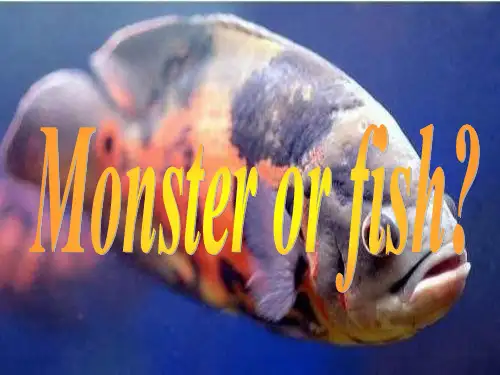
Lesson 82 Monster or fish? 是妖还是鱼?
【New words and expressions】(7)
monster n. 怪物 sailor n. 海员
sight v. 见到 creature n. 动物,生物
peculiar adj. 奇怪的,不寻常的
shining adj. 闪闪发光的 oarfish n. 桨鱼
一.單詞講解:
★ monster (1) n. 怪物
a one-eyed monster獨眼怪物
eg:A dragon is a fabulous monster . 龍是一個傳說中的怪物
(2) 巨大物、(做形容詞) 巨大
eg:The spaceship was a real monster . 巨大的宇宙飛船
a monster pumpkin 南瓜
monstrous adj. 畸形的, 怪異的, 巨大的
a monstrous iceberg 巨大的冰山
monstrously adv. ひどく、非常に
★ sailor (1) n. 海员、水手
eg:His father is a sailor .
(2) 乘船的人 (與adj. 連用)
a good sailor 不暈船的人 ←→ a bad sailor 暈船的人
sail(同音詞sale) (1)n. 帆 put up a sail 揚帆
(2) n.航行、航程 go for a sail 乘船去航行
eg:It’s a forty-minute sail from Dove to Calais .
從多佛到加來需45分鐘的航行
in full sail 以全速 ; set sail 啟航

新概念英语文本第二册Lesson 82
Lesson 82
Monster or fish?
是妖还是鱼?
First listen and then answer the question.听录音,然后回答以下问题。
What was the monster called?
Fishermen and sailors sometimes claim to have seen monsters in the sea. Though
people have often laughed at stories told by seamen, it is now known that many of
these 'monsters' which have at times been sighted are simply strange fish.
Occasionally, unusual creatures are washed to the shore, but they are rarely caught
out at sea. Some time ago, however, a peculiar fish was caught near Madagascar.
A small fishing boat was carried miles out to sea by the powerful fish as it pulled
on the line. Realizing that this was no ordinary fish, the fisherman made every effort
not to damage it in any way. When it was eventually brought to shore, it was found
to be over thirteen feet long. It had a head like a horse, big blue eyes, shining
新概念英语第二册课后习题答案详解Lesson 82练习答案 Key to written exercises
1.难点练习答案
1 wash up 2 laugh at 3 washed 4 laughed 5 wash
2.多项选择题答案
1. a
根据课文第3-4行…these ‘monsters’…are simply strange fish, 可以推测只有a. are
probably unusual fish (或许是不寻常的鱼)与课文的内容相符,而其他3个选择都与课文所描述的情形不符。
2. b
根据课文第6行 …a peculiar fish was caught near Madagascar (在马达加斯加福建的海里捕到了一条奇怪的鱼)可以判断,只有b. an unusual fish 与课文中的内容一致,而其他3个选择都与课文的内容不符,所以选b.
3. a
该句的谓语动词claim(声称)是及物动词,它后面可以跟名词或以that 引导的从句,也可以跟to 加动词不定式做宾语。 只有a. that they have seen 是个从句,可以做claim 的宾语。而其他3个选择都不正确。 b. have seen 既不是从句,又不是不定式,因为前面没有to,因此不能用在claim 后面;c. to be seen 虽然是不定式,但不定式的被动式不符合这个句子的要求;d. to being seen 不符合语法,所以选a. 4. d
本句中的关系从句应该是被动语态才合乎语法,才能使句子意思完整。 a. which, b. which
have 不合乎语法;c. which have being 也不合乎语法,只有选d. which have been 能构成被动语态关系从句,意思完整。
5. c
a. realizing , b. having realized 都不合乎语法,因为他们都不能直接跟在when 后面,

新概念英语第二册Lesson82~84学习笔记
新概念英语第二册Lesson82学习笔记
1、Fishermen and sailors sometimes claim to have seen
monsters in the sea.
1).to have seen是不定式的完成式结构。不定式的完成式用于不定式的动作发生在谓语动作之前的情况。不定式的完成式常用于believe,declare,find,say,see,know,think,understand等动词之后(这些动词常用被动语态):eg. I'm sorry to have taken up
so much of your time.
2) claim: 宣称,断言
Claim (that)
eg. He claimed that Tom had stolen his wallet.
Claim to
eg. I don’t claim to be an expert
It is claimed that 据说
eg. It is claimed that some doctors were working 80 hours
a week.
2、Though people have often laughed at stories told by
seamen, it is now known that many of these "monsters" which
have at times been sighted are simply strange fish.
laugh v. 笑
eg. Everybody laughed when the circus clown made his
appearance. laugh at: 因…而笑; 嘲笑
eg. Everybody laughs at my accents 大家都取笑我的口音