英语知识点动词总结
- 格式:docx
- 大小:24.92 KB
- 文档页数:4
英语知识点动词总结
Types of Verbs
1. Action Verbs: These verbs express physical or mental actions. For example: run, eat, think,
write, etc.
2. Linking Verbs: Linking verbs connect the subject of a sentence to the predicate and
describe a state or condition. For example: is, am, are, was, were, etc.
3. Helping Verbs: Also known as auxiliary verbs, helping verbs are used to form tenses,
moods, and voices of other verbs. For example: have, has, had, do, does, did, etc.
4. Modal Verbs: Modal verbs express the attitude of the speaker towards the action or state
of the main verb. They include can, could, may, might, shall, should, will, would, must, etc.
Tenses of Verbs
Verbs in English are divided into three primary tenses: past, present, and future. Each tense
has four aspects: simple, continuous, perfect, and perfect continuous.
1. Simple Tense: This tense is used to express actions that occur at a specific point in time.
For example: I work, she sleeps, they play, etc.
2. Continuous Tense: This tense is used to express actions that are ongoing or in progress at
a particular time. For example: I am working, she is sleeping, they are playing, etc.
3. Perfect Tense: This tense is used to express actions that have been completed before a
certain point in time. For example: I have worked, she has slept, they have played, etc.
4. Perfect Continuous Tense: This tense is used to express actions that started in the past
and continue up to the present or a specific point in the past, present, or future. For example:
I have been working, she has been sleeping, they have been playing, etc.
Usage of Verbs
Verbs are used in various ways to convey different meanings and functions in a sentence.
Some common usages of verbs include:
1. Action: To indicate physical or mental actions.
2. State: To describe a state or condition of the subject.
3. Change: To indicate a change or transformation.
4. Intent: To express intentions or desires.
5. Permission: To indicate permission or ability. 6. Obligation: To express obligations or necessity.
7. Emotion: To convey emotions or feelings.
8. Experiences: To talk about past experiences or events.
9. Future: To indicate future actions or plans.
10. Possession: To express ownership or possession.
Irregular Verbs
In English, there are many irregular verbs that do not follow the standard rules for forming
past tense and past participle forms. Some of the most common irregular verbs include:
1. Be: am/is/are, was/were, been
2. Have: have/has, had
3. Do: do/does, did
4. Go: go/goes, went, gone
5. Come: come, came, come
6. Eat: eat/eats, ate, eaten
7. Give: give, gave, given
8. Take: take/takes, took, taken
9. See: see, saw, seen
10. Make: make/makes, made
11. Say: say/says, said
12. Think: think/thinks, thought
13. Know: know/knows, knew, known
14. Run: run/runs, ran, run
15. Write: write/writes, wrote, written
Regular Verbs
Regular verbs follow a standard pattern for forming past tense and past participle forms by
adding -ed to the base form of the verb. For example:
1. Walk: walk/walks, walked 2. Play: play/plays, played
3. Talk: talk/talks, talked
4. Jump: jump/jumps, jumped
5. Work: work/works, worked
6. Dance: dance/dances, danced
7. Cook: cook/cooks, cooked
8. Clean: clean/cleans, cleaned
9. Study: study/studies, studied
10. Open: open/opens, opened
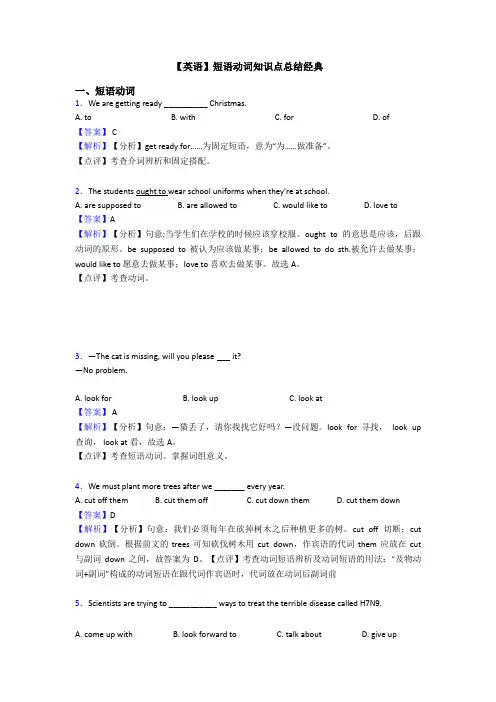
Phrasal Verbs
Phrasal verbs are combinations of a verb and one or more particles (prepositions, adverbs,
or both) that together convey a unique meaning. Some examples of phrasal verbs include:
1. Look up: to search for information.
2. Take off: to remove something, or to leave the ground (for a plane)
3. Put off: to delay or postpone something
4. Turn on: to start a machine or device
5. Look forward to: to anticipate or expect something with pleasure
6. Come across: to find or meet someone or something unexpectedly
7. Give up: to stop doing something, or to surrender
8. Get along: to have a good relationship with someone
9. Set up: to establish or arrange something
10. Run out: to deplete or exhaust the supply of something
Verb Agreement
Verbs must agree with their subjects in number and person. This means that the form of the
verb changes depending on whether the subject is singular or plural, and whether the
subject is first, second, or third person.
For example: