
高中英语语法之主谓一致
- 格式:ppt
- 大小:29.50 KB
- 文档页数:3
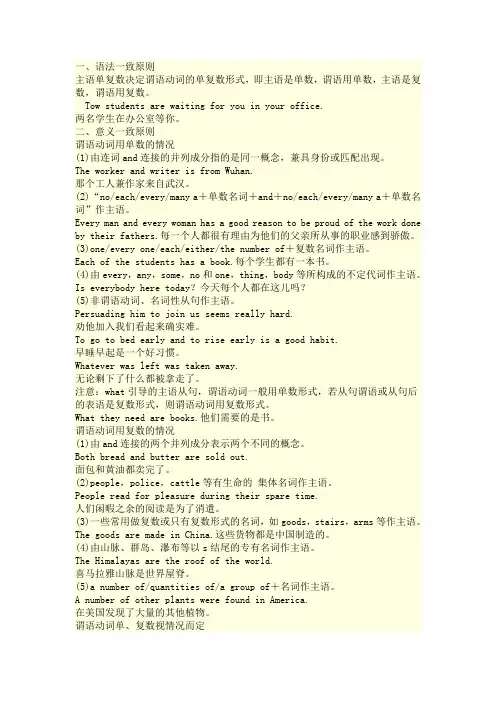
一、语法一致原则主语单复数决定谓语动词的单复数形式,即主语是单数,谓语用单数,主语是复数,谓语用复数。
Tow students are waiting for you in your office.两名学生在办公室等你。
二、意义一致原则谓语动词用单数的情况(1)由连词and连接的并列成分指的是同一概念,兼具身份或匹配出现。
The worker and writer is from Wuhan.那个工人兼作家来自武汉。
(2)“no/each/every/many a+单数名词+and+no/each/every/many a+单数名词”作主语。
Every man and every woman has a good reason to be proud of the work done by their fathers.每一个人都很有理由为他们的父亲所从事的职业感到骄傲。
(3)one/every one/each/either/the number of+复数名词作主语。
Each of the students has a book.每个学生都有一本书。
(4)由every,any,some,no和one,thing,body等所构成的不定代词作主语。
Is everybody here today?今天每个人都在这儿吗?(5)非谓语动词、名词性从句作主语。
Persuading him to join us seems really hard.劝他加入我们看起来确实难。
To go to bed early and to rise early is a good habit.早睡早起是一个好习惯。
Whatever was left was taken away.无论剩下了什么都被拿走了。
注意:what引导的主语从句,谓语动词一般用单数形式,若从句谓语或从句后的表语是复数形式,则谓语动词用复数形式。
What they need are books.他们需要的是书。
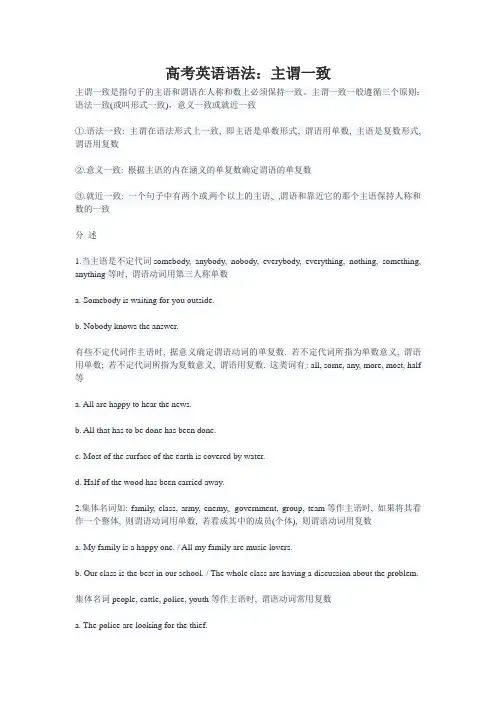
高考英语语法:主谓一致主谓一致是指句子的主语和谓语在人称和数上必须保持一致。
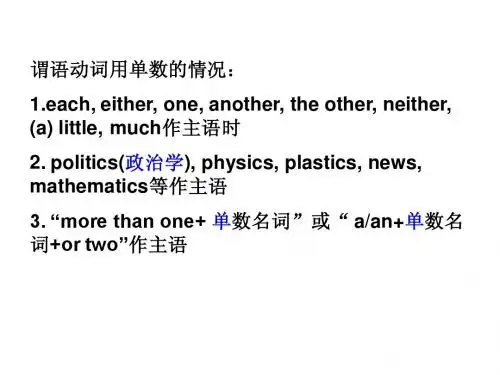
主谓一致一般遵循三个原则:语法一致(或叫形式一致),意义一致或就近一致①.语法一致: 主谓在语法形式上一致, 即主语是单数形式, 谓语用单数, 主语是复数形式, 谓语用复数②.意义一致: 根据主语的内在涵义的单复数确定谓语的单复数③.就近一致: 一个句子中有两个或两个以上的主语,谓语和靠近它的那个主语保持人称和数的一致分述1.当主语是不定代词somebody, anybody, nobody, everybody, everything, nothing, something, anything等时, 谓语动词用第三人称单数a. Somebody is waiting for you outside.b. Nobody knows the answer.有些不定代词作主语时, 据意义确定谓语动词的单复数. 若不定代词所指为单数意义, 谓语用单数; 若不定代词所指为复数意义, 谓语用复数. 这类词有: all, some, any, more, most, half 等a. All are happy to hear the news.b. All that has to be done has been done.c. Most of the surface of the earth is covered by water.d. Half of the wood has been carried away.2.集体名词如: family, class, army, enemy,government, group, team等作主语时, 如果将其看作一个整体, 则谓语动词用单数, 若看成其中的成员(个体), 则谓语动词用复数a. My family is a happy one. / All my family are music lovers.b. Our class is the best in our school. / The whole class are having a discussion about the problem.集体名词people, cattle, police, youth等作主语时, 谓语动词常用复数a. The police are looking for the thief.b. Cattle are not allowed to graze here.3.代词none和neither作主语时, 谓语动词根据说话人的意思用单数或复数. 当说话人着眼于任何一个都不时, 谓语动词用单数; 当说话人着眼于全都不时, 谓语动词用复数a. None of them has a car. ( 他们没有一个人有汽车)b. None of them have a car. ( 他们都没有汽车)c. None of them knows the answer. ( 他们两个谁也不知道答案)d. None of them know the answer. ( 他们两个都不知道答案)4.bothand连接两个主语时, 谓语动词通常用复数. eitheror, neithernor, not onlybut also, notbut 连接两个主语时, 采取就近原则, 即谓语动词和靠近它的那个主语保持一致a. Both Tom and Jerry were late for school that day.b. Either you or he has dropped waste paper in the street.c. Neither he nor I have forgotten for pay for the drinks.5.在There be和Here be结构中, 句子的主语在be之后, 如果主语不止一个, 那么谓语动词be与邻近的主语一致a. There is a desk, a table, three chairs in the room.b. There are three chairs, a desk and a table in the room.c. Here are two letters and a magazine for you.6.如果主语后面跟有with, together with, along with, as well as, but, except, besi des, including, like, rather than, no less than, in addition to(除外)等引导的短语时, 谓语动词的形式只与主语有关, 而与其后的短语无关a. The teacher with three student s was in the classroom then.b. This book, as well as the other two books, is borrowed from our school library.c. None but Jim and Mike knows my secret.d. Seven people, including a policeman, were killed.7.表示时间, 长度, 距离, 金额, 价值, 重量, 容量等的复数名词作主语时, 通常作整体看待, 即表示总量或总和, 谓语动词用单数. 若把它们看作一个个的个体, 即强调其具体数量时, 谓语动词用复数形式a. Twenty years is a long time to us.b. Two hundred miles is not a long distance.c. Ten thousand US dollars is a lot of money.d. There are ten minutes left.8.在四则运算中, 谓语动词用单复数均可, 但单数形式更为多用a. Two and ten is / are twelve.b. Three times five is / are fifteen.9.动名词或动词不定式作主语时, 谓语动词用单数a. Smoking / To smoke is a bad habit.b. Carving animal bones is not an easy job.10.主语从句作主语时, 谓语动词通常用单数. 但若主语从句所指的具体内容为复数意义时, 谓语动词用复数a. What we need is more time.b. What we need are more doctors.11.以-s结尾的专有名词作主语时, 谓语动词通常用单数, 这类专有名词如: General Motors(通用汽车公司), the United Nations(联合国), the United States, the New York Times(纽约时报)等.a. The New York Times is published daily.b. The Arabian Nights is a popular reading among the young people.表示群岛, 山脉, 瀑布的专有名词作主语时, 谓语动词通常用复数, 如:the Andes(安第斯山脉), the Alps(阿尔卑斯山脉), the West Indies(西印度群岛), the Niagara Falls(尼加拉大瀑布)12.有些形式为复数, 而意义为单数的名词作主语时, 谓语动词用单数. 这类名词如: news, works(工厂), politics(政治), physics(物理), mathematics(数学 )等13.以-s或-es结尾, 由对称的两部分构成的物体作主语时, 谓语动词用复数. 这类物体如: trousers, glasses, jeans(牛仔裤), scissors(剪刀), shades(太阳镜)等. 如果这类名词前用了pair, 则谓语动词的数取决于pair的数a. Here is a pair of glasses for you.b. There are three pairs of jeans in the bag.14. 分数或百分数+ of + 名词作主语时, 谓语动词视名词的可数与否采用单数或复数a. Over three quarters of the city was destroyed in the war.b. 35 percent of the do ctors are women.c. Thirty percent of the workers are out of work now.d. One third of the water has been wasted.15.用and连接两个或两个以上的单数名词作主语时, 谓语动词用复数. 如果and连接的两个名词指的是同一人、事、物或概念( 如: a knife and f ork一副刀叉, the bread and butter奶油面包, my house and home我的家)时, 则谓语动词用单数a. Many books and a pen are on the desk.b. The pianist and composer (钢琴家兼作曲家) has come to this small town.16. the + adj.表示一类人或事物作主语时, 谓语动词用复数. the +adj.若表示抽象概念或品质, 则谓语用单数a. The old in the city are taken good care of.b. The beautiful gives pleasure to all of us.美给我们以快乐17.more than one和many a + 单数名词作主语时, 谓语用单数a. Many a student has won the prize.很多学生获了奖b. More than one person has made the same mistake.不止一人犯了同样的错误。
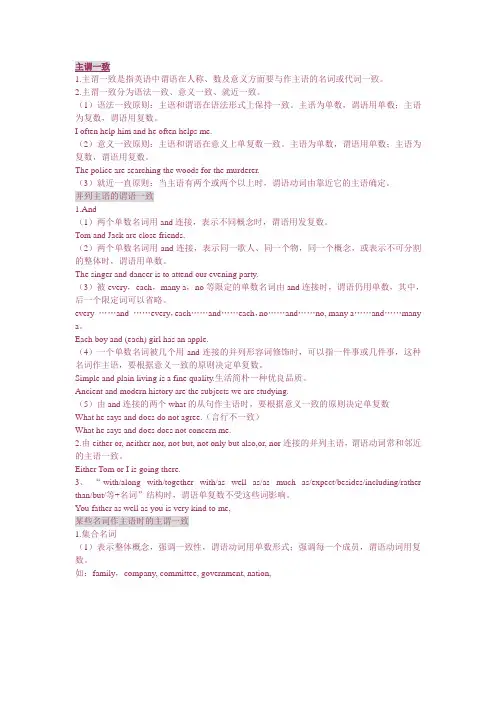
1.主谓一致是指英语中谓语在人称、数及意义方面要与作主语的名词或代词一致。
2.主谓一致分为语法一致、意义一致、就近一致。
(1)语法一致原则:主语和谓语在语法形式上保持一致。
主语为单数,谓语用单数;主语为复数,谓语用复数。
I often help him and he often helps me.(2)意义一致原则:主语和谓语在意义上单复数一致。
主语为单数,谓语用单数;主语为复数,谓语用复数。
The police are searching the woods for the murderer.(3)就近一直原则:当主语有两个或两个以上时,谓语动词由靠近它的主语确定。
并列主语的谓语一致1.And(1)两个单数名词用and连接,表示不同概念时,谓语用发复数。
Tom and Jack are close friends.(2)两个单数名词用and连接,表示同一歌人、同一个物,同一个概念,或表示不可分割的整体时,谓语用单数。
The singer and dancer is to attend our evening party.(3)被every,each,many a,no等限定的单数名词由and连接时,谓语仍用单数,其中,后一个限定词可以省略。
every ……and ……every,each……and……each,no……and……no, many a……and……many a。
Each boy and (each) girl has an apple.(4)一个单数名词被几个用and连接的并列形容词修饰时,可以指一件事或几件事,这种名词作主语,要根据意义一致的原则决定单复数。
Simple and plain living is a fine quality.生活简朴一种优良品质。
Ancient and modern history are the subjects we are studying.(5)由and连接的两个what的从句作主语时,要根据意义一致的原则决定单复数What he says and does do not agree.(言行不一致)What he says and does does not concern me.2.由either or, neither nor, not but, not only but also,or, nor连接的并列主语,谓语动词常和邻近的主语一致。