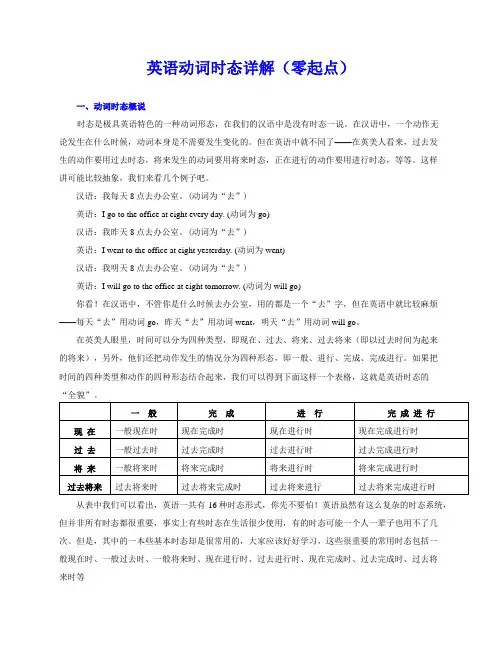
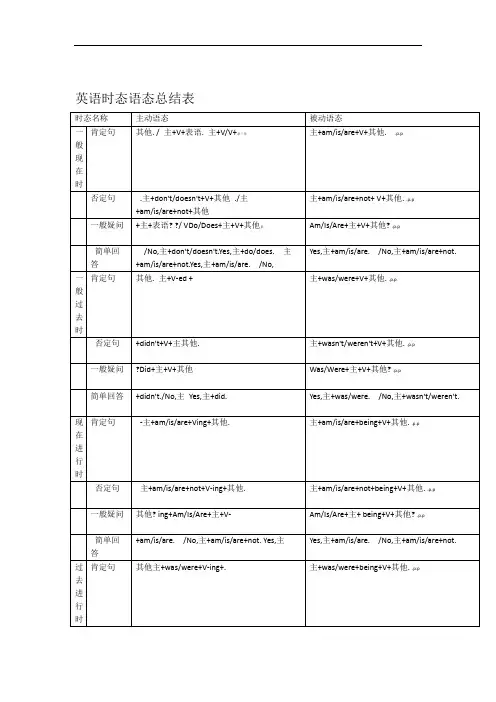
英语时态语态总结表
- 格式:doc
- 大小:58.00 KB
- 文档页数:9
1 英语时态语态总结表
时态名称 主动语态 被动语态
一般现在时 肯定句 主+V/V三单+其他. / 主+V系+表语。 主+am/is/are+V。p.p+其他。
否定句 主+don't/doesn’t+V+其他.
/主+am/is/are+not+其他。 主+am/is/are+not+ V。p.p+其他。
一般疑问 Do/Does+主+V+其他?/ V系+主+表语? Am/Is/Are+主+V。p。p+其他?
简单回答 Yes,主+do/does. /No,主+don’t/doesn't.
Yes,主+am/is/are。 /No,主+am/is/are+not。 Yes,主+am/is/are。 /No,主+am/is/are+not。
一般过去时 肯定句 主+V-ed +其他. 主+was/were+V.p。p+其他.
否定句 主+didn't+V+其他。 主+wasn’t/weren't+V。p.p+其他.
一般疑问 Did+主+V+其他? Was/Were+主+V。p.p+其他?
简单回答 Yes,主+did。 /No,主+didn’t. Yes,主+was/were. /No,主+wasn’t/weren’t。
现在进行时 肯定句 主+am/is/are+V-ing+其他。 主+am/is/are+being+V。p.p+其他.
否定句 主+am/is/are+not+V-ing+其他。 主+am/is/are+not+being+V。p。p+其他。
一般疑问 Am/Is/Are+主+V—ing+其他? Am/Is/Are+主+ being+V。p。p+其他?
简单回答 Yes,主+am/is/are。 /No,主+am/is/are+not. Yes,主+am/is/are。 /No,主+am/is/are+not。
过去进行时 肯定句 主+was/were+V-ing+其他。 主+was/were+being+V。p。p+其他.
否定句 主+wasn’t/weren’t+V-ing+其他. 主+wasn't/weren’t+being+V.p。p+其他。
一般疑问 Was/Were+主+V—ing+其他? Was/Were+主+ being+V。p.p+其他?
简单回答 Yes,主+was/were. /No,主+wasn’t/weren't。 Yes,主+was/were。 /No,主+wasn’t/weren’t.
现肯定句 主+have/has+V。p。p+其他。 主+have/has+been+V。p。p+其他。 2 在完成时 否定句 主+haven’t/hasn’t+V.p.p+其他。 主+haven’t/hasn’t+been+V。p.p+其他。
一般疑问 Have/Has+主+V。p。p+其他? Have/Has+主+been+V。p。p+其他?
简单回答 Yes,主+have/has。 /No,主+haven’t/hasn’t。 Yes,主+have/has。 /No,主+haven’t/hasn't。
过去完成时 肯定句 主+had+V。p。p+其他。 主+had+been+V。p。p+其他.
否定句 主+ hadn’t+V。p。p+其他. 主+ hadn't+been+V。p.p+其他。
一般疑问 Had+主+V。p。p+其他? Had+主+been+V.p.p+其他?
简单回答 Yes,主+had。 /No,主+hadn't. Yes,主+had。 /No,主+hadn't。
一般将来时 肯定句 主+will+V+其他. 主+will+be+V。p.p+其他。
否定句 主+won't+V+其他。 主+won’t+be+V。p.p+其他.
一般疑问 Will+主+V+其他? /Shall+we+V+其他? Will+主+be+V.p。p+其他?
简单回答 Yes,主+will. /No,主+won’t. Yes,主+will. /No,主+won’t.
过去将来时 肯定句 主+would/should+V+其他. 主+would/should+be+V。p。p+其他。
否定句 主+wouldn’t/shouldn’t+V+其他。 主+wouldn’t/shouldn't+be+V.p.p+其他.
一般疑问 Would/Should+主+V+其他? Would/Should+主+be+V。p。p+其他?
简单回答 Yes,主+would/should。
/No,主+wouldn’t/shouldn't。 Yes,主+would/should.
/No,主+wouldn’t/shouldn't。
情态动词 肯定句 主+情态动词+V+其他. 主+情态动词+be+V。p.p+其他。
否定句 主+情态动词+not+V+其他。 主+情态动词+not+be+V.p。p+其他。
一般疑问 情态动词+主+V+其他? 情态动词+主+be+V。p.p+其他?
简单回答 Yes,主+情态动词. /No,主+情态动词+not。 Yes,主+情态动词。 /No,主+情态动词+not。
Ⅰ。 英语八种时态归纳复习 3
时态是英语学习中一个至关重要的内容,广大初中学生在实际运用时,往往对时态总是倍感棘手,下面我们就归纳复习一下这几种时态。
一、一般现在时:
概念:经常、反复发生的动作或行为及现在的某种状况.
时间状语:
always, usually, often, sometimes, every week (day, year, month…), once a week, on
Sundays, etc。
基本结构:①be动词;②行为动词
否定形式:①am/is/are+not;②此时态的谓语动词若为行为动词,则在其前加don’t,如主语为第三人称单数,则用doesn’t,同时还原行为动词.
一般疑问句:①把be动词放于句首;②用助动词do提问,如主语为第三人称单数,则用does,同时,还原行为动词.
二、一般过去时:
概念:过去某个时间里发生的动作或状态;过去习惯性、经常性的动作、行为。
时间状语:ago, yesterday, the day before yesterday, last week(year, night, month…), in
1989, just now, at the age of 5, one day, long long ago, once upon a time, etc。 4
基本结构:①be动词;②行为动词
否定形式:①was/were+not;②在行为动词前加didn’t,同时还原行为动词。
一般疑问句:①was或were放于句首;②用助动词do的过去式did 提问,同时还原行为动词。
三、现在进行时:
概念:表示现阶段或说话时正在进行的动作及行为。
时间状语:now, at this time, these days, etc。
基本结构:am/is/are+doing
否定形式:am/is/are+not+doing。
一般疑问句:把be动词放于句首。
四、过去进行时:
概念:表示过去某段时间或某一时刻正在发生或进行的行为或动作。
时间状语:at this time yesterday, at that time或以when引导的谓语动词是一般过去时的时间状语等. 5
基本结构:was/were+doing
否定形式:was/were + not + doing.
一般疑问句:把was或were放于句首。
五、现在完成时:
概念:过去发生或已经完成的动作对现在造成的影响或结果,或从过去已经开始,持续到现在的动作或状态。
时间状语:recently, lately, since…for…,in the past few years, etc。
基本结构:have/has + done
否定形式:have/has + not +d one.
一般疑问句:have或has。
六、过去完成时:
概念:以过去某个时间为标准,在此以前发生的动作或行为,或在过去某动作之前完成的行为,即“过去的过去”。
时间状语:before, by the end of last year(term, month…),etc. 6
基本结构:had + done.
否定形式:had + not + done。
一般疑问句:had放于句首.
七、一般将来时:
概念:表示将要发生的动作或存在的状态及打算、计划或准备做某事。
时间状语:tomorrow, next day(week, month, year…),soon, in a few minutes, by…,the day after tomorrow, etc。
基本结构:①am/is/are/going to + do;②will/shall + do.
否定形式:①was/were + not; ②在行为动词前加didn’t,同时还原行为动词.
一般疑问句:①be放于句首;②will/shall提到句首。
八、过去将来时:
概念:立足于过去某一时刻,从过去看将来,常用于宾语从句中。
时间状语:the next day(morning, year…),the following month(week…),etc.