
英语课件九年级英语unit3语法
- 格式:ppt
- 大小:161.00 KB
- 文档页数:18

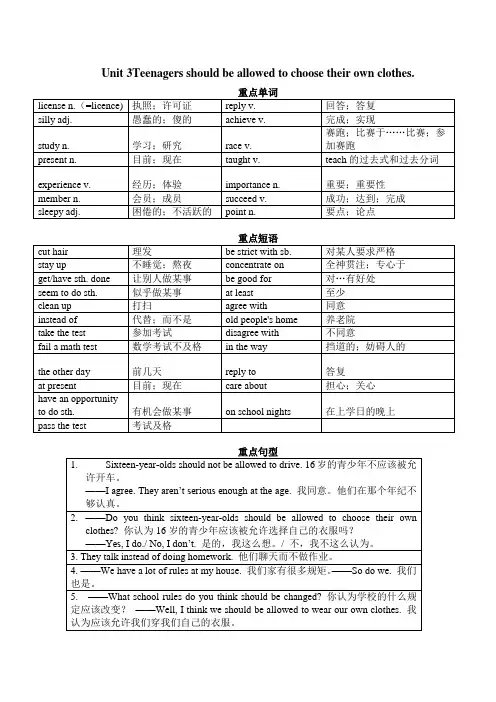
Unit 3Teenagers should be allowed to choose their own clothes.
重点单词
license n. (=licence) 执照;许可证 reply v. 回答;答复
silly adj. 愚蠢的;傻的 achieve v. 完成;实现
study n. 学习;研究 race v. 赛跑;比赛于„„比赛;参加赛跑
present n. 目前;现在 taught v. teach的过去式和过去分词
experience v. 经历;体验 importance n. 重要;重要性
member n. 会员;成员 succeed v. 成功;达到;完成
sleepy adj. 困倦的;不活跃的 point n. 要点;论点
重点短语
cut hair 理发 be strict with sb. 对某人要求严格
stay up 不睡觉;熬夜 concentrate on 全神贯注;专心于
get/have sth. done 让别人做某事 be good for 对„有好处
seem to do sth. 似乎做某事 at least 至少
clean up 打扫 agree with 同意
instead of 代替;而不是 old people's home 养老院
take the test 参加考试 disagree with 不同意
fail a math test 数学考试不及格 in the way 挡道的;妨碍人的
the other day 前几天 reply to 答复
at present 目前;现在 care about 担心;关心
have an opportunity
to do sth. 有机会做某事 on school nights 在上学日的晚上
pass the test 考试及格
重点句型
1. ____Sixteen-year-olds should not be allowed to drive. 16岁的青少年不应该被允许开车。
人教版义务教育教科书◎英语九年级全一册
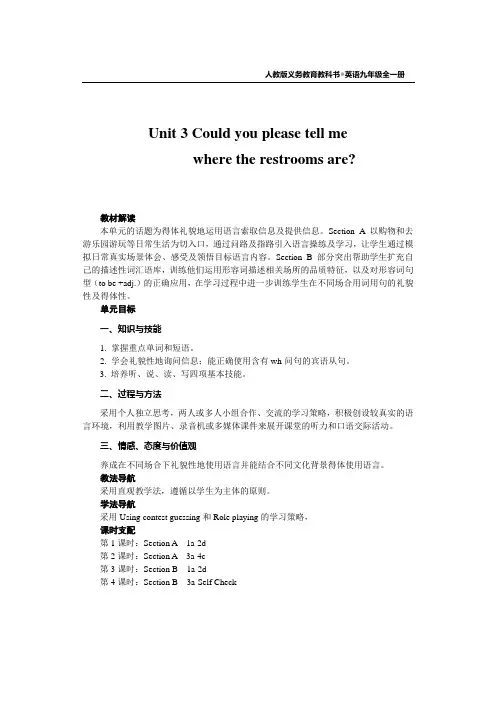
Unit 3 Could you please tell me
where the restrooms are?
教材解读
本单元的话题为得体礼貌地运用语言索取信息及提供信息。Section A 以购物和去游乐园游玩等日常生活为切入口,通过问路及指路引入语言操练及学习,让学生通过模拟日常真实场景体会、感受及领悟目标语言内容。Section B 部分突出帮助学生扩充自己的描述性词汇语库,训练他们运用形容词描述相关场所的品质特征,以及对形容词句型(to be +adj.)的正确应用,在学习过程中进一步训练学生在不同场合用词用句的礼貌性及得体性。
单元目标
一、知识与技能
1. 掌握重点单词和短语。
2. 学会礼貌性地询问信息;能正确使用含有wh-问句的宾语从句。
3. 培养听、说、读、写四项基本技能。
二、过程与方法
采用个人独立思考,两人或多人小组合作、交流的学习策略,积极创设较真实的语言环境,利用教学图片、录音机或多媒体课件来展开课堂的听力和口语交际活动。
三、情感、态度与价值观
养成在不同场合下礼貌性地使用语言并能结合不同文化背景得体使用语言。
教法导航
采用直观教学法,遵循以学生为主体的原则。
学法导航
采用Using contest guessing和Role playing的学习策略,
课时支配
第1课时:Section A 1a-2d
第2课时:Section A 3a-4c
第3课时:Section B 1a-2d
第4课时:Section B 3a-Self Check 教师备课系统──多媒体教案
课时教案
教案I
第1课时 Section A 1a-2d
教学目标
一、知识与技能
1. 掌握重点词汇和短语:restroom,stamp,bookstore,beside,postcard,pardon,bathroom,rush
九年级英语Unit3《Could you please tell me where the
restrooms are?》知识点
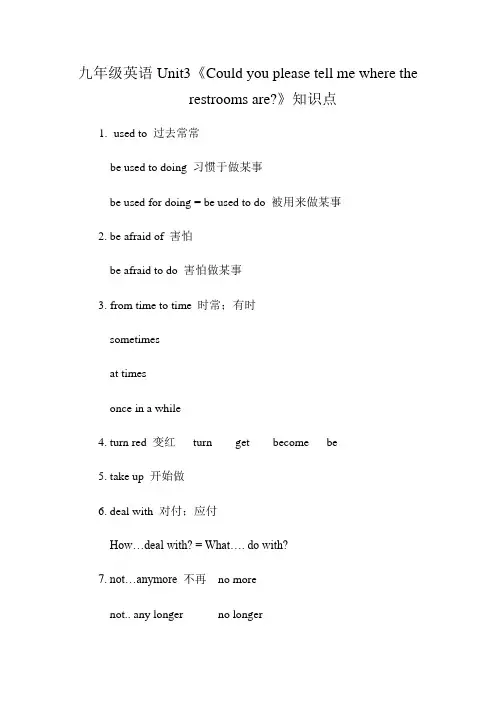
1. used to 过去常常
be used to doing 习惯于做某事
be used for doing = be used to do 被用来做某事
2. be afraid of 害怕
be afraid to do 害怕做某事
3. from time to time 时常;有时
sometimes
at times
once in a while
4. turn red 变红 turn get become be
5. take up 开始做
6. deal with 对付;应付
How…deal with? = What…. do with?
7. not…anymore 不再 no more
not.. any longer no longer 8. tons of attention 很多关注 lots of=a lot of=plenty of
9. worry about 担心 be worried about
10. be careful = take care = look out当心
11. hang out 闲逛 hang-hung-hung hang-hanged-hanged
12. give up 放弃 look forward to盼望 put off 推迟 pay attention
to 注意 concentrate on 集中注意力 have fun玩的开心 have
trouble in doing 做某事有困难 can’t stand 不能忍受 …
The Fourth Period
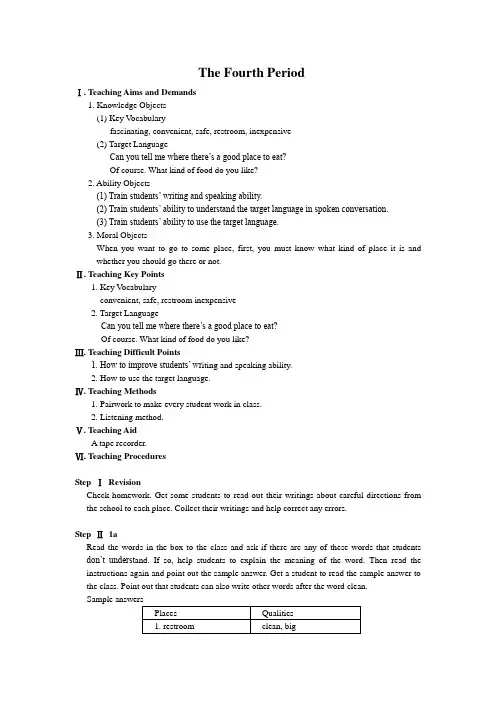
Ⅰ. Teaching Aims and Demands
1. Knowledge Objects
(1) Key Vocabulary
fascinating, convenient, safe, restroom, inexpensive
(2) Target Language
Can you tell me where there’s a good place to eat?
Of course. What kind of food do you like?
2. Ability Objects
(1) Train students’ writing and speaking ability.
(2) Train students’ ability to understand the target language in spoken conversation.
(3) Train students’ ability to use the target language.
3. Moral Objects
When you want to go to some place, first, you must know what kind of place it is and
whether you should go there or not.
Ⅱ. Teaching Key Points
1. Key Vocabulary
convenient, safe, restroom inexpensive
2. Target Language
Can you tell me where there’s a good place to eat?
Of course. What kind of food do you like?
Ⅲ. Teaching Difficult Points