2022年12月大学英语四级考试真题(第3套)含答案
- 格式:pdf
- 大小:552.85 KB
- 文档页数:8
2022年12月大学英语四级考试真题(第3套)
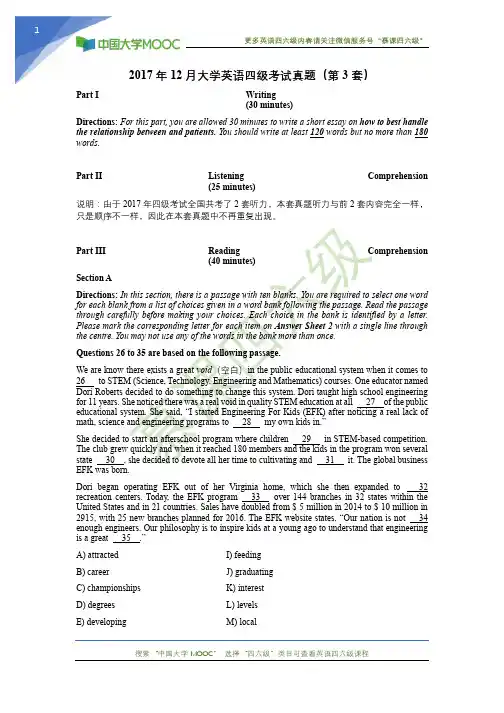
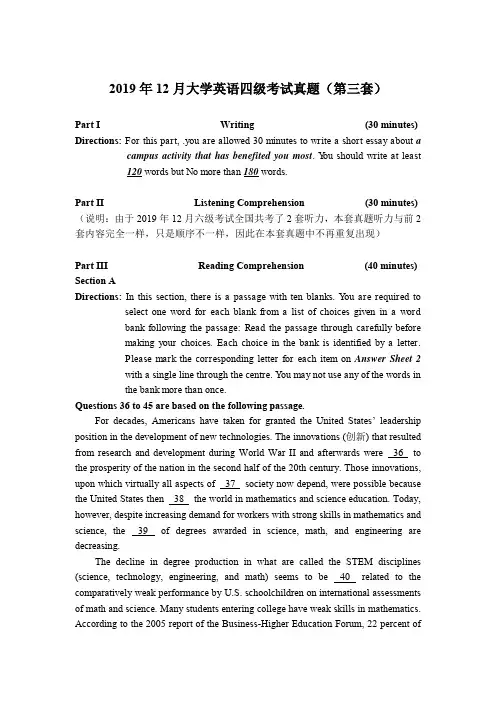
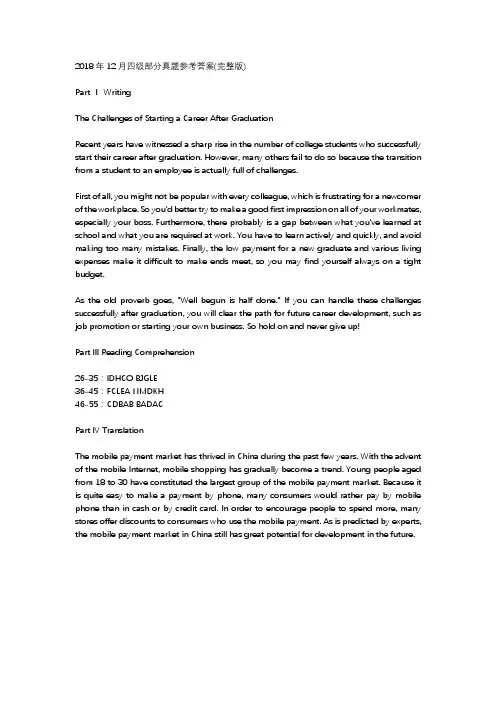
PartIWriting(30minutes)Directions:Inthistask,youaretowriteanessayontheroleofphysicalexerciseinachievingsuccessatcollege.Youwillhave30minutesforthetask.Youshouldwriteatleast120wordsbutnomorethan180words.PartⅡListeningComprehension(25minutes)特殊说明:由于多题多卷,官方第三套真题的听力试题与第二套真题的一致,只是选项顺序不同,因此,本套试卷不再提供听力部分。PartIIIReadingComprehension(40minutes)SectionADirections:Inthissection,thereisapassagewithtenblanks.Youarerequiredtoselectonewordforeachblankfromalistofchoicesgiveninawordbankfollowingthepassage.Readthepassagethroughcarefullybeforemakingyourchoices.Eachchoiceinthebankisidentifiedbyaletter.PleasemarkthecorrespondingletterforeachitemonAnswerSheet2withasinglelinethroughthecentre.Youmaynotuseanyofthewordsinthebankmorethanonce.
Parentingbringsfathersmorejoythanitdoesmothers,accordingtoanewstudy.Theresearchexaminedthreestudies26morethan18,000participants.Acrossallthree,parenthoodwas27withmorepositivewellbeingoutcomesfordadsthanformums.Sowhyarefathershappierthanmothers?“Fathersmayfarebetterthanmothersinpartduetohowtheyspendtimewiththeirchildren,”saidleadauthorKatherineNelson-Coffey.Inonestudy,theauthors28thatdadsweremorelikelytotake“playing”asan29activitybothwhencaringfortheirkidsandspendingtimewiththeirkids.“Playingwiththeirchildrenlikelyoffersparentsopportunitiestoexperiencepositivefeelingsand30closenesswiththeirchildren,”theysay.Fathersalsodidbetterthanmenwithoutkids,reportinggreaterhappiness,lifesatisfaction,andfewer31symptoms.Theyalsoreportedgreaterconnectednessandautonomy(自主).Formums,32,comparedtowomenwithoutchildren,theresultsweren’tquiteaspositive.Mumsreportedgreaterautonomy,butalso“greatertrouble”andfewerpositive33.Mumsreportedhappiermoodswhileinteractingwiththeirkids,comparedtootherexperiences,butnotwhileengaging34inchildcare.“Thisdifferencesuggeststhathowmothersandfathersspendtimewiththeirchildrenmighthaveimportant35fortheirwellbeing,”theauthorswrite.Theysuspectthatmumsmaybelesshappythandadsbecausethey’remorelikelytohavehigherexpectationsaboutparenthood.Assuch,they’remorelikelytobe“letdown”bytheexperience.
SectionBDirections:Inthissection,youaregoingtoreadapassagewithtenstatementsattachedtoit.Eachstatementcontainsinformationgiveninoneoftheparagraphs.Identifytheparagraphfromwhichtheinformationisderived.Youmaychooseaparagraphmorethanonce.Eachparagraphismarkedwithaletter.AnswerthequestionsbymarkingthecorrespondingletteronAnswerSheet2.LearningtosaynoA)Notdoingsomethingwillalwaysbefasterthandoingit.Thisphilosophyappliesinmanyareasoflife.Forexample,thereisnomeetingthatgoesfasterthannothavingameetingatall.Thisisnottosayyoushouldneverattendanothermeeting,butthetruthisthatwesay“yes”totoomanythingswedon’tactuallywanttodo.B)Howoftendopeopleaskyoutodosomethingandyoujustreply,“Sure.”Threedayslater,you’reoverwhelmedbyhowmuchisonyourto-dolist.Webecomefrustratedbyourobligationseventhoughweweretheoneswhosaid“yes”totheminthefirstplace.Evenworse,peoplewilloccasionallyfighttodothingsthatwastetime.Youdon’thavetodosomethingjustbecauseitexists.It’sworthaskingifthingsarenecessary.Manyofthemarenot,andasimple“no”willbemoreproductivethanwhateverworkthemostefficientpersoncancopewith.Butifthebenefitsofsaying“no”aresoobvious,thenwhydowesay“yes”sooften?C)Wesay“yes”tomanyrequestsnotbecausewewanttodothem,butbecausewedon’twanttobeseenasrudeorunhelpful.Often,wehavetoconsidersaying“no”tosomeonewewillinteractwithagaininthefuture—ourco-worker,ourspouse,ourfamilyandfriends.Saying“no”tooursuperiorsatworkcanbeparticularlydifficult.Inthesesituations,IliketheapproachrecommendedinEssentialismbyGregMcKeown.Hewrites,“Remindyoursuperiorswhatyouwouldbeneglectingifyousaid‘yes’andforcethemtodealwiththetrade-off.Forexample,ifyourmanagercomestoyouandasksyoutodoX,youcanrespondwith‘Yes,I’mhappytomakethisthepriority.WhichoftheseotherprojectsshouldIdeprioritizetopayattentiontothisnewproject?’”D)Collaboratingwithothersisanimportantelementoflife.Thethoughtofstrainingtherelationshipoutweighsthecommitmentofourtimeandenergy.Forthisreason,itcanbehelpfultobegraciousinyourresponse.Dowhateverfavorsyoucan,andbewarm-heartedanddirectwhenyouhavetosayno.Butevenafterwehaveaccountedforthesesocialconsiderations,manyofusstillseemtodoapoorjobofmanagingthetrade-offbetweenyesandno.Wefindourselvesover-committedtothingsthatdon’tA)additionalF)directlyK)involvingB)associatedG)emotionsL)noteC)composingH)howeverM)preciselyD)cultivateI)implicationsN)superficialE)depressiveJ)interferedO)thereforemeaningfullyimproveorsupportthosearoundus,andcertainlydon’timproveourownlives.E)Perhapsoneissueishowwethinkaboutthemeaningofyesandno.Thewords“yes”and“no”getsooftenusedincomparisonwitheachotherthatitfeelsliketheycarryequalweightinconversation.Inreality,they’renotjustoppositeinmeaning,butofentirelydifferentmagnitudesincommitment.Whenyousay“no”,you’reonlysaying“no”tooneoption.Whenyousay“yes”,you’resaying“no”toeveryotheroption.IlikehoweconomistTimHarfordputit,“Everytimewesay‘yes’toarequest,we’realsosaying‘no’toanythingelsewemightaccomplishwiththetime.”Onceyou’recommittedtosomething,you’vealreadydecidedhowthatfutureblockoftimewillbespent.Inotherwords,saying“no”savesyoutimeinthefuture.Saying“yes”costsyoutimeinthefuture.“No”isaformoftimecredit.Youretaintheabilitytospendyourfuturetimehoweveryouwant.“Yes”isaformoftimedebt.Youhavetopaybackyourcommitmentatsomepoint.F)“No”isadecision.“Yes”isaresponsibility.Saying“no”issometimesseenasaluxurythatonlythoseinpowercanafford.Andit’strue:turningdownopportunitiesiseasierwhenyoucanfallbackonthesafetynetprovidedbypower,money,andauthority.Butit’salsotruethatsaying“no”isnotmerelyaprivilegereservedforthesuccessful.It’salsoastrategythatcanhelpyoubecomesuccessful.Saying“no”isanimportantskilltodevelopatanystageofyourcareerbecauseitretainsthemostimportantassetinlife:yourtime.AsinvestorPedroSorrentinoputit,“Ifyoudon’tguardyourtime,peoplewillstealitfromyou.”Youneedtosay“no”towhateverisn’tleadingyoutowardyourgoals.G)NobodyembodiedthisideabetterthanSteveJobs,whosaid,“Peoplethinkfocusmeanssaying‘yes’tothethingyou’vegottofocuson.Butthat’snotwhatitmeansatall.Itmeanssaying‘no’tothehundredothergoodideasthatthereare.Youhavetopickcarefully.”Jobshadanothergreatquoteaboutsaying“no”:“I’mactuallyasproudofthethingswehaven’tdoneasthethingsIhavedone.Innovationissaying‘no’to1,000things.”H)Overtime,asyoucontinuetoimproveandsucceed,yourstrategyneedstochange.Theopportunitycostofyourtimeincreasesasyoubecomemoresuccessful.Atfirst,youjusteliminatetheobviousdistractionsandexploretherest.Asyourskillsimproveandyoulearntoseparatewhatworksfromwhatdoesn’t,youhavetocontinuallyincreaseyourthresholdforsaying“yes”.Youstillneedtosay“no”todistractions,butyoualsoneedtolearntosay“no”toopportunitiesthatwerepreviouslygoodusesoftime,soyoucanmakespaceforbetterusesoftime.It’sagoodproblemtohave,butitcanbeatoughskilltomaster.I)Whatistrueabouthealthisalsotrueaboutproductivity:anounceofpreventionisworthapoundofcure.Moreeffortiswasteddoingthingsthatdon’tmatterthaniswasteddoingthingsinefficiently.Andifthatisthecase,eliminationisamoreusefulskillthanoptimization.I’mremindedofthefamousPeterDruckerquote,“Thereisnothingsouselessasdoingefficientlythatwhichshouldnotbedoneatall.”