高三 介词与介词短语
- 格式:doc
- 大小:111.50 KB
- 文档页数:12
2014届牛津高三英语二轮复习语法专题专题11介词与介词短语一.语法概念巧掌握:(一)概念1 介词的分类介词是用于名词词组或相当于名词词组的结构之前,表示词语之间意义关系的词类。
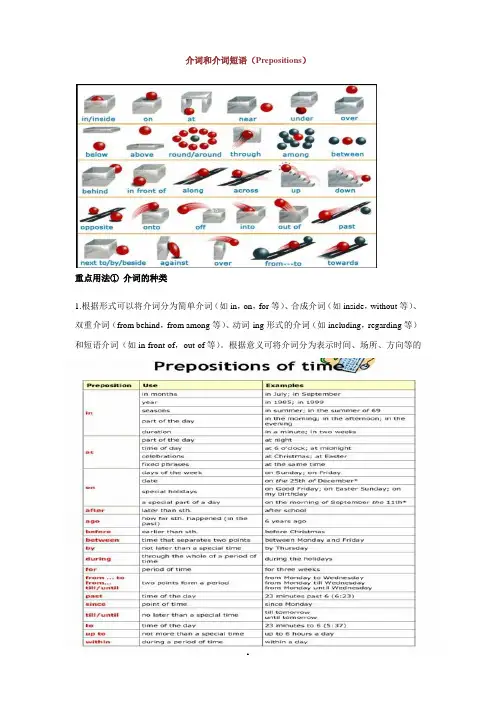
英语常用的介词大致可分为四类:(1.)简单介词顾名思义,简单介词是指由一个单词构成的介词,也是使用最频繁的一类介词。
简单介词也可能由形容词、副词、分词、名词、连词等转变而来。
常用的简单介词有:at,about,above,across,after,among,against,before,behind,below,beside,between,beyond,but,despite,during,except,for,in,of,on,over,near,past,round,since,through,till,until,with,up等。
(2.)合成介词指由介词+其它介词或副词构成的介词。
常用的合成介词有:inside,into,onto,outside,throughout,towards,within,without等。
(3.)二重介词指由两个单一的介词并列在一起,作为一个介词使用并表达一个完整意思的介词。
常见的二重介词有:from among,from behind,from under,until /till after等。
(4.)短语介词指由介词+介词、介词+名词、介词+分词、介词+动词、介词+形容词、介词+副词等构成的短语.常用的有:according to,along with,in front of,by means of,in spite of,together with,with regard to等。
短语介词与介词短语不同。
介词短语是由介词加宾语构成,本身可作句子成分,如定语或状语等,可单独使用;而短语介词是用作介词的短语,不可独立使用,本身不能作句子成分,后面要跟名词、动名词或代词等。
2介词的用法及应注意的问题(1.)介词的搭配与介词的选择介词不能在句子中独立充当一个成分,而需要与其后面的宾语相结合,成为介词短语,在句中充当一个成分。
所以选用什么介词要根据其后面所接的宾语而定。
但是,有时介词也受其前面用词的限制,因此,许多情况下也应根据介词前面的词选用相应的介词。
(2.)介词的宾语介词的宾语可以是名词、代词或其他词类或句子等。
例如:名词:The car ran into a wall,and two men were killed.代词:Wherever he went,he carried the photo with him.形容词:Your plan is far from perfect.副词:I can't see the tower clearly from here.She came from afar.动名词:He entered the room without taking off his hat.不定式:He did nothing but cry.介词短语:She often studies till after midnight.数词:In nine out often he won't come.疑问词+不定式:The problem of how to get enough money is difficult to settle.疑问词引导从句:He does not care about who will be promoted.that引导的从句:Man differs from other animals in that man can laugh and speak.(3.)介词的语法功能介词与其他词类或成分结合后方能在句子中充当语法成分,构成介词短语。
介词短语可以作定语(须后置)、状语、表语、宾语补足语、另一个介词的宾语,间或作主语等。
例如:The skyscraper in the distance isa five-star hotel.(定语)Her eyes were tired from long reading.(状语)The decision is of great importance to me.(表语)They found the machine in a bad state.(宾语补足语)A pretty girl appeared from behind the curtain.(介词宾语)On purpose or not on purpose is of great difference.(主语)3 介词的固定搭配在英语中固定搭配的介词词组和短语介词很多,平时需要加强记忆。
此处讲解几个常见的动词与介词的固定搭配,并且就较容易混淆的介词搭配进行比较、分辨。
1.act as 担任act for 代理2.apply to 应用于,适合于,向……申请apply for 申请,要求3.belong to 属于belong in住在,应该……belong with 应归于(类别,范畴等)4.call on 号召,请求,拜访call at 探访(at后接地方)call in 请医生,召集,收集call to 高声唤(某人)5.compare with 跟……相比较compare to 把……比作,与……相比6.correspond with 与……通信;适合correspond to 相当于7.deal in 做生意,经营(=engage in)deal with 对付,论及,与……交往(=cope with)8.play with 玩(某物)play at玩(某种游戏)play on 玩(某种乐器)9.suffer from 患(病),受……祸患.10.wait on 伺候wait for等待二.解题方法灵活用解题方法或策略:(一)在考试中应注意的一些常用介词1.in 表示某种状态或情况,例如:He had never been in love before.他以前从未恋爱过。
The roses were in flower.玫瑰在盛开。
His clothes were in rags.他衣衫褴褛。
属于该类搭配的还有:in danger,in(dis)order,inpoverty,in retirement,in tears,in trouble等。
2.at用在某些表示情感的形容词、具有形容词作用的-ed分词以及某些动词后面,表示原因,例如:We felt glad at what he had said.他说的话使我们感到高兴。
They were shocked at his idea of being an artist.他们对他要当艺术家的想法感到震惊。
类似的形容词还有:alarmed,amazed,angry,delighted,disappointed,disgusted,happy,indignant,overjoyed,pleased,surprised;动词有:blush,brighten,grieve, marvel,tremble,wonder等。
3.by与某些名词连用,表示"按……计算","成……地买(或卖)"之意,例如: We were paid by the day /week /month /year.我们按日/周/月/年领工资。
Sugar is sold by the pound,petrol by the gallon.糖按磅出售,而汽油按加仑卖。
We do nothing by halves.我们干什么都是彻底的。
这样的用法还有:by the dozen,by the hundreds / thousands /millions,by the ounce,by the yard,by twos and threes等。
4.for与某些动词、形容词以及具有形容词作用的 ed分词连用,表示原因,译法较活,例如:Thank you for your gift.谢谢你的礼物。
I must apologize for coming to school late.我必须就上课迟到道歉。
下面的词亦属于此类:blame,(dis)like,forgive, weep;be grateful,be obliged,be shamed等。
5.to后面加上物主代词和表感情色彩的名词,意为"使某人……的是",该结构一般为插入语,表结果。
例如:To my surprise,he began to cry.使我惊讶的是,他哭了。
To our delight,our team has won the game.使我们高兴的是,我们的队赢了比赛。
其他词还有:amazement,annoyance,astonishment, disappointment,distress,horror,joy,satisfaction,等。
6.from用在某些动词和表人或物的名词之后,这种用法往往具有"保护"、"使不受……之害"或"阻止"的意思,例如:The shed will protect us from the rain.这个棚子能使我们避雨。
She saved the child from the fire.她从火中救出了孩子。
下列各词的用法类似:bar,discourage,dissuade, hinder,keep,preserve,refrain,restrain,shelter等。
7.out of 后面跟一抽象名词,表示"出于(某种动机等)",例如:The boy opened the box out of curiosity.那男孩出于好奇打开了盒子。
He did that not only out of necessity,but also out of a sense of duty.他做那件事不仅仅因为必要,而且出于责任感。
类似的词还有:desperation,fear,gratitude,interest, kindness,pity,sympathy等。
(二)某些派生词后的介词用法注意部分派生出来的抽象名词或形容词后面的介词,与其同源的动词或形容词后面的介词是一致的,例如: A man’s success depends chiefly on himself.一个人的成功主要靠自己。
The sample was different from the goods furnished.样品和所提供的货物不一样。