
Polysemy
- 格式:ppt
- 大小:159.00 KB
- 文档页数:10

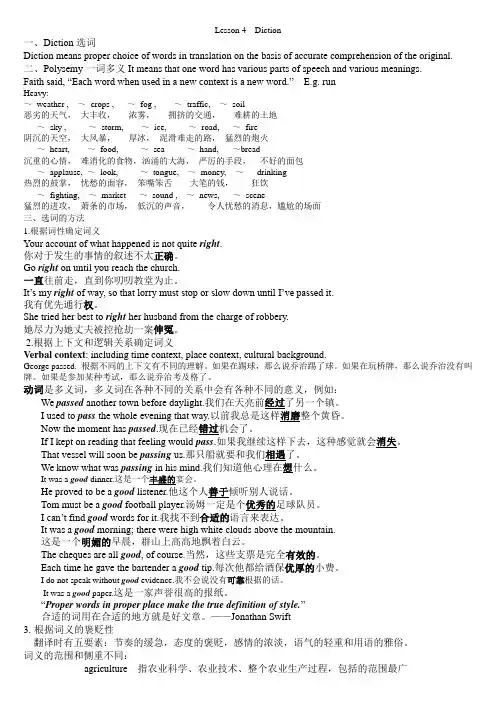
Lesson 4 Diction
一、Diction选词
Diction means proper choice of words in translation on the basis of accurate comprehension of the original.
二、Polysemy一词多义It means that one word has various parts of speech and various meanings.
Faith said, “Each word when used in a new context is a new word.” E.g. run
Heavy:
~ weather , ~ crops , ~ fog , ~ traffic, ~ soil
恶劣的天气, 大丰收, 浓雾, 拥挤的交通, 难耕的土地
~ sky , ~ storm, ~ ice, ~ road, ~ fire
阴沉的天空, 大风暴, 厚冰, 泥滑难走的路, 猛烈的炮火
~ heart, ~ food, ~ sea ~ hand, ~bread
沉重的心情, 难消化的食物,汹涌的大海, 严厉的手段, 不好的面包
~ applause, ~ look, ~ tongue, ~ money, ~ drinking
热烈的鼓掌, 忧愁的面容, 笨嘴笨舌 大笔的钱, 狂饮
~ fighting, ~ market ~ sound , ~ news, ~ scene
猛烈的进攻, 萧条的市场, 低沉的声音, 令人忧愁的消息,尴尬的场面
三、选词的方法
1.根据词性确定词义
Your account of what happened is not quite right.

专八语言学考点
语言学概论
一.语言的甄别特征(Design Features):
语言的甄别特征(Design Features)包括:
1. 任意性(Arbitrariness)
2. 能产性(Productivity)
3. 双层性(Duality)
4. 移位性(Replacement)
5. 文化传承(Cultural transmission)
二.语言学的主要分支(the Main Branches of Linguistics):
1. 语音学(phonetics):用以研究语音的特点,并提供语音描写、分类和标记方法的学
科。
2. 音系学(phonology):研究语言中出现的区别语音及其模式是如何形成语音系统来表
达意义的学科。
3. 形态学(morphology):研究词的内部结构和构词规则。
4. 句法学(syntax):用以研究词是被如何组成句子,以及支配句子构成的学科。
5. 语义学(semantics):研究语言意义的学科。
6. 语用学(pragmatics):研究语言的意义在语境中如何被理解、传递和产出的学科。
7. 宏观语言学(Macrolinguistics):主要包括社会语言学(Sociolinguistics)、心理语言
学(Psycholinguistics)、人类语言学(Anthropological
Linguistics)、计算机语言学
(Computational Linguistics)。
三.语言学的流派(Different Approaches of Linguistics):
1. 结构主义语言学(Structural Lingustics): 1.1 布拉格学派(The Prague School)
1.2 哥本哈根学派(The Copenhagen School)
1.3 美国结构主义学派(American Structuralism)
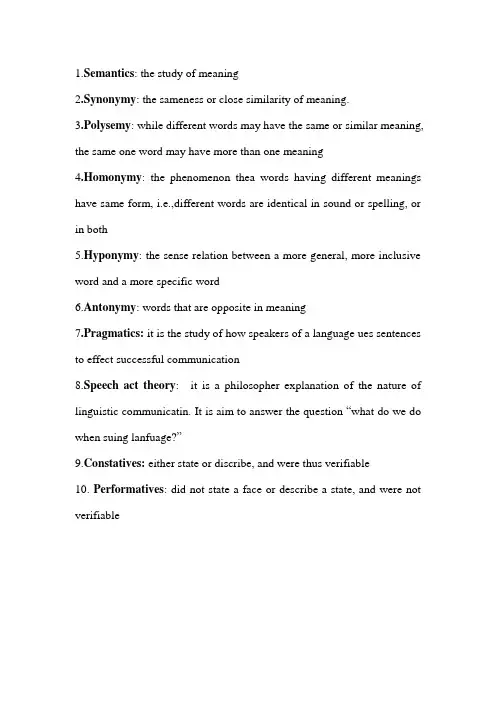
1.Semantics: the study of meaning
2.Synonymy: the sameness or close similarity of meaning.
3.Polysemy: while different words may have the same or similar meaning,
the same one word may have more than one meaning
4.Homonymy: the phenomenon thea words having different meanings
have same form, i.e.,different words are identical in sound or spelling, or
in both
5.Hyponymy: the sense relation between a more general, more inclusive
word and a more specific word
6.Antonymy: words that are opposite in meaning
7.Pragmatics: it is the study of how speakers of a language ues sentences
to effect successful communication
8.Speech act theory: it is a philosopher explanation of the nature of
linguistic communicatin. It is aim to answer the question “what do we do
when suing lanfuage?”
9.Constatives: either state or discribe, and were thus verifiable

欧阳语创编
欧阳语创编 现代语言学名词解释
时间:2021.03.01 创作:欧阳语
现代语言学名词解释
现代语言学
一 绪论
1 Linguisitics :Linguistics is generally defined as the
scientic study of language
2 Phonetics : The study of sounds which are used in
linguistics communication is called phonetics.For
example,vowels and consonants
3 Phonology” : The study of how sounds are put
together and used in communication is called
phonology.For example,phone,phoneme,and
allophone.
4 Morphology :The study of the way in which
morphemes are arranged to form words is called
morphology.For example,boy and “ish”---boyish,teach---teacher. 欧阳语创编
欧阳语创编 5 Syntax : The study of how morphemes and words
are combined to form sentences is called syntax.For
esample,”John like linguistics.”
6 Semantics: The study of meaning in language is
called semantics. For example,:The seal could not be