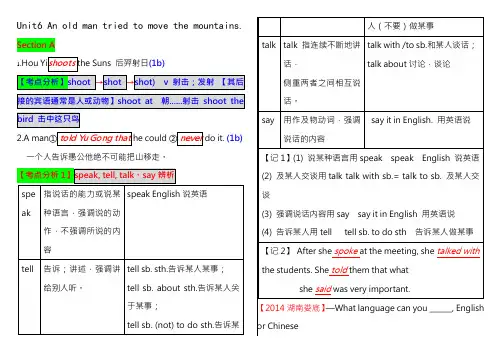
新目标英语八年级英语下册知识点总结
- 格式:docx
- 大小:50.67 KB
- 文档页数:23
. 《新目标英语八年级英语下册知识点总结》
摘要:decide 动 决定, by oneself = alone 独自一人,decide to do sth; volunteer to do sth; plan to
do sth; want to do sth; try to do sth; be able to do; be unable to do sth 不能干……
新目标英语八年级下各单元知识点总结
[键入文字]
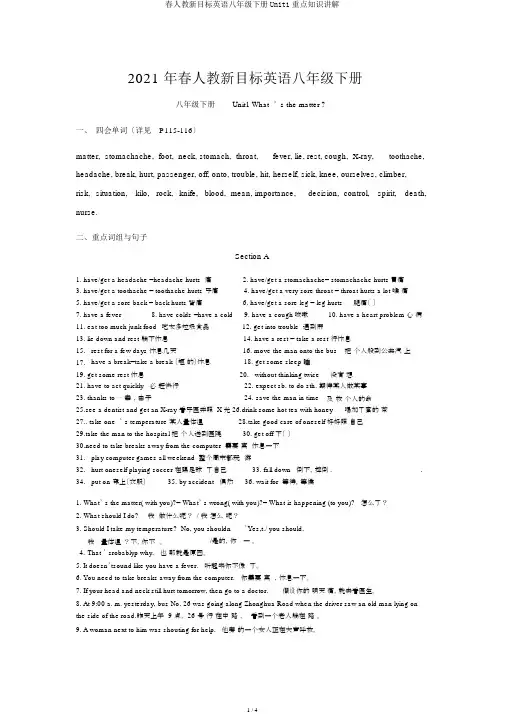
unit1 What’s the matter知识点总结
(问答疾病,状从、宾从)
重点短语
have a sore back / throat 背部/咽喉疼痛
have / catch a cold =have the flu 感冒;得了流感
have a (high)fever 发(高)烧
have a toothache 牙痛
have a headache 头疼
have a stomachache 胃疼;肚子疼
talk too much谈的太多; too much+不可数名词(milk) too many +可名复(people)
much too 实在太
drink enough water喝足够的水;big enough 足够大 enough +名 形/副 +enough
lie down and rest 躺下来休息 v. have a rest
take one’s temperature 给某人量体温
see a dentist and get an X-ray看牙医并做X光透视
cut oneself 切伤自己;cut off 切除 cut it/them off cut up 切碎
. put some medicine on it在上面敷些药
drink some hot tea with honey喝些带/加蜂蜜的热茶 with 介 有 without 介 没有
without saying goodbye
take breaks away from 远离……而休息片刻
see an old man lying on the side of the road看见一位老人正躺在路边 (lie)see/hear sb
doing sth 看见某人正在做某事
shout for help呼救;shout at 向……喊;shout to see/hear sb do sth 看见某人做了某事
stop the bus without thinking twice不假思索地停下车
get off 下车;get on 上车;get it /them on (off) put on 穿上 take off 脱下 起飞
to one’s surprise 使某人惊奇的是 in surprise 惊奇地 to our surprise使我们惊奇的是
take sb to sp 带某人去某地 take him to the hospital take her home
wait for 等候…… wait for the bus /him 等公交车/他 can’t wait to do sth 迫不及待地干什么
agree to do sth同意干什么 agree with sb 同意某人的观点,看法 disagree 不同意
think about oneself为自己考虑
think about saving a life考虑挽救一个生命 about 介词 save a life 救命 life—(复)lives
hurt oneself doing sth在干某事中伤害自己 hurt himself playing soccer
fall down 跌倒;fall off 从……摔下 fall off his bike/the tree
have problems doing sth在干某事中有困难
have problems breathing呼吸困难(breathe)
get sunburned 晒伤
. be interested in 在……感兴趣 sb(某人) be interested in English/playing chess
sth(某物) interesting
be used to doing sth 习惯于干某事;be used to taking risks 习惯冒险
lose one’s life because of accidents 由于事故而丧生 lose(lost) because of+词/词组
because+从句
sth + run out (某物)用完;用光 sb. + run out of+ sth (某人)把……用完
be ready to do sth愿意迅速/乐意/准备做某事 get ready for 为……做准备 ready 有准备的so that = in order to do sth 为了 以便于… so …. that 如此…以致于…
a book called (call)…… 一本名叫……的书
mean being in a difficult situation 意思是在困难的境况下
get out of 离开;从……出来;下小汽车—get into上小汽车 get out of /get into a car
tell of the importance of making good decisions 告诉有关做出好决定的重要性的情况
important 重要的be in control of 掌管;管理 名 决定 decide
动 决定
keep on doing sth 一直,坚持干某事
make a decision to do sth.= decide to do sth 下决心/决定干某事
Thanks to +名词或代词 =because of 多亏;幸亏(多放在句首) thanks for 因…而感谢
expect sb to do… 期望某人干什么 hope/want /would like sb to do sth 希望/想要某人做某事
in time 及时; on time 准时 at times 有时
hit sb on the head/ nose ; 打了某人的头,鼻子;hit sb in the face.打了某人的脸(硬的用on;软的用in)
hit me on my(× the ∨) head
. 重点句型
1.问毛病:
①What’s the matter (with) …?怎么啦?What’s the matter with him? =What’s the
trouble with him?=What’s wrong with him?
②What’s the trouble (with) …?
③What’s wrong (with) …?
④What happened? 发生了什么事?
⑤Is there anything wrong with…? …有毛病/故障吗? Is there anything wrong with
the old man/your bike?
⑥Are you OK?
2.回答+建议
①I have a cold. You should drink lots of water and rest. should +动词原形 情态动词 “应该”
②I have a cough and sore throat. You should drink hot tea with honey. shouldn’t
+动词原形 “不应该”
③I have a sore back. You should lie down and rest.
④I have a fever. You should take your temperature.
⑤I have a toothache. You should see a dentist and get an X-ray.
⑥I have a stomachache. You should lie down and rest.
You should eat less meat and take more exercise.
⑦I cut myself. You should put some medicine( medicines ×) on it and put a bandage
on it .
⑧No, I don’t feel well ( good × ).=I feel sick =I’m not feeling well. 我感到不舒服.
. 3.I think I sat in the same way for too long without moving. 我认为我以同样的方式坐了太久而没有运动。
宾语从句 (宾语从句:主句用一般现在时,从句随句意)
4.If your head and neck still hurt tomorrow, then go to a doctor. 如果明天头和颈部仍然疼的话,那就得去看医生。
状语从句 (状语从句:主将从现)
5.bus No.26 was going along Zhonghua Road when the driver saw an old man lying
on the side of the road.
当26路汽车沿着中华路行进,突然驾驶员看见一位老人正躺在路边。
(when并列连词,强调从句动作发生在主句动作进行的瞬间)
see sb doing sth . 看见某人正在干什么(动作正在进行)
see sb do sth 看见某人干了什么(动作已发生)
6.A woman was next to him, shouting for help. 一位妇女在他旁边,正在呼救
(现在分词作伴随状语)
7.He got off and asked the woman what happened.他下了车并问妇女发生了什么事。
(宾语从句)
sth happen to sb某人发生了什么 An accident happened to her yesterday.
sb happen to do sth 碰巧干什么; I happened to meet my old friend yesterday.
![八年级下册英语知识点[新目标八年级英语知识点总结]](https://imgs-1438308264.cos.ap-hongkong.myqcloud.com/fb83419d50e79b89680203d8ce2f0066f53364ab.webp)