
苏教版译林牛津初中英语语法总结初一初二
- 格式:pdf
- 大小:506.20 KB
- 文档页数:5


牛津译林版八年级上册语法总结篇一:新牛津译林版八年级上8A Unit1-8语法总结八年级上册8AUnit1-8语法总结1. 形容词/副词的比较等级(1)—用法讲解大多数的形容词都有三个级别:原级、比较级、最高级。
其中比较级表示“更……”,用于两者之间的比较,用来说明“前者比后者更……”,比较级前面一般用much, even, alittle修饰,其中even, much 只能修饰比较级。
最高级表示“最……”,用于三者及三者以上之间的比较,用来说明“某人或某物在某个范围内最……” ① 形容词的比较级(-er)和最高级(-est)的构成a. 规则变化之口诀:直接加;去e加;双写加;变y加; more/ mostb.②比较级前的修饰语still, even, any, quite(a bit), almost, nearly, just, rather;a little, a bit;much, a lot, far, many;twice, ten times, one fourth, two pounds, three years 他和我一样高。
② A≠ B They didn’t d o as/so much work as you did. 他们干得事没有你多。
③ A > B 或A < BTom is two years older than his brother. 汤姆比他的弟弟大两岁。
④ 表示倍数This room is twice as large as that one. 整个房间是那房间的两倍大。
⑤The days are getting shorter and shorter.白天变得越来越长了。
Our country is being more and more beautiful.我们的国家变得越来越美了。
⑥ 表示两种情况同时变化我们聚得越多,我们就会越高兴。
The harder you study, the better you’ll be at English.= If you study harder, you’ll be better at English. 你学习越努力,你的英语成绩越好。
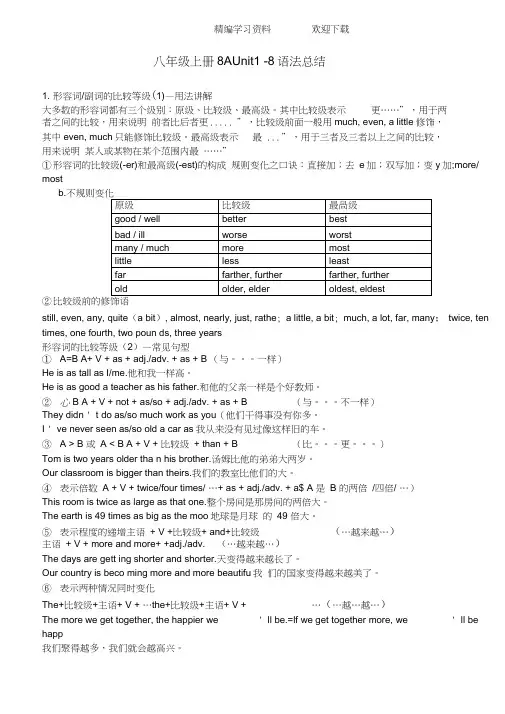
八年级上册8AUnit1 -8语法总结1. 形容词/副词的比较等级(1)—用法讲解大多数的形容词都有三个级别:原级、比较级、最高级。
其中比较级表示更……”,用于两者之间的比较,用来说明前者比后者更..... ”,比较级前面一般用much, even, a little修饰,其中even, much只能修饰比较级。
最高级表示最 ... ”,用于三者及三者以上之间的比较,用来说明某人或某物在某个范围内最……”①形容词的比较级(-er)和最高级(-est)的构成规则变化之口诀:直接加;去e加;双写加;变y加;more/ mostb.②比较级前的修饰语still, even, any, quite(a bit), almost, nearly, just, rathe; a little, a bit; much, a lot, far, many; twice, ten times, one fourth, two poun ds, three years形容词的比较等级(2)—常见句型①A=B A+ V + as + adj./adv. + as + B (与。
一样)He is as tall as I/me.他和我一样高。
He is as good a teacher as his father.和他的父亲一样是个好教师。
②心 B A + V + not + as/so + adj./adv. + as + B (与。
不一样)They didn ' t do as/so much work as you(他们干得事没有你多。
I ' ve never seen as/so old a car as我从来没有见过像这样旧的车。
③ A > B 或 A < B A + V + 比较级+ than + B (比。
更。
)Tom is two years older tha n his brother.汤姆比他的弟弟大两岁。

苏教牛津译林初中英语重点知识精选掌握英语语法知识,巩固词汇量和各种语态,学好英语基础一定要扎实,大家一起练习吧!牛津译林初中英语和你一起共同进步学业有成!Past and present教学目标1.掌握相关的词汇、短语和本文中出现的语言点。
2.进一步理解课文内容(The changes to Sunshine Town)。
重点1.培养学生根据提示复述课文的能力。
1. 2.一般过去时与现在完成时态的区别。
难点1.培养学生根据提示复述课文的能力。
2.一般过去时与现在完成时态的区别。
教学内容个案调整教师主导活动学生主体活动教学过程Task One DiscussionWhy was the river in Sunshine Town very d irty in the past?The local factori es used to dump waste water in to the river. Thelocal people didn’t realize the import ance of polluting the river.Why is the river in Sunshine Town much cleaner now?The local government realized water pollution was a serious problemand actively took action to reduce the pollution.How does Mr. Chen feel now?He feels a bit lonely from time to time.(有点寂寞) (不时;偶尔)alone (adv.) 独自;单独 live alonelonely (adj.) 孤独的;寂寞的 feel lonelyTask Two: Doing Part B3 on page 111.northern2.blocks3. restaurants4.post office5.cinema6.theatre7.shopping mall 8.steel factoryDoing Part B4 on page 111. has changed a lot2. beautiful modern3. waste4. situation5. play chess and Chinese chess6. feel a bit lonely7. see each other8. the amazing changes in the townTask Three: Post-reading一、翻译词组1.过去曾经做过某事2.结婚3.搬到(出)某地4.变化很大教学内容个案调整教师主导活动学生主体活动教学过程5.变成 6.感到寂寞7.时常 8.从某种程度上说9.像以前一样经常地10.在城镇的南部11.把废物倾倒在河里12.废料里的毒素13.一次愉快的旅行14.采取行动减少污染二、根据汉语用单词的适当形式填空。
初中英语苏教版知识点总结一、词汇与短语1. 基础词汇- 常见名词:学生、老师、家长、朋友、动物、颜色、食物、数字、地点等。
- 常见动词:去、来、是、有、做、吃、喝、玩、学习等。
- 常见形容词:好的、坏的、大的、小的、快乐的、悲伤的等。
- 常见副词:经常、从不、快速地、慢慢地等。
2. 短语搭配- 动词短语:去做作业、去购物、去旅行等。
- 形容词短语:看起来漂亮、感觉很好、听起来很糟糕等。
- 介词短语:在桌子下、在公园里、在学校等。
二、语法知识1. 时态- 一般现在时:表示经常发生的动作或状态。
- 一般过去时:表示过去发生的动作或状态。
- 一般将来时:表示将来会发生的动作或状态。
2. 句型结构- 肯定句:I am a student.- 否定句:I am not a student.- 一般疑问句:Are you a student?- 特殊疑问句:What is your name?3. 代词- 人称代词:I, you, he, she, it, we, they.- 物主代词:my, your, his, her, its, our, their.- 反身代词:myself, yourself, himself, herself, itself, ourselves, yourselves, themselves.4. 冠词- 不定冠词:a, an.- 定冠词:the.5. 介词- 表示时间:at, on, in.- 表示地点:at, on, in, under, above, behind.- 表示方向:to, towards, through.6. 连词- 并列连词:and, but, or, so.- 从属连词:because, since, although, if, when, while.三、阅读理解1. 文章类型- 记叙文:讲述人物、事件的故事。
- 说明文:解释事物的特性、原因、过程等。