The Strategic Management Process
- 格式:doc
- 大小:1.85 MB
- 文档页数:22
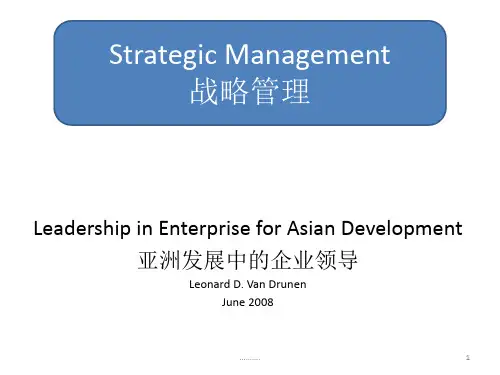

战略管理(英文版)Strategic Management: An OverviewIntroductionIn today's fast-paced and highly competitive business environment, companies must adopt effective strategies to ensure their long-term success and sustainable growth. Strategic management plays a crucial role in helping organizations align their resources, capabilities, and objectives to achieve their strategic goals. This article provides an overview of strategic management, its key components, and the benefits it offers in an increasingly dynamic and complex marketplace.1. Definition of Strategic ManagementStrategic management is the process of formulating and implementing strategies that enable organizations to fulfill their missions and achieve their objectives. It involves analyzing the external environment, identifying internal strengths and weaknesses, setting objectives, formulating strategies, implementing plans, and monitoring progress to ensure strategic goals are met.2. Key Components of Strategic Management2.1 Environmental AnalysisEnvironmental analysis involves assessing the external factors that influence an organization's performance and success. This includes macro-environmental factors such as political, economic, social, technological, environmental, and legal (PESTEL) factors, as well as industry-specificfactors. Understanding the external environment helps organizations identify opportunities and threats and make informed strategic decisions.2.2 Internal AnalysisInternal analysis focuses on assessing an organization's internal strengths and weaknesses. This includes evaluating its resources, capabilities, and core competencies. By understanding its internal strengths, an organization can leverage them to gain a competitive advantage. Similarly, identifying weaknesses helps organizations address potential areas of improvement and overcome challenges.2.3 Strategy FormulationStrategy formulation involves developing a comprehensive plan to achieve an organization's objectives and competitive advantage. This includes defining the mission and vision, setting strategic objectives, and selecting appropriate strategies. Strategies can be categorized into corporate, business, and functional levels, depending on the scope and focus of the organization's activities.2.4 Strategy ImplementationStrategy implementation is the process of translating strategic plans into actions and ensuring their effective execution. It involves allocating resources, coordinating activities, and monitoring progress. Effective implementation requires strong leadership, effective communication, and a supportive organizational culture.2.5 Evaluation and ControlEvaluation and control involve monitoring and reviewing the progress of strategic initiatives and making necessary adjustments. This includes establishing key performance indicators, conducting regular performance assessments, and taking corrective actions to ensure strategic goals are being achieved. Evaluation and control help organizations stay on track and make informed decisions throughout the strategic management process.3. Benefits of Strategic ManagementStrategic management offers several benefits to organizations:3.1 Clear DirectionBy formulating a clear strategy, organizations establish a sense of direction and purpose. This enables employees to align their efforts and work towards common goals, enhancing overall organizational performance.3.2 Competitive AdvantageStrategic management helps organizations identify unique value propositions and differentiate themselves from competitors. By leveraging their strengths and focusing on key opportunities, organizations can gain a competitive advantage in the marketplace.3.3 Adaptability to ChangeIn today's rapidly evolving business landscape, agility and adaptability are essential for success. Strategic management enables organizations to anticipate and respond to changes in the external environment, ensuring their long-term viability in a dynamic marketplace.3.4 Resource AllocationStrategic management facilitates effective resource allocation by aligning financial, human, and technological resources with strategic objectives. This ensures optimal utilization of resources and maximizes the organization's ability to achieve its goals.3.5 Performance MeasurementBy implementing strategic objectives and monitoring progress, organizations can measure their performance and identify areas for improvement. This allows for continuous learning and ongoing improvement, enhancing overall organizational effectiveness.ConclusionStrategic management is a fundamental process that enables organizations to navigate the complexities of the modern business landscape. By analyzing the external environment, assessing internal capabilities, formulating effective strategies, implementing plans, and evaluating performance, organizations can achieve their objectives and thrive in a highly competitive marketplace. Embracing strategic management is essential for long-term success and sustainability.。
战略管理的几个阶段战略管理过程(Strategic Management Process)包括三个阶段:战略制定、战术运用(战略实施)和战略评价。
战略制定:包括确定企业任务,分析企业的外部机会与威胁和企业内部优势与弱点,建立长期目标,制定可供选择的战略,以及选择特定的实施战略。
战略制定过程所要决定的主要问题有:企业进入何种新产业?放弃何种产业?如何配置资源?是否进入新的地域?是否扩大市场范围?是否扩大经营或进行多元经营?是否进行合并或建立合资公司?如何防止被敌意接管?由于没有任何企业拥有无限的资源,战略制定者必须确定在可选择的战略中,哪一种能够使公司获得最大收益。
战略决策将使公司在相当长的时期内与特定的产品、市场、资源和技术相联系。
战术运用(战略实施):在这一过程中,要求公司树立年度目标、制定政策、激励雇员和配置资源,各个职能部门制定具体的战术,以便使制定的战略得以贯彻执行,也就是战略实施阶段。
战术运用活动包括培育支持战略实施的企业文化,建立有效的组织结构,制定预算,建立和使用信息系统,制定各种行动。
方案和具体计划措施。
战术运用往往被称做是战略管理的行动阶段,实施意味着动员雇员和管理者将已制定的战略付诸行动。
已经制定的战略无论多么好,但如未能实施,便不会有任何实际作用。
战术运用活动受企业中的所有雇员及管理者的素质和行为的直接影响,往往被看作是战略管理过程中难度最大的阶段,因此,在该阶段人力资源的开发和利用是关键环节。
为激励整个公司的管理者和雇员以自豪感和热情为实现已明确的目标而努力工作,要求每个分公司或部门在战术运用阶段都必须回答诸如这样的问题:“为实施企业战略中属于我们责任的部分,我们必须做什么?”以及“我们能将工作做得多好?”战略评价:这是战略管理的最后阶段。
由于外部及内部因素处于不断变化之中,所有战略都将面临不断地调整与修改,所以管理者需要及时地了解哪一特定的战略管理阶段出了问题,而战略评价便是获得这一信息的主要方法。