
英语 语法 动词时态 一般将来时 English Tenses Simple Future Tense 小中学 Primary Middle School PDF
- 格式:pdf
- 大小:417.01 KB
- 文档页数:5

英语动词时态总结
一、一般现在时(Simple Present Tense)
表示经常性动作、惯性动作、普遍真理等。
1. 动词原形:
- I, you, we, they + 动词原形
- He, she, it + 动词原形 + -s/-es
2. 特殊用法:
- 表示客观事实或普遍真理:The sun rises in the east.
- 表示经常性或惯性动作:I often go for a run in the morning.
二、一般过去时(Simple Past Tense)
表示过去某个时间发生的动作或存在的状态。
1. 动词过去式:
- 一般情况下,动词过去式在词尾加-ed。
- 不规则动词过去式需单独记忆。
2. 特殊用法:
- 表示过去的经历或事件:We traveled to France last summer.
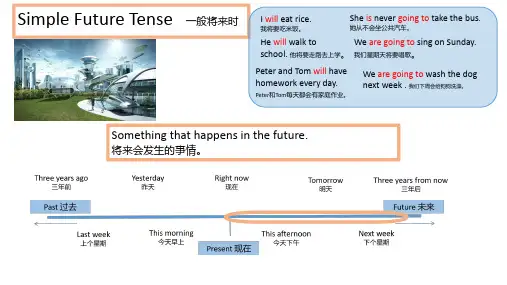
三、一般将来时(Simple Future Tense) 表示将来发生的动作或存在的状态。
1. will/shall + 动词原形:
- I, you, he, she, it, we, they + will + 动词原形
- I, we + shall + 动词原形
2. 特殊用法:
- 表示决定、承诺、意愿等:I will help you with your homework.
四、现在进行时(Present Continuous Tense)
表示现在正在进行的动作。
1. be(am/is/are) + 动词-ing:
- I + am + 动词-ing
- He, she, it + is + 动词-ing
- You, we, they + are + 动词-ing
2. 特殊用法:
- 表示现在进行的动作:I am studying for the exam.
五、过去进行时(Past Continuous Tense)
表示过去某个时间正在进行的动作。

英语时态语法归纳
以下是英语时态语法归纳:
1. 一般现在时 (Simple Present Tense):表示现在的状态、经常发生的动作或客观事实。
- 肯定句:主语 + V (动词原形或第三人称单数形式) + 其他
- 否定句:主语 + do/does not + V (动词原形) + 其他
- 疑问句:Do/Does + 主语 + V (动词原形) + 其他?
2. 一般过去时 (Simple Past Tense):表示过去发生的动作或状态。
- 肯定句:主语 + V-ed (动词过去式) + 其他
- 否定句:主语 + did not + V (动词原形) + 其他
- 疑问句:Did + 主语 + V (动词原形) + 其他?
3. 一般将来时 (Simple Future Tense):表示将来发生的动作或状态。
- 肯定句:主语 + will/shall + V (动词原形) + 其他
- 否定句:主语 + will/shall not + V (动词原形) + 其他
- 疑问句:Will/Shall + 主语 + V (动词原形) + 其他?
4. 现在进行时 (Present Continuous Tense):表示现在正在进行的动作或状态。
- 肯定句:主语 + am/is/are + V-ing (现在分词) + 其他
- 否定句:主语 + am/is/are not + V-ing (现在分词) + 其他
- 疑问句:Am/Is/Are + 主语 + V-ing (现在分词) + 其他?
5. 过去进行时 (Past Continuous Tense):表示过去某个时刻正在进行的动作或状态。 - 肯定句:主语 + was/were + V-ing (现在分词) + 其他
- 否定句:主语 + was/were not + V-ing (现在分词) + 其他

初中英语语法八大时态总结推荐文档
中学阶段是英语语法学习的重要阶段之一,掌握好时态是英语学习的基础。以下是初中英语语法八大时态的总结。
一、一般现在时(Simple Present Tense)
结构:主语+谓语动词原形(第三人称单数要加-s)
用法:
1.表示经常性动作、习惯或真理。
例句:I brush my teeth every morning.
2.表示现在的状态或存在。
例句:She is a student.
3.描述当前的情况、事件或安排。
例句:The train leaves at 9 o'clock.
二、一般过去时(Simple Past Tense)
结构:主语+谓语动词过去式
用法:
1.表示过去发生的动作或存在的状态。
例句:They visited Beijing last summer.
2.表示过去的习惯或经常性的动作。
例句:She always went to bed early when she was a child. 三、一般将来时(Simple Future Tense)
结构:主语+will+谓语动词原形
用法:
1.表示将来会发生的动作或事件。
例句:I will study abroad next year.
2.表示打算、意愿、请求、允诺等。
例句:You will help me, won't you?
四、现在进行时(Present Continuous Tense)
结构:主语+be(am/is/are)+动词-ing
用法:
1.表示现在正在进行的动作。
例句:He is reading a book now.
2.表示计划将来要发生的动作。
例句:I am going to the cinema tonight.
五、过去进行时(Past Continuous Tense)
结构:主语+was/were+动词-ing
用法:表示过去一些时间点或一些过去的动作正在进行中。

掌握时态一般将来时和过去将来时
一般将来时和过去将来时是英语中常用的两种时态形式,它们帮助我们描述将来发生的动作或事件,同时强调时间的关系。在本文中,我们将重点探讨这两种时态的用法和相应的例句。
一、一般将来时(Simple Future Tense)
一般将来时用来表达将来某个时间发生的动作或事件。我们可以使用以下几种结构来构成一般将来时:
1. 使用“will + 动词原形”构成句子,表示决定或预测的未来动作或事件。
例如:
- I will visit my grandparents this weekend.(我会在这个周末去拜访我的祖父母。)
- He will be a doctor when he grows up.(他长大后会成为一名医生。)
2. 使用“be going to + 动词原形”表示计划、意愿或打算去做某事。
例如:
- I am going to study abroad next year.(明年我打算出国留学。)
- She is going to have a party on Friday.(她打算在周五举办一个派对。) 3. 使用“shall + 动词原形”构成句子,表示“我将”,主要用于“我们”(“we”)和“我”(“I”)。
例如:
- We shall meet at the park tomorrow.(明天我们将在公园见面。)
- Shall I help you with the bags?(我应该帮你拿行李吗?)
二、过去将来时(Future in the Past Tense)
过去将来时用于描述在过去某个时间点将来会发生的动作或事件。我们可以使用以下结构来构成过去将来时:
1. 使用“would + 动词原形”构成句子,表示过去某个时间点的将来动作。
例如:
- He said he would come to the party.(他说他会来参加派对。)