(word完整版)外研版九上全册重点短语及句型汇总,推荐文档
- 格式:doc
- 大小:24.15 KB
- 文档页数:6
外研版九上全册重点短语 + 句式 + 语法
Modules 1短语 1、从……出来 get out of ... 2. 在……的顶上 on top of ...
3. 期望…… look forward to ... 4. 穿过 go through
5. 朝……望过去 look across 6. 同意 agree with
7. 在我看来 in my opinion 8. 多于 more than
9. 无数的 millions of 10. 加入 join in
句型:1. be not sure... 对……不确定 2. There be nothing to do... 没有什么可以……
3. There be no sign of ... ……没有迹象 4. I think... 我认为……
5. It’s about ...wide and ...high. 大约多宽多高。
语法运用—— 六种时态
Module 2 短语1. ……末尾 the end of 2. 去野餐 have a picnic
3. 摆餐桌 lay the table 4. 聚在一起 get together
5. 倒数 count down 6. 取决于 depend on
7. 一……就…… as soon as 8. 对……表示感谢 give thanks for...
9. 大量 plenty of 10. ……的开始 the start of ...
11. 也 as well 12. 度假 take a vacation
核心句型:1. It is a time for .. 是……的时候了。
2. Is there anything special...?……有什么特别的事情吗?
3. teach sb how to do... 教某人怎样做…… 4. I hope that... 我希望
语法点击 —— 时间状语从句
一、不同身份
1. 表示主从句的动作同时发生或几乎同时发生时,这类连词(组)有:when, while, as soon as。
例如:When I felt hungry, my friend gave me a hamburger. While I was working, my mother called
me. Xiaoming let me know as soon as he bought the tickets.
2. 表示主从句的动作先后发生时,这类连词有:before, after。
例如:The thief had run away before the police arrived. After you finish the task, I will send you a
present.
3. 表示主句动作为可持续性时,即主句谓语动词为持续性动词,这类连词有:until, since。
例如:I watched TV until my father came back. She has saved money since she got the job.
二、时态呼应
在时间状语从句中,主句和从句之间的时态呼应问题一般分下列三种情况:
1. 当从句表示“将来”的意义,用一般现在时,主句用一般将来时,即“主将从现”原则。
例如:She’llbeangrywhensheseesthebrokenwindow.
2. 主句是祈使句,时间状语从句用一般现在时。
例如:Turn off the tap when you brush your teeth.
3. 主句是一般过去时,时间状语从句也要用与过去相应的时态。例如:He was fond of drawing
when he was a child.
Module 3 短语 1. 为……而死 die for... 2. 得知 learn about 3. 放弃 give up
4. 独自地 on one’s own 5. 感到骄傲 be proud of 6. 足够好 good enough
7. 那时 at that time 8. 最后 in the end 9. 并且 as well as
10. 死于 die of 11. 照顾 take care of 12. 又一次 once again
13. 需要 in need of 14. 不得不 have to
核心句型 1. one of the best... 最好的……之一 2. manage to do... 设法做…… 3. start doing... 开始做…… 4. stop doing... 停止做……
原因、目的和结果状语从句
【例句】
1. We have to play inside because it is raining.因为下雨,我们不得不在屋里玩。
2. — Why didn’t you answer my call yesterday?你昨天为什么不接我的电话?
— Because I was taking a shower at that time.因为当时我正在洗澡。
3. Haste makes waste, so be careful as you work.欲速则不达,所以工作时要仔细。
4. I stay on so that he may not feel lonely.我留下来以使他可能不会感到孤独。
【总结】
◆ because 作连词,意为“因为”,表示必然的因果关系,语气较强,通常放在主句之后,若需强调则放在主句之前,常用来回答疑问词“why”提出的问题,如例句 1 与 2。
◆ so 可以引导结果状语从句,但是 so 和because不能同时使用,如例句 3。
◆ so that 引导的目的状语从句中通常带有 can, could, may, might, should 等情态动词。so
that 引导的从句在主句后,从句前不用逗号,如例句 4。
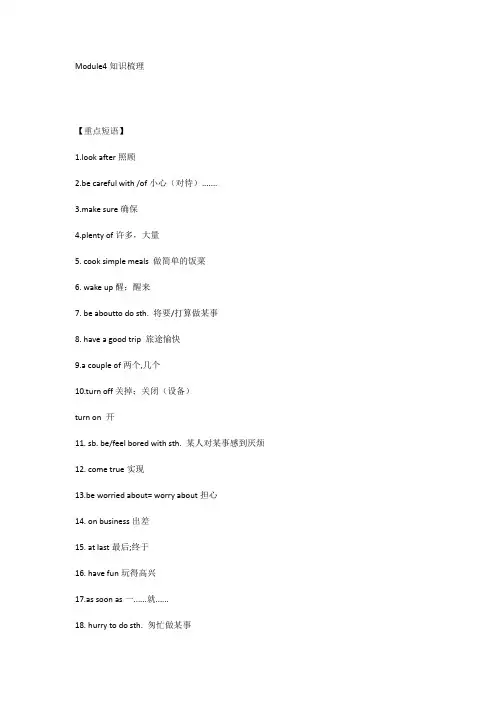
Module 4短语 1. 叫醒 wake up 2. 关掉 turn off 3. 担心 be worried about
4. 出差 on business 5. 整天 all day long 6. 依靠 depend on
7. 厌烦 be bored with 8. 照顾 look after 9. 许多 plenty of
10. 两个 a couple of 11. 注意 be careful with 12. 整理 tidy up
13. 不善于 bad at 14. 玩得开心 have fun 15. 请求 ask...for...
核心句型 1. so...that... 如此……以至于…… 2. be about to... 即将……
3. I am sure that... 我确定…… 4. unable to do... 不能做
结果状语从句和让步状语从句
【例句】
1. He has so many friends here that he doesn’t feel lonely at all.
在这儿他有很多朋友以至于他一点也不感到孤独。
2. He ran so fast that other students fell far behind him.
他跑得太快了,以至于别的同学都远远地落在他的后面。
3. Xiaoming will help his mother with the housework although he comes back home late.
尽管小明回家很晚,他还是会帮妈妈做家务。
4. I exercised for half an hour though I was a little bit tired today.
尽管我今天有点累,我还是锻炼了半个小时。
【总结】
◆ so...that...意为“如此……以至于…… ”,so 后接形容词或副词的原级,表示程度,that
引导的是结果状语从句,如例句 1 与 2。
◆ although / though 作连词,意为“虽然;尽管;然而”,引导让步状语从句,如例句 3 与4。Although / though 引导让步状语从句时,不能与 but 同时使用,但可以与 yet, still 连用。
Module 5短语 1. 处于困境 in trouble 2. 比如 for example
3. 和……比较 compare... with... 4. 吵闹;喧哗 make a noise
5. 隔壁;相邻 next to 6. 用……填充…… fill...with 7. 期待 look forward to
8. 不仅……而且 as well as 9. 注意 pay attention to 10. 发现;查明 find out
11. 得知 learn about 12. 所有年龄段的 of all ages 13. 全世界 in the whole world
核心句型
1. It’s against ... 这是违反…… 2. That’s no good. 那样不好。
3. No wonder ... 难怪……
if 从句 1:if 从句 + 祈使句
1. 结构: “if 从句 + 祈使句”意为“如果……,就 / 要……”。
2. 用法:
① “if从句+祈使句”结构中,if引导的从句可以放在主句之前,也可以放在主句之后。
② if 从句在前时,主从句之间必须用逗号隔开。
③ 主句是祈使句,if 从句要用一般现在时。
例如:If you want to leave, drive slowly. 如果你想走,慢点开车。
Stay at home if it rains. = If it rains, stay at
home. 如果下雨,你就待在家。
表示禁止的结构
1. “No + 名词 / 动名词!”句型常用于公共场合的提示语,意为“禁止……,不准……”。
例如:No smoking! 禁止吸烟!No burning!禁止烟火!
2. Don’t + 动词原形. 例如:Don’t jump. 不准蹦跳。
Module 6短语 1. 而不是 instead of 2. 养成……的习惯 get into the habit of