
英国绅士
- 格式:ppt
- 大小:2.60 MB
- 文档页数:15
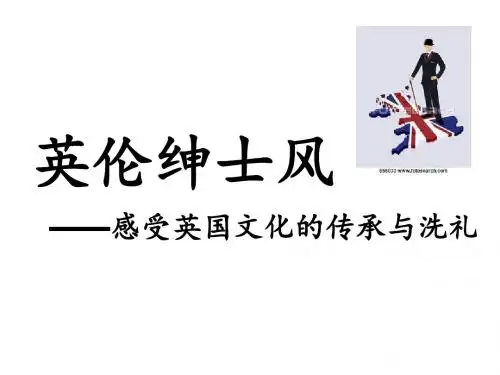

英吉利民族绅士风度解析
英吉利民族是英国的一个民族,也是英国国家的重要组成部分。
英吉利民族有着悠久的历史和丰富的文化传统,他们被称为英国的“绅士”。
英吉利民族绅士风度是指英吉利民族男性行为准则中的一种。
绅士风度是英吉利民族男性的美德和优秀品质的集合,包括礼貌、有礼、文雅、有才华、精明、有责任感、有尊严等。
绅士风度的重要性在于,它体现了英吉利民族男性的道德和文化修养,是英吉利民族男性在社会中所应有的品质和行为准则。
绅士风度不仅体现在英吉利民族男性的外在行为上,也体现在他们的内在思想和情感上。

议英国人绅士风度及其文化内涵每个民族都有自己特有的精神特征,而每一种精神特征都必然蕴藏着特定的文化内涵及其形成这种精神特征的历史根源。
谈到英国人这一特殊的民族群体,我们首先会想到他们的绅士风度。
关于绅士风度在我们的一些简单口语中完全可以体现出来。
比如Ladies & gentlemen,Lady first!等等。
绅士风度的最大特征就是:conservation,<保守>,politeness<礼貌>,以及showing respect tofemales<尊重女士>。
众所周知,英国最有实力、执政时间最长的党派即为保守党(theConservative Party)。
而且,英国人非常崇尚传统的观念及制度,而对于新生事物的接受能力远远低于其他欧洲国家的民族。
在英国,君主政体仍旧被保存下来。
英国的国歌仍旧是“Godsavethequeen/king”(神佑吾王/女王)。
直到今天,一些有名望的人仍旧希望从女王那里得到诸如:“公,候,伯,子,男”之类的封爵。
英国律师戴假发,穿长袍的习俗也一直延留至今。
在现代社会中,电力和天燃气用于室内保暖和取热在很长一段时间内已经完全代替了煤火的使用。
但一般英国人的居室内仍旧设有虚设的炉壁。
英国人的保守怀旧心态在此可见一斑。
这对于一个文明现代的发达国家来说确实有点不可思议。
礼貌、缄默是英国绅士风度的又一表现。
英国人非常讨厌喋喋不休的“侃大山”<free talk>,即使同他们聊天<casual talk>,话题也是很讲究的:家庭、身份、年龄、工作甚至事业都被认为是他们的私人生活<privatelife>,别人无权干涉过问,否则,就违背了他们的礼貌原则<politenessprinciple>。
西方有一句谚语:“英国人的家就是他们的城堡。
”英国人特别讲究尊重每个人自己的“个人天地”,因此,天气<the weather>成为英国人永恒的话题。

从唐顿庄园看英国绅士风度作文《从唐顿庄园看英国绅士风度》篇一《礼貌:绅士风度的敲门砖》在《唐顿庄园》里,绅士风度首先体现在礼貌上。
就像老伯爵,无论面对家人、仆人还是访客,他总是彬彬有礼。
有一次,庄园里来了一位远方亲戚,这位亲戚的穿着打扮有点土气,行为举止也略显粗俗。
但老伯爵丝毫没有表现出嫌弃,他亲切地迎接,还带着对方参观庄园,耐心地讲解庄园的历史和一些小典故。
在交谈中,老伯爵一直保持着温和的笑容,认真地倾听亲戚的每一句话,哪怕那些话有点前言不搭后语。
吃饭的时候,这位亲戚不小心碰倒了酒杯,酒洒在桌上,他惊慌失措。
老伯爵没有责怪,而是立刻叫来仆人收拾,还轻声安慰亲戚说这只是个小意外。
这种礼貌不是装出来的,而是深入骨子里的,在英国,好像不管什么身份地位,礼貌都是人与人交往的第一准则。
绅士们从不大声喧哗,就算生气也不会恶语相向。
外出时如果有女士同行,男士也会绅士地为女士开门,扶着女士过马路。
这种礼貌的行为就像一阵微风,轻轻地吹过,却让周围的人都感觉很舒服。
篇二《尊重女士:绅士风度的重要内涵》在唐顿庄园里,尊重女士那可是非常明显的。
就拿大表哥来说吧,当他和小姐们在一起的时候。
有一回在庄园举办的小型舞会上,一位小姐不小心把裙摆踩了个小口子。
小姐顿时很沮丧,因为那是她最喜欢的一条裙子。
大表哥看到后,立刻非常自然地把自己的手帕递给小姐,然后安慰她说,其实这个小口子就像不小心洒在瓷器上的一点小墨水,在他眼里反而给裙子增添了一点特别的韵味。
然后大表哥还陪着小姐找了个隐秘的角落,很贴心地找来了女管家帮忙补救。
在英国,尊重女士不只是一个口号。
在公共场合,男士会把舒适的座位让给女士,在走路的时候也会让女士走在相对安全的内侧。
而且在女士发表意见的时候,绅士们会认真倾听,不会轻易打断。
就连仆人们也是如此,男仆对待女仆也充满尊重,要是有重物要搬,男仆都会很主动地承担。
这种对女士的尊重,不是因为女士有什么特权,而是一种刻在英国人心中的文化,这也是绅士风度的重要一部分。

英国绅士文化英文作文The British gentleman culture is a unique and enduring tradition that has been passed down through generations. It is characterized by a sense of refinement, politeness, anda certain old-world charm. Whether it's the way they dress, their impeccable manners, or their love for tradition, British gentlemen are known for their distinctive style and class.The attire of a British gentleman is always well-tailored and sophisticated. They take great care in their appearance, often opting for tailored suits, polished shoes, and a classic tie. The attention to detail in theirclothing reflects their commitment to presenting themselves in a polished and respectable manner.Politeness is a cornerstone of the British gentleman culture. They are known for their impeccable manners,always saying "please" and "thank you," and holding doors open for others. Their courteous behavior is a reflectionof their respect for others and their desire to create a pleasant and respectful environment.British gentlemen have a deep appreciation fortradition and history. They often take pride in their country's heritage and enjoy partaking in traditional activities such as afternoon tea, attending polo matches, or participating in country pursuits like shooting and fishing. These traditions are a way for them to connect with their past and maintain a sense of continuity in an ever-changing world.In addition to their love for tradition, British gentlemen are also known for their wit and charm. They have a way with words and can engage in lively and intelligent conversations on a wide range of topics. Their quick wit and sense of humor make them enjoyable company, and they are often sought after for their entertaining and engaging conversation.Overall, the British gentleman culture is a timeless and elegant tradition that continues to thrive in modernsociety. It is characterized by a sense of refinement, politeness, and a deep appreciation for tradition and history. British gentlemen are admired for their impeccable style, courteous manners, and engaging personalities, making them true ambassadors of their unique and enduring culture.。