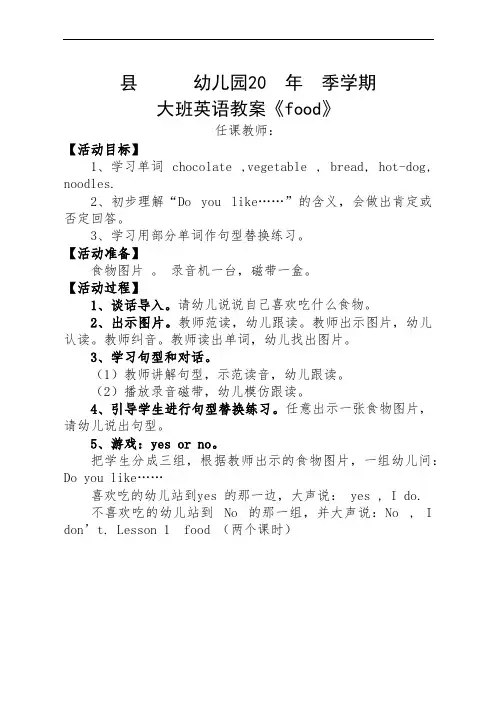
英语教案food范文全英文版幼儿全文共3篇示例,供读者参考篇1Food theme for young childrenBackground:This English lesson plan is designed for young children (ages 3-5) to learn about food in a fun and engaging way. The lesson will focus on vocabulary related to different types of food, as well as introducing basic concepts of healthy eating and nutrition.Objectives:1. To introduce and practice food vocabulary2. To promote awareness of healthy eating habits3. To encourage language development through interactive activitiesMaterials needed:- Flashcards with pictures of different types of food (fruits, vegetables, dairy products, grains, proteins)- A play food set- Songs or videos about food- Worksheets or coloring pages with food-related activitiesActivities:1. Introduction: Begin the lesson by showing the children the flashcards with pictures of different types of food. Ask them to identify the foods and say the names out loud. Use this opportunity to introduce new vocabulary and pronunciation.2. Sorting game: Divide the children into groups and give each group a set of play food. Ask them to sort the food into categories (fruits, vegetables, dairy products, grains, proteins) and discuss why each food belongs in a specific category.3. Healthy eating discussion: Show the children pictures or videos of healthy foods and discuss the benefits of eating a balanced diet. Encourage them to identify which foods are good for their bodies and why.4. Song and dance: Play a fun song or video about food and encourage the children to dance along. This will help reinforce the vocabulary and keep the lesson engaging.5. Cooking activity: Set up a pretend kitchen area with play food and cooking utensils. Invite the children to pretend to cookdifferent dishes using the play food. This will help them practice using the new vocabulary in context.6. Art activity: Provide the children with worksheets or coloring pages with food-related activities, such as matching foods to their colors or completing a food-themed puzzle. This will help reinforce the vocabulary and provide a creative outlet for the children.Closure: End the lesson by reviewing the new vocabulary and concepts with the children. Encourage them to share what they have learned about food and healthy eating.Overall, this food-themed lesson plan will engage young children in learning English in a fun and interactive way, while also promoting awareness of healthy eating habits. Through a variety of activities, children will have the opportunity to practice new vocabulary, develop language skills, and foster a positive attitude towards food and nutrition.篇2Lesson PlanTheme: FoodAge group: Preschool (3-5 years old)Objectives:1. To introduce food vocabulary to the children.2. To teach the children about healthy eating habits.3. To enhance the children's language skills through various activities.Materials:- Pictures of different types of food (fruits, vegetables, snacks, etc.)- Flashcards with food vocabulary words.- Paper plates, glue, and magazines for a collage activity.- Healthy and unhealthy food sorting game.- Cooking ingredients for a simple food preparation activity.- Children's storybooks about food.Introduction (10 minutes):- Greet the children and introduce the topic of food.- Show pictures of different food items and ask the children to name them.- Play a short video or song about food to engage the children.Vocabulary Building (15 minutes):- Use flashcards to introduce new food vocabulary words to the children.- Have the children repeat the words after you and try to say them on their own.- Practice pronunciation and spelling of the words through fun activities.Healthy Eating Habits (20 minutes):- Show pictures of healthy and unhealthy food items and discuss the differences with the children.- Play a sorting game where the children categorize the food items into healthy and unhealthy groups.- Talk about why it is important to eat healthy food and how it makes us strong and healthy.Collage Activity (15 minutes):- Provide each child with a paper plate and glue.- Give them magazines with pictures of food and ask them to cut out and paste healthy food items on the plate.- Encourage the children to talk about the food they are pasting and why they chose them.Food Preparation Activity (20 minutes):- Set up a table with simple cooking ingredients like bread, butter, and vegetables.- Allow the children to make their own healthy sandwich or snack with the ingredients.- Supervise and assist the children with the preparation process.Storytime (10 minutes):- Read a children's storybook about food to the class.- Encourage the children to interact with the story by asking questions and discussing the plot.Conclusion (10 minutes):- Recap the day's lesson on food and healthy eating habits.- Ask the children to share one thing they learned today.- Thank the children for their participation and enthusiasm.Assessment:- Observe the children's participation and engagement throughout the lesson.- Assess their understanding of the food vocabulary and healthy eating concepts.- Encourage the children to apply what they have learned in their daily lives.Extension Activities:- Plan a field trip to a local farm or grocery store to explore different types of food.- Organize a cooking class where the children can learn to prepare a healthy recipe.- Create a food-themed art project using various materials like paint, clay, and recycled items.By following this lesson plan, the children will not only learn about food and healthy eating habits, but also improve their language skills and creativity. It is important to make learning fun and interactive for preschoolers, so incorporating games, activities, and hands-on experiences will keep them engaged and excited to learn.篇3Food Lesson PlanTitle: Let's Learn About FoodGrade level: PreschoolObjectives:1. Students will be able to identify different types of food.2. Students will learn about the importance of eating a variety of foods for a healthy diet.3. Students will practice vocabulary related to food.Materials:- Pictures of different types of food (fruits, vegetables, meats, dairy products, grains)- Flashcards with food vocabulary- Blank paper and crayons markers- Playfood or toy kitchen setWarm-up activity (10 minutes):- Begin the lesson by showing the students pictures of different types of food. Ask them to identify each type of food and talk about their favorite foods.- Play a game where students have to match the food pictures with their names.Introduction (15 minutes):- Introduce the concept of a healthy diet by explaining that our bodies need different types of food to stay healthy and strong. Show the students the food pyramid and explain that we should eat more of some foods (fruits and vegetables) and less of others (sweets and treats).Main activity (20 minutes):- Divide the students into small groups and give each group a set of flashcards with food vocabulary. Have them take turns identifying each food item and describing it to the rest of the group.- After the students have practiced the vocabulary, have them draw their favorite meal on a piece of paper. They can include fruits, vegetables, proteins, and grains in their meal.- Encourage the students to share their drawings with the class and explain why they chose the foods they did.Extension activity (15 minutes):- Bring out the playfood or toy kitchen set and have the students pretend to cook a healthy meal together. Encourage them to use a variety of food items in their meal and talk about why each item is important for their health.Closure (10 minutes):- Review the lesson by asking the students to identify the different types of food they learned about today. Ask them why it is important to eat a variety of foods for a healthy diet.- Give each student a sticker for participating in the lesson and remind them to eat a variety of foods to stay healthy.Assessment:- Observe the students during the main and extension activities to see if they are able to identify the different types of food and explain their importance.Overall, this lesson plan is designed to help preschool students learn about the importance of eating a variety of foods for a healthy diet. By using a variety of activities, students will practice food vocabulary, learn about different types of food, and understand why it is important to eat a balanced diet.。