
古希腊神话故事英语简介
- 格式:ppt
- 大小:3.05 MB
- 文档页数:23
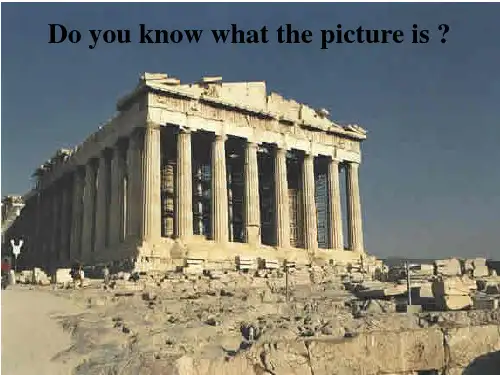


英语作文古希腊神话Title: Exploring the Rich Tapestry of Greek Mythologyin English Literature。
Greek mythology, with its intricate tales of gods, heroes, and monsters, has long captivated readers and inspired countless works of literature. From Homer's epic poems to modern novels, the influence of these ancientmyths can be seen across the spectrum of English literature. In this essay, we delve into the enduring allure of Greek mythology and its impact on English literary tradition.At the heart of Greek mythology are the gods and goddesses who ruled over the universe from Mount Olympus. Zeus, the king of the gods, wielded thunderbolts and ruled over the sky, while his wife Hera presided over marriageand childbirth. Athena, the goddess of wisdom, embodied strategic warfare and arts and crafts, while Apollo, thegod of the sun, represented music, poetry, and healing. These divine figures, with their complex personalities andsupernatural powers, provided fertile ground for literary exploration.One of the most famous works of English literature influenced by Greek mythology is Homer's "The Iliad" and "The Odyssey." These epic poems recount the exploits of Greek heroes like Achilles and Odysseus as they navigatethe challenges of war and the whims of the gods. The themes of heroism, fate, and the struggle between mortals and immortals resonate throughout these timeless works,offering readers a glimpse into the ancient Greek worldview.In addition to epic poetry, Greek mythology hasinspired countless plays, from the tragedies of Aeschylus, Sophocles, and Euripides to the comedies of Aristophanes. These playwrights brought the myths to life on the stage, exploring themes of hubris, fate, and the consequences of human ambition. Characters like Oedipus, Medea, and Prometheus have become iconic figures in the literary canon, their stories serving as cautionary tales about the perilsof defying the will of the gods.The influence of Greek mythology extends beyond ancient literature and into the realm of modern fiction. Writers like William Shakespeare drew upon classical themes and characters in works such as "A Midsummer Night's Dream" and "The Tempest," infusing their plays with elements of magic, transformation, and divine intervention. In more recent times, authors like Rick Riordan have reimagined Greek myths for a young adult audience, introducing readers to modern-day demigods and monsters in series like "Percy Jackson and the Olympians."Furthermore, Greek mythology has left its mark on English poetry, inspiring poets from John Milton to T.S. Eliot. Milton's "Paradise Lost" draws heavily from biblical and classical sources, weaving together the stories of Adam and Eve with those of Satan and the Greek Titans. Eliot's modernist masterpiece, "The Waste Land," incorporates fragments of mythological imagery to evoke a sense of cultural disintegration and spiritual desolation in the aftermath of World War I.In conclusion, Greek mythology occupies a central placein the tapestry of English literature, providing a rich source of inspiration for writers across the centuries. From epic poetry to modern fiction, the myths of ancient Greece continue to captivate readers with their timeless themes and enduring relevance. As long as there are storytellers, the gods and heroes of Mount Olympus will live on in the pages of literature, their stories serving as a testament to the enduring power of the human imagination.。

