
高级汉语词汇
- 格式:pdf
- 大小:190.29 KB
- 文档页数:7
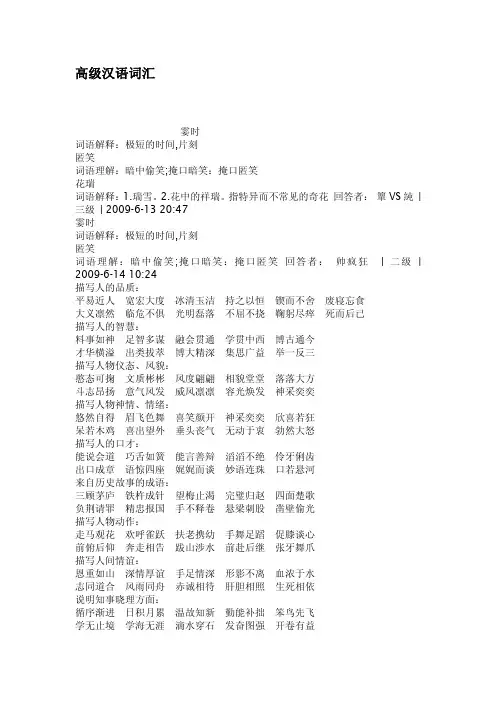

3500词汇分层记第一层:基础词汇(1000个词汇)本层包括了汉字的基本词汇、常用的动词、名词和形容词,以及一些常用短语和固定搭配。
这些词汇在日常生活和交流中经常使用,是学习汉语的基础。
第二层:进阶词汇(1000个词汇)本层包括了一些稍微复杂一些的词汇,涵盖了更多的动词、名词和形容词,以及一些常用成语和习惯用语。
这些词汇可以帮助学习者更深入地理解和运用汉语。
第三层:高级词汇(1000个词汇)本层包括了一些比较专业和高级的词汇,涵盖了各个领域的专业术语和高级词汇。
这些词汇可以帮助学习者扩展词汇量,提升语言表达能力,在专业领域或高级交流中更加自如地运用汉语。
第四层:实用词汇(500个词汇)本层包括了一些实用的词汇,涵盖了日常生活、工作、学习等方面常用的词汇。
这些词汇可以帮助学习者更好地应对各种实际情境,提高实际应用能力。
第五层:拓展词汇(500个词汇)本层包括了一些拓展的词汇,涵盖了一些特定领域或主题的词汇。
这些词汇可以帮助学习者拓宽视野,了解更多领域的专业词汇,提高自己的综合能力。
第六层:文化词汇(500个词汇)本层包括了一些与中国文化、历史、传统等相关的词汇。
这些词汇可以帮助学习者更好地了解中国文化,增进对中国的认知和理解。
第七层:扩展词汇(500个词汇)本层包括了一些扩展的词汇,涵盖了一些热门话题、新兴领域的词汇。
这些词汇可以帮助学习者跟上时代发展的潮流,了解最新的词汇和表达方式。
第八层:专业词汇(500个词汇)本层包括了一些与各个专业领域相关的词汇。
这些词汇可以帮助学习者在特定领域的学习或工作中更加熟练地运用汉语。
第九层:口语词汇(500个词汇)本层包括了一些常用的口语词汇和口头禅,涵盖了日常生活中经常用到的口语表达。
这些词汇可以帮助学习者提高口语交流能力,更加流利地表达自己的想法和观点。
第十层:写作词汇(500个词汇)本层包括了一些常用的写作词汇和句式,涵盖了不同类型的写作所需的词汇。
这些词汇可以帮助学习者提高写作能力,更加准确地表达自己的思想和观点。

新汉语水平考试级词汇
新汉语水平考试(HSK)是由中国国家汉办组织的一种国际汉语
水平标准化考试。
HSK考试分为六个级别,从HSK一级到HSK六级。
每个级别的词汇量都有相应的要求,下面我将从每个级别的词汇量
要求来回答你的问题。
1. HSK一级,150词汇,包括基本的日常用语和简单的语法结构。
2. HSK二级,300词汇,包括更多的日常用语和基本的交际能力。
3. HSK三级,600词汇,包括进阶的日常用语和更复杂的语法
结构。
4. HSK四级,1200词汇,包括更广泛的日常用语和较为复杂的
交际能力。
5. HSK五级,2500词汇,包括较为丰富的词汇量和较高水平的
语言运用能力。
6. HSK六级,5000词汇,包括丰富的词汇量和高级的语言运用能力,可以进行高水平的汉语交流和阅读理解。
除了词汇量外,HSK考试还包括听力、阅读、写作等方面的测试内容。
因此,想要通过HSK考试,除了词汇量的积累,还需要全面提高汉语的听、说、读、写能力。
希望以上信息能够帮助到你。

Aability[əˈbɪləti] n. the fact that somebody is able to do something 能力,才能abroad [əˈbrɔːd] adv. in or to a foreign country 在国外,到国外absent [ˈæbsənt] adj. not in a place because of illness, etc 缺席的,不在的accept[əkˈsept] v. to agree to take something 接受access [ˈækses] n. 入口,通道accommodation [əˌkɒməˈdeɪʃn] n. a place to live, work or stay in 住处,办公处,停留处accompany[əˈkʌmpəni] v. to travel or go somewhere with somebody 陪同,陪伴according to [əˈkɔːdɪŋ] 根据account [əˈkaʊnt] n. 账目;账户accurate [ˈækjərət] adj. correct, exact and without any mistakes 准确的,精确的achieve [əˈtʃiːv] v. 完成,实现,达到actual [ˈæktʃuəl] adj. 实际的,事实上的in addition [əˈdɪʃn] 另外,此外additional [əˈdɪʃənl] adj. 附加的,额外的admire [ədˈmaɪə] vt. 钦佩, 赞美, 羡慕7.4↓admission [ədˈmɪʃn] n. 承认, 入会费, 许可admit[ədˈmɪt] v. to agree, often unwillingly, that sth is true 承认,允许进入advanced [ədˈvɑːnst] adj. 先进的, 高级的advantage [ədˈvɑːntɪdʒ] n. 优势,有利条件advert [ˈædvɜːt] n. 广告advice [ədˈvaɪs] n. 忠告advise [ədˈvaɪz] v. 劝告,忠告afford [əˈfɔːd] v. 负担得起aim n. 目标air conditioning [kənˈdɪʃənɪŋ] 空调系统air force [fɔːs] 空军alarm [əˈlɑːm] n. 警报album[ˈælbəm] n. a book in which you keep photos, stamps, etc 唱片集, 唱片, 相册, 集邮册, 纪念册allow [əˈlaʊ] v. to let somebody/something do something 允许alphabet [ˈælfəbet] n. 字母表ambassador [æmˈbæsədə] n. 大使,代表ambition [æmˈbɪʃn] n. 雄心,抱负amusing [əˈmjuːzɪŋ] adj. funny and enjoyable 有趣的,引人发笑的ankle [ˈæŋkl] n. the joint connecting the foot to the leg 踝,踝关节anniversary [ˌænɪˈvɜːsəri] n. 周年纪念,周年纪念日announce [əˈnaʊns] v. 宣布;播报annoy[əˈnɔɪ] v. to make somebody slightly angry 使恼怒,使烦恼annual[ˈænjuəl] adj. happening or done once every year 每年的,年度的,一年生的antique[ænˈtiːk] adj. old and often valuable 古代的,古老的,过时的anxious[ˈæŋkʃəs] adj. feeling worried or nervous 渴望的,忧虑的apart from除……之外,且不说apologise[əˈpɒlədʒaɪz] v. to say that you are sorry for doing something wrong or causing a problem 道歉,赎罪appearance [əˈpɪərəns] n. 出现;外表application [ˌæplɪˈkeɪʃn] n.申请apply [əˈplaɪ] v. 申请;应用approach[əˈprəʊtʃ] v. to come near to sb/sth in distance or time 靠近,接近approve [əˈpruːv] v. 批准,赞成architect [ˈɑːkɪtekt] n. a person whose job is designing buildings, etc. 建筑师argue[ˈɑːɡjuː] v. to speak angrily to somebody because you disagree with them 争论,辩论arrange[əˈreɪndʒ] v. to plan or organize something in advance 安排,整理,计划arrest[əˈrest] v. if the police arrest sb, the person is taken to a police station and kept there because the police believe they may be guilty of a crime 逮捕,拘留arrival [əˈraɪvl] n. when sb or sth arrives somewhere 到达article [ˈɑːtɪkl] n. a piece of writing on a particular subject in a newspaper or magazine 文章at present现在,目前(now)athlete [ˈæθliːt] n. a person who is very good at sports or physical exercise, especially one who competes in organized events 运动员athletics [æθˈletɪks] n. 体育运动,田径atmosphere [ˈætməsfɪə] n.气氛;大气,空气attach [əˈtætʃ] v. 附上,系上attack [əˈtæk] v. 攻击,侵袭attempt [əˈtempt] n.&v. 企图,尝试attend [əˈtend] v. 出席,参加attitude [ˈætɪtjuːd] n. 态度,看法attract [əˈtrækt] v. 吸引audience[ˈɔːdiəns] n. the group of people together in one place to watch or listen to a play, film, someone speaking, etc. 听众,观众,读者automatically [ˌɔːtəˈmætɪkli] adv. 自动地,机械地available [əˈveɪləbl] adj. 有效的,可用的,可得到的average [ˈævərɪdʒ] adj. 平均的,一般的,通常的avoid [əˈvɔɪd] v. 避免Bbackground['bækɡraund] n. the details of a person's family, education, experience, etc背景, 经历, 幕后, 后景backpack[ˈbækpæk] n. a large bag, oftensupported on a light metal frame, carried on the back and used especially by people who go climbing or walking 背包backwards [ˈbækwədz] adj. towards a placeor position that is behind落后的, 向后的baggage [ˈ'bægidʒ] n. = luggage 行李balance[ˈbæləns] n. a situation in whichdifferent things exist in equal, correct or good amounts 平衡balcony [ˈbælkəni] n. a platform that is builton the upstairs outside wall of a building, with a wall or rail around it. You can get out onto a balcony from an upstairs room. 阳台bald [bɔːld] adj. having little or no hair on thehead秃头的ballet [ˈbælei] n. a style of dancing that tells adramatic story with music but no talking or singing 芭蕾舞bandage[ˈbændidʒ] n.a strip of cloth usedfor tying around a part of the body that has been hurt in order to protect or support it 绷带bank balance: he amount of money that somebody has in their bank account at a particular time 银行存款, 银行余额banknote [ˈbæŋknəʊt] n. a piece of printedpaper that has a particular value as money钞票barbecue [ˈbɑːbi kjuː] n. an outdoor meal or party when food is cooked in this way烤肉, 烧烤, 烤架bare[beə(r)]adj. not covered with or protected by anything 赤裸的,仅有的baseball [ˈbeisbɔ:l] n. a game played especially in the US by two teams of nine players, using a bat and ball. Each player tries to hit the ball and then run around four bases before the other team can return the ball 棒球basement [ˈbeismənt] n. a room or rooms in a building, partly or completely below the level of the ground 地下室basic [ˈbeisik] 基础的bat [bæt] n.a piece of wood with a handle, made in various shapes and sizes, and used for hitting the ball in games such as baseball, cricket and table tennis 球棒,球拍battle [ˈbætl] n. a fight between armies, ships or planes, especially during a war; a violent fight between groups of people 战役bay [bei] n. a part of the sea, or of a large lake, partly surrounded by a wide curve of the land 海湾beard[biəd] n.hair that grows on the chin and cheeks of a man's face; similar hair that grows on some animals 胡须beat [b iːt] v. to hit somebody/something many times, usually very hard/to defeat somebody in a game or competition 敲打;打败behave [biˈheiv] v. 表现believe[biˈliːv]v. to feel certain that something is true or that somebody is telling you the truth 相信belong [bi'lɔŋ] v. to be in the right or suitable place 应归入;属于belongings[bi'lɔ:ŋiŋz] n. the things that a person owns, especially those which can be carried 财产;所有物beneath[bi'ni:θ] prep. in or to a lower position than, under 在……之下benefit [ˈbenifit] n. 利益;好处beyond [biˈjɔnd] prep. more than something; used to say that something is not possible 超出;远于;除…..之外biography[baiˈɔɡrəfi] n.the story of a person's life written by somebody else; this type of writing 传记biology [b aiˈɔlədʒi] n. the scientific study of the life and structure of plants and animals 生物学bitter[ˈbitə(r)] adj. angry; very unpleasant taste; very cold 苦的;痛苦的;心酸的blame[bleim]v. to think or say that somebody/something is responsible for something bad 责备blanket[ˈblæŋk it]n. a large cover, often made of wool, used especially on beds to keep people warm 毛毯bleed [bl iːd] v. 流血block [blɔk] n. 块,片(木、石等)、大厦、街区board [bɔːd] n. 木板v. 登机boarding pass登机牌bold[bəʊld] adj.brave; not fearing danger 大胆的boarder[ˈbɔːdə] n. at a school who sleeps and eats there and only goes home during school holidays 寄宿者brake[breik]n. device for slowing or stopping a vehicle 刹车;闸;制动器branch [brɑːntʃ] n. a part of a tree that grows out from the main stem and on which leaves, flowers and fruit grow 树枝;分支break down出故障break in闯入break up解散breath[breθ] n.the air that you take into your lungs and send out again 呼吸brick [brik] n. 砖Ccloth [klɔθ]n. (a type of) woven material 布, 布料, 一块布collar ['kɔlə] n. the part around the neck of a piece of clothing 衣领cotton ['kɔtn] n. 棉花, 棉制品, 棉布calculator [ˈkælkjuleɪtə(r] n.计算器connect[kə'nekt] v. to join or be joined with something else 连接, 接通,certificate [ səˈtɪfɪkət] n.执照, 证(明)书chemistry [ ˈkemɪstri] n.化学college[ ˈkɒlɪdʒ] n.学院composition[ ˌkɒmpəˈzɪʃn] n. the act ofcreating written works 作文,corridor [ ˈkɒrɪdɔː(r)] n. an enclosed passageway 走廊curriculum [kəˈrɪkjələm] n. the subjects that are included in a course of study or taught in a school, 全部课程,cassette [kəˈset] n. 盒式磁带channel [ˈtʃænl] n. on television / radio频道,circus [ˈsɜːkəs] n.马戏团, 马戏表演, 竞技场, 广场comedy [ˈkɒmədi] n. a play or film/movie that is intended to be funny, usually with a happy ending; 喜剧, 滑稽,comedian [kəˈmiːd iən] n. an entertainer who makes people laugh by telling jokes or funny stories 喜剧演员comic [ˈkɒmɪk] n. 连环图画, 喜剧演员commercial [kəˈmɜːʃl] adj. connected with the buying and selling of goods 商业的concert [ˈkɒnsət] n. 音乐会costume [ˈkɒstjuːm] n. 服装, 剧装climate [ˈklaɪmət] n. 气候canteen [kænˈtiːn] n. a place where food and drink are served in a factory, a school, etc. 食堂,cauliflower [ˈkɒliflaʊə(r)] n..花椰菜celery [ˈseləri] n.芹菜cocoa [ˈkəʊkəʊ] n. 可可粉, 可可饮料, 可可色curry [ˈkʌri] n. 咖哩饭菜, 咖哩粉chemist [ˈkemɪst] n. 化学家, 药剂师campsite [ˈkæmpsaɪt] n. 露营地chess [tʃes] n.国际象棋collector [kəˈlektə(r)] n. a person who collects things, either as a hobby, or as a job: an art / a stamp collector ◆ticket / tax / debt collectors收集家, 收税员cruise [kruːz] n. a journey by sea, visiting different place 巡航, 漫游ceiling [ˈsiːlɪŋ] n.天花板;cellar [ˈselə(r)] n. an underground room often used for storing things 地窖, 地下室central heating [ˈsentrəl] n. a system for heating a building from one source which then pumps the hot water or hot air through pipes all around the building中央暖气系统cloakroom [ˈkləʊkruːm] n. (剧场等)衣帽间, (车站等)行李站暂存处,cottage [ˈkɒtɪdʒ] n.小屋,村舍curtain [ˈkɜːtn] n. 帘;窗帘;门帘;帷幔cushion [ˈkʊʃn] n. 垫子;坐垫;靠垫chat/ tʃæt/ v. to talk to someone in a friendly informal way闲谈, 谈天communicate / kəˈmjuːnɪkeɪt/ v. to talk about your thoughts and feelings, and help other people to understand them传达, 沟通, 交流communication/ kəˌmjuːnɪˈkeɪʃn/ n. 交流, 通讯, 传达, 通信, 沟通calm/ kɑːm/adj. peaceful and quiet; 平静的, 冷静的challenging / ˈtʃælɪndʒɪŋ/ adj. difficult, in a way that tests your ability挑战性的, 有吸引力的cheerful / ˈtʃɪəfl/ adj. happy and positive高兴的, 快乐的confident/ ˈkɒnfɪdənt/ adj. having confidence: 自信的, 有信心的, 有把握的cruel / ˈkruːəl/ adj 残酷的, 残忍的, 引起痛苦的curious/ ˈkjʊəriəs/ adj. strange and unusual; 好奇的, 奇特的cathedral [kəˈθiːdrəl] n.大教堂clinic [ˈklɪnɪk] n.诊所, 门诊部, 科室club [klʌb] n.俱乐部, 棍棒, (扑克牌中)梅花canal / kəˈnæl/ n. 运河, 沟渠, 气管,食管cliff [klɪf] n.悬崖, 峭壁crossroad [ˈkrɒsrəʊd] n.交叉路, 岔道, 十字路口change/ tʃeɪndʒ/ v. to make or become different 变化, 零钱cheque [tʃek] n. 支票choose/ tʃuːz/ v. chose, chosen to decide what you want from somethings 选择, 决定collect/ kəˈlekt/ v. bring together集, 聚集, 募捐,complain/ kəmˈpleɪn/ v. to say that something is wrong or not satisfactory: 抱怨, 控诉, 诉说credit card ['kredit .kɑ:d] n.信用卡customer/ ˈkʌstəmə(r)/ n. a person who buys goods or a service: 顾客, 主顾champion [ˈtʃæmpiən] n.拥护者, 冠军, 优胜者, 勇士compete/ kəmˈpiːt/ v. to try to be more successful than someone or something else: 竞争, 对抗, 比赛court[kɔːt] n.法庭,法院;球场cycling [ˈsaɪklɪŋ] n.骑自行车cab[kæb] n.出租汽车;司机室cabin [ˈkæbɪn] n.船舱, 机舱, 小木屋canal [kəˈnæl] n.运河, 沟渠, 气管car alarm ph. 汽车防盗系统charter [ˈtʃɑːtə(r)] n.宪章;许可证;check in to show your ticket at an airport so that you can be told where you will be sitting and so that your bags can be put on the aircraft: 登记, 报到, 记录coach n. the cheapest type of seats on a plane or train: 教练, 经济舱,confirm / kənˈfɜːm/ v. to make an arrangement or meeting certain,often by telephone or writing证实, 批准, 确定consulate [ˈkɒnsjələt] n.领事, 领事馆crossing [ˈkrɒsɪŋ] n.人行横道;交叉口crossroads ['krɔsrəudz] n. 交叉路口, 十字路currency [ˈkʌrənsi] n.通货,货币;通行,流行customs [ˈkʌstəmz] n.海关cyclist/ ˈsaɪklɪst/ n.someone who rides a bicycle骑自行车的人cave / keɪv/ n.a large hole in the side of a hill, 洞穴, 山洞cliff [klɪf] n.悬崖,峭壁气候, 风气continent [ˈkɒntɪnənt] n.大陆, 洲, (the Continent)欧洲大陆centigrade [ˈsentɪɡreɪd]a.摄氏的candidate [ˈkændɪdeɪt] n.申请求职者;投考者;候选人canteen [kænˈtiːn] n.食堂;小卖部;餐具箱;水壶career [kəˈrɪə(r)] n.生涯,职业chef [ʃef] n.厨师, 主厨chemist[ˈkemɪst] n.化学家;药剂师,药商colleague [ˈkɒliːɡ] n.同事,同僚comedian [kəˈmiːdiən] n.喜剧演员company [ˈkʌmpəni] n.公司;陪伴;同伴(们);conference [ˈkɒnfərəns] n.(正式)会议;讨论,商谈consulate [ˈkɒnsjələt ] n.领事, 领事馆contract [ˈkɒntrækt] n.合同, 婚约, 合约, 契约crew [kruː] n.全体船员, 全体乘务员, curriculum vitae [kəˌrɪkjələm ˈviːtaɪi] n.简历Ddaily adj&n. every day 每天的;日报damage v&n. the same as destroy 破坏damp堤坝。
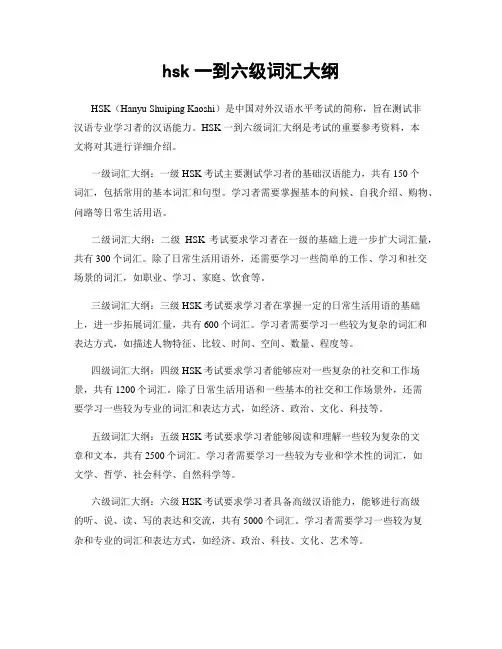
hsk一到六级词汇大纲HSK(Hanyu Shuiping Kaoshi)是中国对外汉语水平考试的简称,旨在测试非汉语专业学习者的汉语能力。
HSK一到六级词汇大纲是考试的重要参考资料,本文将对其进行详细介绍。
一级词汇大纲:一级HSK考试主要测试学习者的基础汉语能力,共有150个词汇,包括常用的基本词汇和句型。
学习者需要掌握基本的问候、自我介绍、购物、问路等日常生活用语。
二级词汇大纲:二级HSK考试要求学习者在一级的基础上进一步扩大词汇量,共有300个词汇。
除了日常生活用语外,还需要学习一些简单的工作、学习和社交场景的词汇,如职业、学习、家庭、饮食等。
三级词汇大纲:三级HSK考试要求学习者在掌握一定的日常生活用语的基础上,进一步拓展词汇量,共有600个词汇。
学习者需要学习一些较为复杂的词汇和表达方式,如描述人物特征、比较、时间、空间、数量、程度等。
四级词汇大纲:四级HSK考试要求学习者能够应对一些复杂的社交和工作场景,共有1200个词汇。
除了日常生活用语和一些基本的社交和工作场景外,还需要学习一些较为专业的词汇和表达方式,如经济、政治、文化、科技等。
五级词汇大纲:五级HSK考试要求学习者能够阅读和理解一些较为复杂的文章和文本,共有2500个词汇。
学习者需要学习一些较为专业和学术性的词汇,如文学、哲学、社会科学、自然科学等。
六级词汇大纲:六级HSK考试要求学习者具备高级汉语能力,能够进行高级的听、说、读、写的表达和交流,共有5000个词汇。
学习者需要学习一些较为复杂和专业的词汇和表达方式,如经济、政治、科技、文化、艺术等。
总结起来,HSK一到六级词汇大纲是汉语学习者的必备参考资料。
通过学习和掌握这些词汇,学习者可以逐步提高自己的汉语水平,达到更高的语言表达和交流能力。
无论是在日常生活中还是在学习和工作中,掌握HSK词汇大纲中的词汇都将对学习者产生积极的影响。
因此,学习者应该在备考HSK考试的过程中,认真学习和掌握相应级别的词汇,以提升自己的汉语能力。