上海版牛津英语6B六年级基础语法复习整理
- 格式:doc
- 大小:68.50 KB
- 文档页数:6
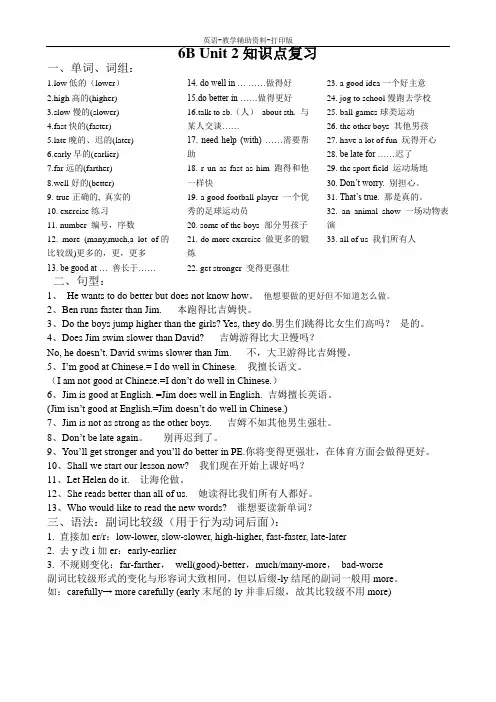
形容词比较级最高级
规则变化
A. 单音节和不可拆双音节形容词
1.以e结尾+r / st
huge-huger/hugest
large- larger- largest
safe- safer- safest
2.辅音字母+y结尾:去y + ier / iest
heavy-heavier-heaviest
dirty- dirtier- dirtiest
happy-happier-happiest
early-earlier-earliest
friendly-friendlier-friendliest
angry-angrier-angriest
healthy-healthier-healthiest
easy-easier-easiest
3.重读闭音节,以一个元音字母加一个辅音字母结尾:双写辅音字母+ er,est
big-bigger- biggest
fat- fatter- fattest
thin- thinner- thinnest
hot- hotter- hottest
wet- wetter- wettest
red- redder- reddest
4.直接+ er/est
strong
young
old
short clever new
great
tall
high
cheap poor rich
small
slow
fast
light
B. 部分双音节形容词, 多音节形容词
famous- more famous- the most famous
modern – more modern – the most modern
careful- more careful- the most careful
beautiful-more beautiful-the most beautiful
expensive – more expensive (less expensive)- the most expensive
interesting- more interesting- the most interesting
不规则变化
good/well-better –best
bad/badly/ill-worse-worst
little-less-least + u. n. (few-fewer-fewest) + c. n.
many/much-more –most
far-farther-farthest (距离)
far-further-furthest(程度)
程度副词much用来修饰形容词比较级
cheap(便宜的),cheaper(更便宜) much cheaper(便宜得多),
good better much better
much faster
much taller
much more beautiful fast faster
tall taller
beautiful more beautiful
too, very, quite, so, as…as,not as /so…as, less …修饰形容词原级
very/quite tall(很高),
too tall(太高)
so tall(如此高)
as tall as(与某人一样高)
not as tall as /not so tall as(不如某人高)= less tall
注意事项:
1、形容词最高级前必须加the;副词最高级前可加the,也可不加the
e.g. the biggest cities;draw (the) best
2、much可修饰比较级:……得多
e.g. much taller ……高得多
3、原级标志:very非常;too太;quite相当;(not)as+原级+as (不)像……一样;less+原级 不如……;so如此(共五个)
时态填空
(一) 常用固定词组:
A型. doing
like doing/ love doing/ enjoy doing 喜欢做某事
hate doing 讨厌做某事
finish doing 完成做某事
practise doing 练习作某事
start doing / begin doing 开始做某事
What about doing…? / How about doing…? 做某事怎么样?
be good at doing 善于做某事
be poor at doing 不善于做某事
Sb. spend(s) some time doing sth. 某人花时间做某事
remember doing 记住做过某事
forget doing 忘记做过某事
see sb. doing 看见某人正在做
by doing 通过做某事
by not doing通过不做某事
stop doing 停止做某事
instead of doing 而不是做某事
go doing
B型. to do
would like to do / want to do 想要做某事
forget to do 忘记要做某事
remember to do 记得要做某事 have/has to do不得不做某事
had to do不得不做某事
will have to do 将不得不做某事
plan to do 计划做某事
One's job is / was to do... 某人的工作是做某事
like to do/love to do 喜欢做某事
start to do / begin to do 开始做某事
need to do 需要做某事
don’t need to do/ don’t have to do 不需要做某事
learn to do 学习做某事
promise to do / promise not to do 保证做某事/保证不做某事
tell sb. to do / tell sb. not to do 告诉某人做某事/告诉某人不做某事
ask sb. to do / ask sb. not to do 叫某人做某事/叫某人不做某事
It takes/took sb. some time to do sth.某人花时间做某事
It’s time to do sth. 做某事的时间到了
C型. do
Let sb. do 让某人做
help sb. (to) do 帮助某人做
Why not do...? 为何不做......? would rather do / would rather not do 宁愿做/宁愿不做
had better do / had better not do 最好做/最好不做 can do 能做
may do 可以做
must do 必须做
will do 将要做
would do 想要做
shall do 应该做
should do 应该做
can't do 不能做
may not do 不可以做
mustn't do 不准做
won't do 将不做
wouldn't do 将不做
shan't do 将不做
shouldn't do 不应该做
needn’t do 不需要做
(二) 五种常见时态:
现在进行时
公式:am/is/are +doing (现在分词)
时间状语:
now 现在
listen 听
look 看
these days 最近
eg.
Look, they are planting trees.
一般现在时(助动词do/does)
公式:V. / V.+s/es/ies (动词原形或动词第三人称单数)
时间状语:
always 一直
usually 经常
often 常常
sometimes 有时候
once a week 每周一次
four times a day 一天四次
every year 每年
How often 多久一次
e.g.
I usually take an underground to school.
He often takes a bus home.
一般过去时 (助动词did)
公式:V. +d/ed/ied或不规则(动词过去式) 时间状语:
yesterday 昨天
yesterday evening 昨天晚上
ten years ago 十年前
last week 上个星期
in the past 在过去
just now 刚才
e.g.
Ten years ago, he moved to Japan.
I sent a letter just now.
4. 一般将来时(助动词will/shall)
公式:am/is/are going to +V. , will /shall +V.
时间状语:
tomorrow 明天
next week 下个星期
this weekend 这个星期
in the future 在将来
Soon 很快,不久
in 15 years’ time 在15年后
How soon 多久以后
e.g.
I will fly to America tomorrow.
现在完成时(助动词have/has)
公式:have/has +done (过去分词)
时间状语:
already 已经
yet 尚
never 从未
ever 曾经
just 刚才
once 一次
before 在......之前
for 6 years 6年
how long 多久
e.g.
I haven’t read this newspaper yet.
Mary has already packed her things.