interactwebdb
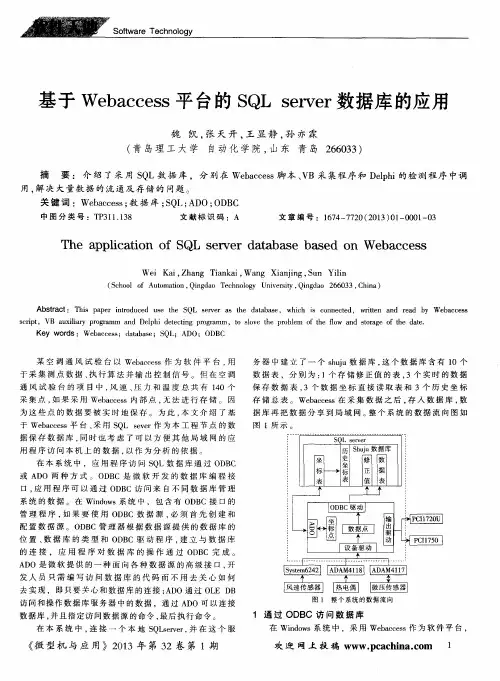
- 格式:pdf
- 大小:77.43 KB
- 文档页数:7
InteractiveQueryandSearchinSemistructuredDatabases
RoyGoldman,JenniferWidom
StanfordUniversityroyg,widom@cs.stanford.edu
www-db.stanford.edu
Abstract
Semistructuredgraph-baseddatabaseshavebeenproposed
aswell-suitedstoresforWorld-WideWebdata.Yetsofar,
languagesforqueryingsuchdataaretoocomplexforca-
sualWebusers.Further,proposedqueryapproachesdo
nottakeadvantageoftheinteractivenatureoftypicalWeb
sessions—usersareproficientatiterativelyrefiningtheir
Webexplorations.Inthispaperweproposeanewmodel
forinteractivelyqueryingandsearchingsemistructured
databases.Userscanbeginwithasimplekeywordsearch,
dynamicallybrowsethestructureoftheresult,andthen
submitfurtherrefiningqueries.Enablingthismodelex-
posesnewrequirementsofasemistructureddatabaseman-
agementsystemthatarenotapparentundertraditional
databaseuses.Wedemonstratetheimportanceofefficient
keywordsearch,structuralsummariesofqueryresults,
andsupportforinversepointers.Wealsodescribesome
preliminarysolutionstothesetechnicalissues.
1Introduction
QueryingtheWebhasunderstandablygatheredmuchat-
tentionfrombothresearchandindustry.Forsearchingthe
entireWeb,searchenginesareawell-proven,successful
technology[Dig97,Ink96].Searchenginesassumelittle
aboutthesemanticsofadocument,whichworkswellfor
theconglomerationofdisparatedatasourcesthatmakeup
theWeb.ButforsearchingwithinasingleWebsite,a
searchenginemaybetoobluntatool.LargeWebsites,
withthousandsofpages,areattractingmillionsofusers.
TheESPNSportssite(espn.com),forexample,hasover
90,000pages[Sta96]andseveralmillionpageviewsaday
[Sta97].Aslargeassomesitesmaybe,theyarefunda-
mentallydifferentfromtheWebasawholesinceasingle
siteusuallyhasacontrolledpointofadministration.Thus,
itbecomespossibletoconsistentlyassignandexposetheforobject-relationalandrelationaldatabases,respectively,
enableuserstospecifyqueriesinasimilarmanner.)A
DataGuidesummarizesallpathsthroughadatabase,start-
ingfromitsroot.Whilesuchdynamicsummariesarean
importantbasictechnologyforseveralreasons[GW97],
presentingtheuserwithacompletesummaryofpaths
maystillforcehimtoexploremuchunnecessarydatabase
structure.
Inthispaper,targetingcasualusers,ourstrategyisto
modelandexploittwokeytechniquesthatWebusersare
intimatelyfamiliarwith:
1.specifyingasimplequerytobeginasearch,usually
withkeywords
2.furtherexploringandrefiningtheresults
Forthefirsttechnique,wewanttosupportverysimple
queriesthathelp“focus”theuseronrelevantdata.The
manysearchenginesontheWebhaveshownthatkeyword
searchisaneasyandeffectivetechniqueforbeginninga
search.Toenablethesecondtechnique,wewanttoexpose
andsummarizethestructureofthedatabase“surround-
ing”anyqueryresult.Todothis,wedynamicallybuild
andpresentaDataGuidethatsummarizespathsnotfrom
thedatabaseroot,butinsteadfromtheobjectsreturned
inthequeryresult.Ausercanthenrepeattheprocess
bysubmittingaqueryfromthis“focused”DataGuideor
specifyingadditionalkeywords,ultimatelylocatingthe
desiredresults.
OurdiscussionsareinthecontextoftheLoreproject
[MAG97],whichusestheOEMgraph-baseddatamodel
[PGMW95]andtheLorelquerylanguage[AQM97].
Ourresultsareapplicabletoothersimilargraph-baseddata
models,aswellastheemergingXMLstandardfordefining
thesemanticstructureofWebdocuments[Con97].
Intherestofthepaper,wefirstprovidebackground
andcontextinSection2.InSection3,wepresentasimple
motivatingexampletoillustratewhynewfunctionalityis
neededinasemistructureddatabasesystemtosupportin-
teractivequeryandsearch.Oursessionmodelisdescribed
inSection4,followedbythreesectionscoveringthenew
requiredtechnology:
Keywordsearch(Section5):Efficientdatastruc-
turesandindexingtechniquesareneededforquickly
findingobjectsthatmatchkeywordsearchcriteria.
Whilewemayborrowheavilyfromwell-provenin-
formationretrieval(IR)technology,thenewcontext
ofagraphdatabaseissufficientlydifferentfroma
simplesetofdocumentstowarrantinvestigation.
DataGuideenhancements(Section6):Computing
aDataGuideovereachqueryresultcanbevery
expensive,sowehavedevelopednewalgorithmsfor
computingandpresentingDataGuidespiecewise,
computingmoreondemand.Inversepointers(Section7):Tofullyexposethe
structuralcontextofaqueryresult,itiscrucial
toexploitinversepointerswhencreatingtheData-
Guidefortheresult,browsingthedata,andsub-
mittingrefiningqueries.Whilesupportforin-
versepointersmayseemstraightforward,themajor
proposedmodelsforsemistructureddataarebased
ondirectedgraphs,andinversepointershavenot
beenconsideredintheproposedquerylanguages
[AQM97,BDHS96,FFLS97].
2Background
Tosetthestagefortherestofthepaper,webrieflydescribe
theOEMdatamodel,introducetheLorelquerylanguage,
andsummarizeDataGuides.InOEM,eachobjectcontains
anobjectidentifier(oid)andavalue.Avaluemaybe
atomicorcomplex.Atomicvaluesmaybeintegers,reals,
strings,images,oranyotherindivisibledata.Acomplex
OEMvalueisacollectionofOEMsubobjects,eachlinked