8年级to do 与 doing 知识点
- 格式:doc
- 大小:18.00 KB
- 文档页数:1
后接动名词的动词
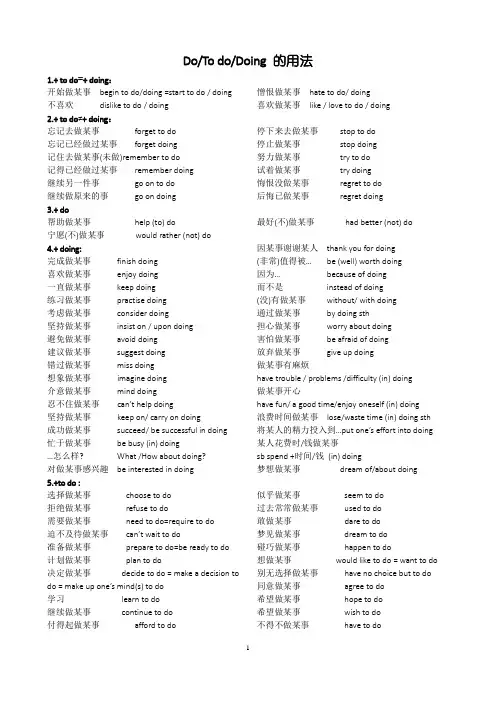
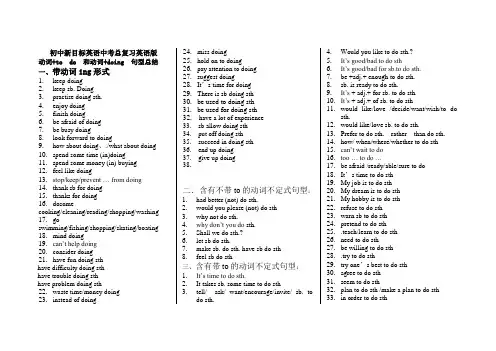
admit 承认/ advise 建议/ allow 允许/ appreciate 感激/ avoid 避免/ consider 考虑/ delay 推迟/ deny 否认/ discuss 讨论/ dislike 不喜欢/ enjoy 喜爱/ escape 逃脱/ excuse 原谅/ fancy 设想/ finish 完成/ forbid 禁止/ forgive 原谅/ imagine 想像/ keep 保持/ mention 提及/ mind 介意/ miss 没赶上/ pardon 原谅/ permit 允许/ practice 练习/ prevent 阻止/ prohibit 禁止/ put off 推迟/ report 报告/ risk 冒险/ stop 停止/ suggest 建议/ carry on 继续/ can’t help 禁不住/ feel like 想要/ give up 放弃/ keep on 继续/ put off 推迟/ set about 开始,着手/ object to 反对/ insist on 坚持/ pay attention to 注意/stick to 坚持/ get down to 开始认真做/ look forwards to 期盼/ be [get] used to 习惯于/ lead to 导致/ be devoted to 致力于,专用于/ insist on 坚持
后接不定式作宾语的动词
afford 负担得起/ arrange 安排/ ask 要求/ care 想要/ choose 决定/ decide 决定/ demand 要求/ determine 决心/ expect 期待,预计/ help 帮助/ hesitate 犹豫/ hope 希望/ long 渴望/ manage 渴望设法/ offer 主动提出/ plan 计划/ prepare 准备/ pretend 假装/ promise 答应/ refuse 拒绝/ want 想要/ wish 希望,intend, mean(计划), do / try one’s best, make an attempt (努力) / learn(学习), wish, hope, desire, expect, long, want, would like, should like, would prefer(), wish,希望、愿意), agree, choose, make a decision, make up one’s mind(决定), offer(主动提出), apply(申请), help(帮助), fail(不能、没有), , happen(碰巧), 等。
既可接doing也可接to do作宾语
1.意义不同
(1) remember(记得),forget(忘记),regret(后悔)stop,go on,动词forget, remember, regret 等接动名词、接动名词的完成式或不定式的完成式作宾语时,意义相同。
I regretted to have broken the rules of our class. = I regretted having broken the rules of our class. 我后悔违反了班规。
(2)try 后接不定式表示设法做某事,接动名词表示做某事试试(看有什么效果)。
如:I’ll try to come tomorrow. 我明天设法来。
Let’s try knocking at the back door. 咱们敲敲后门试试。
(3) mean 后接不定式表示打算(想要)做某事,接动名词意味着(做某事,接动名词表示意味着要)做某事。
如:He did not mean to hurt you. 他不是有意要伤害你。
This illness will mean going to hospital. 得了这种病就意味着要住院。
(4) can’t help后接动名词:禁不住做某事,接不定式表示不能帮助做某事。
如:如:He couldn’t help crying when he heard the news. 他听到这个消息时禁不住哭了The medicine can’t help to get rid of your cold. 这药不能帮你治好感冒。
既可接不定式又可接动名词作宾语的动词
2.含义相同
这类动词常见的有:
like 喜欢/ love 喜欢/ hate 憎恨/ prefer 宁可/ begin 开始/ start 开始/ continue 继续/ can’t bear 不能忍受/ bother 麻烦/ intend 想要/ attempt 试图/ cease 停止,等。
如:He likes travelling [to travel] alone. He began doing [to do] this job last year. /Don’t bother to get [getting]dinner for me.
注意:当like, love, hate, prefer 与would, should 连用时,其后只能接不定式。
如:I’d lik e to drop in and see you tonight.
另外,当begin, start 本身为进行时态或后接know, realize, understand 等静态动词时,其后的动词只能用不定式。
如:He is beginning to work in that company. /After the talk with his English teacher, he began to like English.。