
小学英语毕业复习经验交流.6
- 格式:ppt
- 大小:3.60 MB
- 文档页数:17


小学六年级英语复习计划与经验交流全文共3篇示例,供读者参考篇1Study Plan for Sixth Grade EnglishIntroductionAs the end of the school year approaches, it’s time for sixth graders to review what they have learned in English class over the past year. A good study plan and effective study habits are essential to ensure success in revising for exams. In this article, we will discuss a study plan for sixth-grade English and share some tips and experiences to help students achieve their goals.Study Plan1. Set Goals: The first step in creating a study plan is to set clear and achievable goals. Identify the topics you need to review, the areas you need to improve on, and the grades you want to achieve in the final exams.2. Organize Study Materials: Gather all your English textbooks, notes, and assignments from the past year. Organizethem in a way that makes it easy for you to access and review them.3. Create a Study Schedule: Allocate specific time slots for studying English each day. Break down your study sessions into smaller, manageable chunks to prevent burnout and improve retention.4. Review Vocabulary: Go through all the vocabulary words you have learned throughout the year. Create flashcards or use online tools to help you memorize and review them regularly.5. Practice Writing: Work on your writing skills by writing essays, short stories, or journal entries. Practice using different writing styles and techniques to improve your composition skills.6. Improve Reading Comprehension: Read a variety of texts, such as books, newspapers, and magazines. Practice summarizing the main ideas, identifying key details, and making inferences.7. Enhance Grammar Skills: Review the grammar rules and concepts you have learned in class. Practice identifying and correcting errors in sentences to improve your grammar skills.8. Seek Help: Don’t hesitate to ask your English teacher or classmates for help if you are struggling with any aspect of thesubject. Join study groups or online forums to discuss and clarify doubts.Experiences and Tips1. Start Early: Begin revising for exams well in advance to avoid last-minute cramming. Reviewing a little bit every day will help you retain information better and reduce stress.2. Use Mnemonics: Mnemonic devices, such as acronyms, visual aids, or rhymes, can help you remember information more effectively. Create mnemonic devices for difficult vocabulary words or grammar rules.3. Practice Regularly: Consistent practice is key to mastering English skills. Set aside time each day to work on different aspects of the subject, such as reading, writing, and grammar.4. Take Breaks: Don’t forget to give yourself breaks during study sessions to recharge and refocus. Take short breaks every hour to prevent mental fatigue and improve concentration.5. Stay Positive: Stay motivated and positive throughout your study sessions. Celebrate small achievements, stay focused on your goals, and believe in your ability to succeed.ConclusionA well-designed study plan and disciplined study habits are essential for sixth graders to succeed in their English exams. By setting clear goals, organizing study materials, and following a structured study schedule, students can effectively review the topics covered in class and improve their English skills. Remember to stay positive, seek help when needed, and practice regularly to achieve success in sixth-grade English. Good luck with your exams!篇2Title: Revision Plan and Experience Sharing for Sixth Grade EnglishIntroductionAs sixth graders, it is crucial to have a solid revision plan in place to prepare for any upcoming English exams. In this document, we will discuss an effective revision plan for sixth grade English, as well as share some experiences and tips to help you excel in your studies.Revision Plan1. Organize Your Study Materials- Gather all your textbooks, notebooks, and handouts for English class.- Create a study schedule that allocates specific times for revising different topics.- Use color-coding or labeling to differentiate between different subjects or units.2. Review Previous Lessons- Start by revisiting previous lessons to ensure a good understanding of the basics.- Focus on grammar rules, vocabulary, and common phrases used in English.3. Practice Writing- Practice writing essays, letters, and short stories to improve your writing skills.- Pay attention to punctuation, spelling, and sentence structure.4. Enhance Reading Comprehension- Read a variety of texts, including stories, articles, and poems.- Practice summarizing and analyzing the main ideas of a text.5. Practice Listening- Listen to English podcasts, songs, or audio recordings to improve your listening skills.- Note down key points, main ideas, or unfamiliar vocabulary.6. Speak English- Engage in conversations in English with classmates, teachers, or even language exchange partners.- Practice pronunciation and fluency by speaking aloud.Experience Sharing1. Stay Organized- Keep your study materials and notes organized to avoid confusion.- Create a study timetable and stick to it to ensure effective revision.2. Practice Regularly- Consistent practice is key to mastering English skills.- Set aside time each day for revision and practice.3. Seek Help- Don't hesitate to ask your teacher or classmates for help if you're struggling with a concept.- Join study groups or online forums for additional support.4. Use Resources- Utilize online resources, such as grammar websites, vocabulary apps, or English learning platforms.- Take advantage of study guides, practice tests, and review materials.5. Set Realistic Goals- Set achievable goals for your revision to stay motivated.- Celebrate small victories and progress along the way.ConclusionIn conclusion, a well-structured revision plan coupled with regular practice and dedication can significantly enhance your English skills as a sixth grader. By following the tips and experiences shared in this document, you can aim for success inyour English studies and achieve your academic goals. Good luck with your revision!篇3Review Plan and Experience Sharing of Sixth Grade English in Primary SchoolIntroductionAs young students approach the end of their primary schooling, it is important to reflect on their English learning journey and prepare for the upcoming challenges. With the transition to middle school looming, a solid grasp of English language skills becomes increasingly vital. In this document, we will outline a comprehensive review plan and share some valuable experiences to help sixth graders navigate the final stage of their primary school English education.Review Plan1. Grammar and Vocabulary- Review basic grammar rules such as tenses, articles, prepositions, and conjunctions.- Expand vocabulary by learning new words and phrases regularly. Utilize flashcards, word games, and vocabulary lists to reinforce retention.- Practice using grammar and vocabulary in context through reading, writing, and speaking exercises.2. Reading Comprehension- Improve reading comprehension skills by practicing with a variety of texts, including fiction, non-fiction, and informational passages.- Focus on identifying main ideas, supporting details, and making inferences from the text.- Discuss and analyze reading materials with peers to deepen understanding and critical thinking skills.3. Writing Skills- Strengthen writing skills through continued practice in various formats such as essays, letters, stories, and reports.- Pay attention to grammar, punctuation, and sentence structure to enhance clarity and coherence.- Seek feedback from teachers and peers to improve writing quality and revision techniques.4. Speaking and Listening- Practice speaking fluently and confidently throughrole-plays, presentations, and group discussions.- Improve listening skills by actively engaging in class instruction, audio materials, and conversations.- Use online resources and language apps to enhance pronunciation, intonation, and listening comprehension.Experience Sharing1. Establish a Routine- Create a study schedule that includes daily practice of grammar, vocabulary, reading, writing, speaking, and listening activities.- Set specific goals for each study session and track progress to stay motivated and focused.2. Utilize Resources- Take advantage of textbooks, workbooks, online resources, and educational apps to supplement classroom learning.- Participate in English language clubs, workshops, and competitions to enhance language skills and cultural understanding.3. Collaborate with Peers- Form study groups with classmates to review lessons, practice conversations, and engage in collaborative learning activities.- Share study tips, resources, and strategies with peers to support each other’s academic growth.4. Seek Guidance- Approach teachers for guidance, feedback, and clarification on challenging concepts or assignments.- Attend remedial classes or tutoring sessions to address specific language skill deficiencies and receive personalized support.ConclusionIn conclusion, the sixth grade English curriculum in primary school requires a comprehensive review plan and active participation in learning activities to achieve academic success. By focusing on grammar and vocabulary, readingcomprehension, writing skills, speaking, and listening practice, students can enhance their English language proficiency and prepare for the transition to middle school. By incorporating routine study habits, utilizing resources, collaborating with peers, and seeking guidance from teachers, sixth graders can navigate the final stage of their primary school English education with confidence and competence. Good luck with your English learning journey!。

六年级英语复习经验交流每当庄稼人热火朝天的收麦子的时候,就是六年级的学生紧张复习的时候了,其实复习也就像就像农民收麦子,耕耘了几个月,收获就在那几天。
我在中心小学教六年级英语已经四年了,或多或少对四五十人的大班复课也积累了一些自己的经验,冒着贻笑大方的风险,献丑简陈如下。
一、引入竞争机制,绷紧每一个学生的复习神经。
没有竞争就没有活力,所有正当的竞争都会带来共同的进步。
去年的六年级有47人,尖子生太少,差生太差。
为了让每个学生通过复习成绩都有提高,我针对他们自尊心强,特别好胜的特点,每测验一次就给他们排一遍名次,并且把名次变成每个人的临时学号,上课提问我叫8,那么上次考第8的学生就站起来回答问题。
为了超过和自己水平相当的同学,向老师和全班同学同学证明自己的实力,取得更靠前的学号,同学们都你追我赶拼命复习,去年期末的成绩出乎意料的好。
但是我也怕这样做会伤害一些学习差的同学的自尊心,使他们丧失自信,就常常宽慰他们,名次只是过去式,鼓励他们“士别三日当刮目相看”,只要你有一点点提高老师和同学就认可你。
今年的六年级有53人,我针对这班学生团结善于协作的特点,把他们分成人数总实力相当的小组,那几个小组先集体背过课文,就获得自由选写练习的权利,那几个小组单词听写总分高,写单词的练习就减半,为了给小集体“争面子”、“谋福利”,优等生主动帮助差生,形成了互帮互助学习的好局面,差生的成绩提高得很快。
二、科学的复习方法,取得事半功倍的效果。
(一)英语是一门记忆量很大的语言学科,根据记忆规律,调动多种感官参与复习,复习效果会更好。
我要求学生在复习单词课文时做到四到:及眼到、心到、口到、手到。
边读边写边记,肯定记得又准又快。
(二)多种课型交叉进行。
尽量避免一连几节课都是背诵和或者都是讲题,学生厌倦,教师自己也疲劳,把内容合理安排,讲授、背诵、做题穿插进行,有机结合,学生始终兴趣高涨,复习效果要好得多。
(三)逐课过关与分类复习相结合。
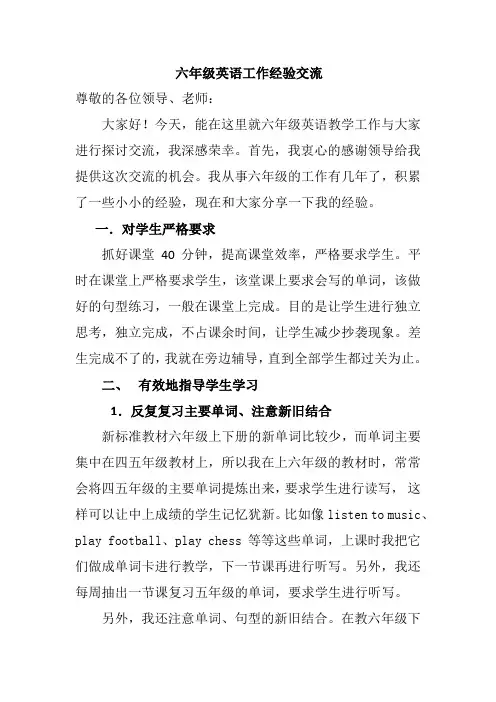
六年级英语工作经验交流尊敬的各位领导、老师:大家好!今天,能在这里就六年级英语教学工作与大家进行探讨交流,我深感荣幸。
首先,我衷心的感谢领导给我提供这次交流的机会。
我从事六年级的工作有几年了,积累了一些小小的经验,现在和大家分享一下我的经验。
一.对学生严格要求抓好课堂40分钟,提高课堂效率,严格要求学生。
平时在课堂上严格要求学生,该堂课上要求会写的单词,该做好的句型练习,一般在课堂上完成。
目的是让学生进行独立思考,独立完成,不占课余时间,让学生减少抄袭现象。
差生完成不了的,我就在旁边辅导,直到全部学生都过关为止。
二、有效地指导学生学习1.反复复习主要单词、注意新旧结合新标准教材六年级上下册的新单词比较少,而单词主要集中在四五年级教材上,所以我在上六年级的教材时,常常会将四五年级的主要单词提炼出来,要求学生进行读写,这样可以让中上成绩的学生记忆犹新。
比如像listen to music、play football、play chess等等这些单词,上课时我把它们做成单词卡进行教学,下一节课再进行听写。
另外,我还每周抽出一节课复习五年级的单词,要求学生进行听写。
另外,我还注意单词、句型的新旧结合。
在教六年级下册第一模块时,主要是讲食物的单词和句型what do you want to eat\drink。
在上新课前十分钟,我就把前面所有的食物单词都复习一次,到let’s talk环节时,我提问了五年级下册的句型“what do you have for breakfast”和四年级上册的“do you want some rice”。
2.培养学生记忆单词的习惯。
教学中,我主要采用联想记忆法和归类记忆法帮助学生记忆单词。
联想记忆法,即看到某个单词,应该回想一下,有没有和自己以前记忆的单词在形或意上近似的。
如 shirt、girl、bird、 T-shirt都含有ir,就可以利用这个方法进行记忆。
归类记忆法就是把单词进行分门类,如:动物,人物等,进行分类记忆。

小学英语经验总结6篇第1篇示例:小学英语经验总结小学英语是孩子学习的第一门外语,对于培养孩子的语言能力、逻辑思维能力和跨文化交流能力具有重要的意义。
在小学阶段,孩子们学习英语的方式主要是通过课堂教学和课后自主学习两种方式。
而在学习英语的过程中,孩子们也积累了许多学习经验,下面将对小学英语学习经验进行总结。
小学英语学习需要培养孩子的兴趣。
在小学阶段,孩子们对于新事物都有着浓厚的兴趣,这也为他们学习英语创造了良好的条件。
教师在教学过程中应该注重培养孩子的学习兴趣,可以通过丰富多彩的教学方式和儿歌、游戏等形式来吸引孩子们的注意力,让他们在轻松愉快的氛围中学习英语。
小学英语学习需要注重基础知识的积累。
在小学阶段,孩子们需要掌握一定的英语词汇和语法知识。
教师在课堂教学中应该注重基础知识的传授,让孩子们在扎实的基础上逐步提高英语水平。
家长也可以在家里和孩子一起进行英语学习,通过与孩子一起玩英语游戏、听英语歌曲等方式来巩固孩子的英语基础知识。
小学英语学习需要注重实践应用。
在学习英语的过程中,孩子们的口语表达能力也需要得到锻炼。
教师可以设计一些口语练习的活动,让孩子们在实践中学习英语。
家长也可以和孩子一起进行英语对话练习,让孩子在日常生活中有机会运用所学的英语知识,提高英语口语表达能力。
小学英语学习需要注重综合能力的培养。
英语学习不仅仅是掌握英语的基础知识,还需要培养孩子的综合能力,如阅读能力、写作能力、听力能力和表达能力等。
教师在教学中应该注重培养孩子的综合能力,让他们在学习英语的过程中全面发展。
小学英语学习是一个循序渐进的过程,需要教师和家长共同努力。
通过培养孩子的学习兴趣,注重基础知识的积累,注重实践应用和注重综合能力的培养,相信孩子们一定能在英语学习中取得好成绩。
希望每个小学生都能在英语学习中有所收获,为以后的英语学习打下良好的基础。
第2篇示例:小学英语经验总结随着我国对外开放的深入和国际交流的日益频繁,学习一门外语已经成为当今社会中的一种必备技能,而英语作为世界上使用最为广泛的语言之一,对于小学生来说,学习英语已经成为一种必要且重要的课程。