
Marine biodiversity and microbial diversity
- 格式:pdf
- 大小:4.23 MB
- 文档页数:66
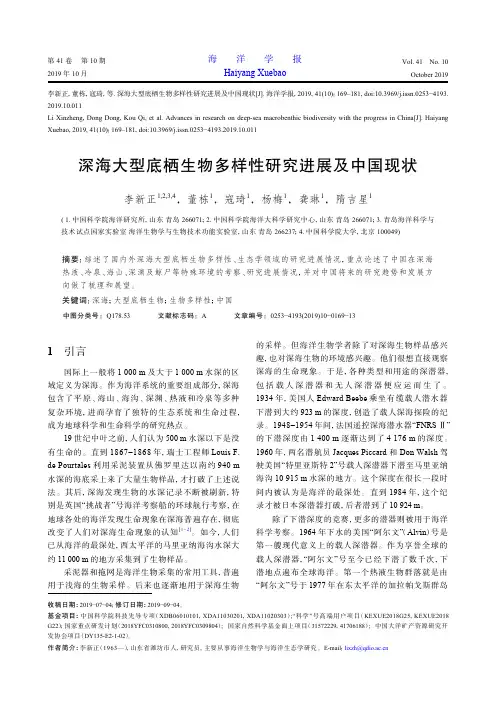
李新正,董栋,寇琦,等. 深海大型底栖生物多样性研究进展及中国现状[J]. 海洋学报,2019,41(10):169–181,doi:10.3969/j.issn.0253−4193.2019.10.011Li Xinzheng ,Dong Dong ,Kou Qi, et al. Advances in research on deep-sea macrobenthic biodiversity with the progress in China[J]. Haiyang Xuebao ,2019, 41(10):169–181,doi:10.3969/j.issn.0253−4193.2019.10.011深海大型底栖生物多样性研究进展及中国现状李新正1,2,3,4,董栋1,寇琦1,杨梅1,龚琳1,隋吉星1( 1. 中国科学院海洋研究所,山东 青岛 266071;2. 中国科学院海洋大科学研究中心,山东 青岛 266071;3. 青岛海洋科学与技术试点国家实验室 海洋生物学与生物技术功能实验室,山东 青岛 266237;4. 中国科学院大学,北京 100049)摘要:综述了国内外深海大型底栖生物多样性、生态学领域的研究进展情况,重点论述了中国在深海热液、冷泉、海山、深渊及鲸尸等特殊环境的考察、研究进展情况,并对中国将来的研究趋势和发展方向做了梳理和展望。
关键词:深海;大型底栖生物;生物多样性;中国中图分类号:Q178.53 文献标志码:A 文章编号:0253−4193(2019)10−0169−131 引言国际上一般将1 000 m 及大于1 000 m 水深的区域定义为深海。
作为海洋系统的重要组成部分,深海包含了平原、海山、海沟、深渊、热液和冷泉等多种复杂环境,进而孕育了独特的生态系统和生命过程,成为地球科学和生命科学的研究热点。
19世纪中叶之前,人们认为500 m 水深以下是没有生命的。

The Importance Ecosystems in the Ocean The ocean is a vast and diverse ecosystem, covering more than 70% of the Earth’s surface. It is home to a wide range of organisms and plays a crucial role in maintaining the balance of life on our planet. Understanding the importance of ocean ecosystems is crucial for our survival and the conservation of the environment.Biodiversity and the Food ChainOcean ecosystems support an incredible diversity of life. From microscopic plankton to majestic whales, each organism has its role in the food chain. Phytoplankton, for example, are microscopic plants that provide the foundation of the marine food web. They are responsible for up to 50% of the world’s oxygen production through photosynthesis.Small marine animals consume phytoplankton, and larger predatory fish consume these smaller organisms. This process continues until it reaches the largest predators, such as sharks and marine mammals. Any disruption in the balance of this food chain can have cascading effects on the entire ecosystem.Climate RegulationOce an ecosystems also play a vital role in regulating the Earth’s climate. The ocean acts as a massive carbon sink, absorbing large amounts of carbon dioxide from the atmosphere. This process helps to mitigate the effects of climate change, as excess carbon dioxide in the atmosphere contributes to global warming.Additionally, ocean currents play a significant role in transporting heat around the planet. The Gulf Stream, for example, carries warm water from the tropics to the North Atlantic, warming the climate in Europe. Without these ocean currents, many regions would experience dramatic changes in climate patterns, with severe consequences for ecosystems and human populations.Protection against Natural DisastersHealthy ocean ecosystems provide essential protection against natural disasters, especially along coastal areas. Coral reefs, for example, act as natural breakwaters, reducing the impact of waves and storms on coastlines. They help to prevent erosion and maintain the stability of coastal ecosystems and human settlements.Mangrove forests are another example of ocean ecosystems that provide protection. These dense forests act as natural barriers against storms and tsunamis, absorbing the energy of waves and reducing their impact on coastal communities.Economic ImportanceOcean ecosystems are not only vital for the environment but also for our economy. Marine resources, such as fish, shellfish, and algae, are important sources of food and livelihood for many communities around the world. The fishing industry, in particular, provides employment and sustenance for millions of people globally.Furthermore, recreational activities like boating, diving, and beach tourism contribute significantly to local economies. Pristine marine environments, such as coral reefs and underwater reserves, attract tourists from all over the world, providing income to coastal communities.The Threat of Human ActivitiesDespite their importance, ocean ecosystems are under threat from various human activities. Overfishing, pollution, habitat destruction, and climate change have had severe impacts on marine life and ecosystems. Some species have become endangered or even extinct, disrupting the balance of the ecosystem.To protect and preserve ocean ecosystems, it is essential to promote sustainable fishing practices, reduce pollution, and establish protected areas where marine life can thrive. Additionally, raising awareness about the importance of ocean conservation and fostering international cooperation is crucial to ensuring the long-term health and sustainability of our planet’s oceans.In conclusion, ocean ecosystems play a vital role in maintaining the balance of life on Earth. Their biodiversity, climate regulation, natural disaster protection, and economic importance highlight the significance of preserving these ecosystems for future generations. Through responsible and sustainable practices, we can ensure the continued health of our oceans and the well-being of all life on our planet.。

海洋科普英文The ocean, covering more than two-thirds of the Earth's surface, is a vast and mysterious realm that has fascinated humans for centuries. 海洋覆盖地球表面超过三分之二,是一个广阔而神秘的领域,几个世纪来一直吸引着人类。
Its deep blue waters hide a world teeming with life, from microscopic plankton to massive whales, and its depths hold secrets that are yet to be fully explored. 它深蓝色的水域隐藏着一个生机勃勃的世界,从微小的浮游生物到庞大的鲸鱼,而它的深处还隐藏着尚未完全探索的秘密。
One of the most intriguing aspects of the ocean is its incredible biodiversity. Thousands of species call the ocean home, and many of them have yet to be discovered by humans. 海洋最引人注目的一个方面是其惊人的生物多样性。
数千种生物栖息在海洋中,其中许多尚未被人类发现。
From colorful coral reefs to dark abyssal plains, the ocean is home to a wide variety of ecosystems that support a complex web of life. 从色彩斑斓的珊瑚礁到黑暗的深海平原,海洋是各种生态系统的家园,支撑着复杂的生命网络。
In addition to its biological diversity, the ocean plays a crucial role in regulating the Earth's climate. As the largest carbon sink on the planet, the ocean absorbs a significant amount of carbon dioxide from the atmosphere, helping to mitigate the effects of climate change. 除了生物多样性外,海洋在调节地球气候方面发挥着至关重要的作用。

施用化肥的利与弊英语作文Title: Pros and Cons of Fertilizer Application。
Fertilizers play a pivotal role in modern agriculture, enhancing crop yields and ensuring food security for a growing global population. However, their use also raises concerns regarding environmental sustainability and human health. In this essay, we will explore the advantages and disadvantages of fertilizer application.Advantages:1. Increased Crop Yields: Fertilizers provide essential nutrients like nitrogen, phosphorus, and potassium, which are crucial for plant growth. By replenishing soil nutrients, fertilizers enhance crop yields, ensuring food security and economic prosperity.2. Improved Nutrient Balance: Different crops require varying nutrient levels for optimal growth. Fertilizerapplication allows farmers to customize nutrient levels according to crop needs, promoting balanced plant nutrition and healthier harvests.3. Enhanced Soil Fertility: Continuous farming depletes soil nutrients over time. Fertilizers replenish these nutrients, maintaining soil fertility and preventing degradation. This sustains agricultural productivity in the long run, supporting future generations.4. Time and Labor Savings: Compared to organic methods like composting, fertilizer application is more efficient and requires less labor. This enables farmers to manage larger agricultural areas effectively, increasing overall productivity.5. Climate Resilience: Fertilizers can help crops withstand environmental stressors like drought or disease. By promoting robust plant growth, they contribute to climate resilience, ensuring stable food production even in adverse conditions.Disadvantages:1. Environmental Pollution: Excessive fertilizer usecan lead to nutrient runoff into water bodies, causing eutrophication and harming aquatic ecosystems. Nitrogen-based fertilizers, in particular, contribute to water pollution and algae blooms, disrupting marine biodiversity.2. Soil Degradation: Dependency on fertilizers can degrade soil quality over time. Excessive use of certain nutrients, such as phosphorus, can alter soil pH levels and reduce microbial diversity, compromising long-term soil health and productivity.3. Health Risks: Exposure to chemical fertilizers can pose health risks to farmers and consumers. Prolonged contact with fertilizers containing harmful substances like ammonia or nitrates can cause respiratory problems, skin irritations, or even chronic illnesses.4. Economic Burden: Fertilizers incur costs for farmers, especially small-scale or subsistence farmers with limitedfinancial resources. Rising fertilizer prices canexacerbate economic disparities and hinder access to essential agricultural inputs, affecting food security and rural livelihoods.5. Contributing to Climate Change: Certain fertilizers, notably nitrogen-based ones, release greenhouse gases like nitrous oxide, contributing to climate change. Additionally, fertilizer production and transportation emit carbon dioxide, further exacerbating environmental impacts.In conclusion, fertilizer application offerssignificant benefits in terms of increased crop yields and improved agricultural productivity. However, these advantages come with environmental and health consequences that must be carefully managed. Sustainable farming practices, such as precision agriculture and integrated nutrient management, can mitigate the negative impacts of fertilizer use while maximizing its benefits. Balancing the advantages and disadvantages of fertilizer application is essential for achieving food security and environmental sustainability in the long term.。